
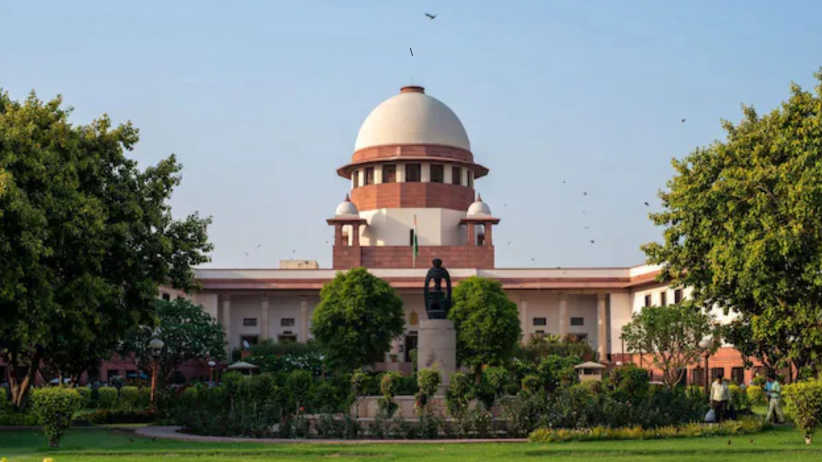

The Supreme Court gave the Centre one week to respond to petitions on Thursday. These petitions challenge the Waqf (Amendment) Act, 2025. Meanwhile, the Centre gave an assurance to the court. It promised that until the next hearing, it will not denotify or alter any Waqf property. This includes Waqf declared by notification or user-based claims.
Next Hearing Scheduled for May
As a next step, the court scheduled the hearing for the week of May 5. By then, the Centre, the states, and the petitioners must submit their replies. Moreover, the court chose five petitions to lead the arguments. The petitioners will decide which ones to put forward.
Earlier Cases Handled Separately
In addition, the court segregated cases filed by Hindu parties that challenged the 1995 and 2013 Waqf laws. However, it ordered that all cases challenging the 2025 law be listed under one title, “In Re: Waqf Amendment Act 2025.”
Court Raises Concerns Over the New Law
Earlier, on Wednesday, the court expressed concern about three major parts of the law. First, it questioned the status of Waqf by user properties already declared by courts. Second, it highlighted the majority of non-Muslims on the Waqf Boards and Council. Third, it opposed the rule that blocks disputed government land from becoming Waqf.
Because of these concerns, the court said it might pass an interim order to pause the law. Nevertheless, it chose to hear the Centre’s side before taking action.
Court Warns Against Rewriting History
During the hearing, the bench stated,“We will say that whichever properties have been declared by the court to be Waqf or held to be Waqf will not be de-notified as Waqfs or be treated as non-Waqf properties, whether they are by Waqf-by-user or waqf-by-declaration or otherwise... declared by courts or otherwise also.”
Chief Justice Sanjiv Khanna also said,“Government cannot rewrite history.” He made this comment while referring to a provision in the new law that could undo past Waqf declarations.
Several Petitions Filed Against the Law
So far, many political and civil society leaders have challenged the new Act.
The petitioners include, Asaduddin Owaisi (AIMIM), Amanatullah Khan (AAP), Association for the Protection of Civil Rights, Arshad Madani, Samastha Kerala Jamiathul Ulema, Anjum Kadari, Taiyyab Khan Salmani, Mohammad Shafi, Mohammed Fazlurrahim, Manoj Kumar Jha (RJD).
Furthermore, several political parties also filed pleas. These include YSR Congress Party (Jagan Mohan Reddy), Communist Party of India (CPI), Tamilaga Vettri Kazhagam (led by actor Vijay).
Additionally, organizations such as the All India Muslim Personal Law Board (AIMPLB) and Jamiat Ulama-i-Hind joined the case. The DMK, along with Congress MPs Imran Pratapgarhi and Mohammad Jawed, also filed petition