
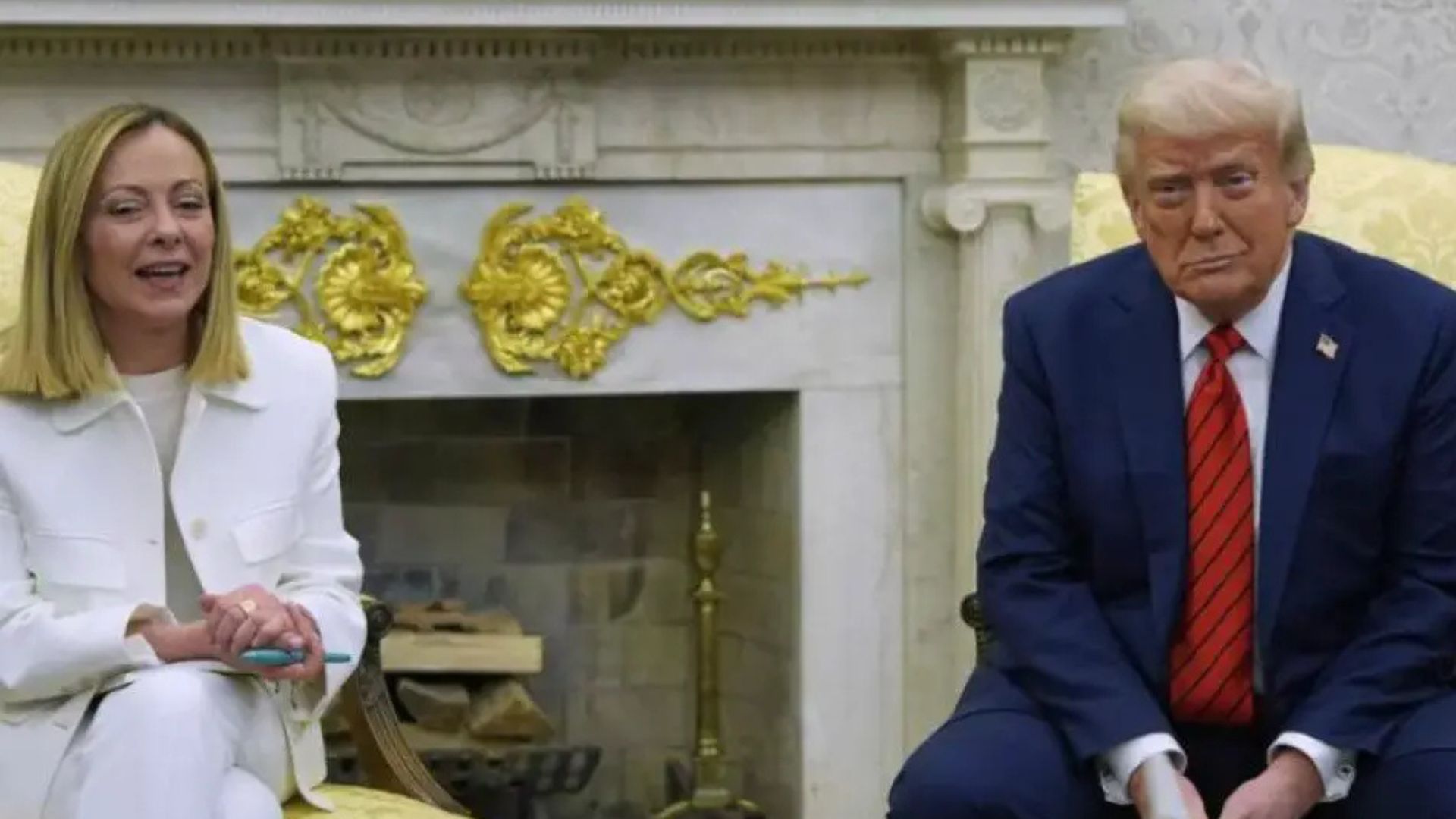

U.S. President Donald Trump, during his meeting with Italian Prime Minister Giorgia Meloni at the White House on Thursday, said he expected a fair trade agreement between the United States and the European Union. His statement came after he decided to pause a set of controversial tariffs he had introduced earlier this year.
Trump Pauses Tariffs, Signals Willingness to Negotiate
In a surprising move, Trump announced a 90-day suspension of the reciprocal tariffs that he had imposed on what he called "Liberation Day." These tariffs, which mainly targeted European goods, had created tension between the U.S. and its European allies. Trump reportedly said that the EU now showed a strong interest in negotiating, and he felt confident that both sides would reach a deal. However, he stressed that the deal must be fair and in America's interest.
He assured that a trade agreement would happen “100 per cent” and added that the EU wanted it “very much.” Trump emphasized that the U.S. would not settle for anything less than a balanced agreement.
EU Has Faced Sharp Criticism from Trump
Throughout his political career, Trump has frequently accused the EU of benefiting unfairly from trade with the U.S. and contributing too little to NATO’s defense spending. According to him, the U.S. had carried an unfair share of the burden for decades. The former president has also claimed that European tariffs on American goods were often higher than what the U.S. charged in return.
Despite those criticisms, Trump appeared to adopt a more cooperative tone during Thursday's meeting.
Meloni Stresses Importance of Dialogue
Italian Prime Minister Giorgia Meloni became the first European leader to meet Trump since his tariff announcement. Though she admitted she could not speak on behalf of all 27 EU countries, she believed honest and open talks were necessary. She expressed hope that meaningful negotiations could lead to a mutually beneficial agreement. Meloni also highlighted that Italy valued strong transatlantic relations and was ready to work closely with the U.S. on issues beyond trade, including security and energy.
European Goods Still Under Tariff Pressure
Although Trump paused the new wave of tariffs, existing trade duties remained in place. For instance, many European products, including automobiles and certain agricultural goods, continued to face a 10% import tariff under Trump’s trade policies. This situation has caused concern among European exporters, especially Germany and France, whose carmakers rely heavily on U.S. markets.
According to U.S. Trade Representative data, trade between the U.S. and EU totaled over $900 billion in 2023, making it one of the largest bilateral trade relationships in the world.
What’s Next?
While Trump’s comments marked a softer approach, experts said negotiations could still face hurdles. Trade analysts believe both sides would need to address long-standing issues like digital service taxes, agricultural standards, and industrial subsidies before finalizing any agreement.
Still, Thursday’s meeting signaled a possible thaw in transatlantic trade tensions. If talks move forward, a new U.S.-EU trade deal could reshape economic ties between the two powers ahead of the 2025 U.S. presidential elections.