
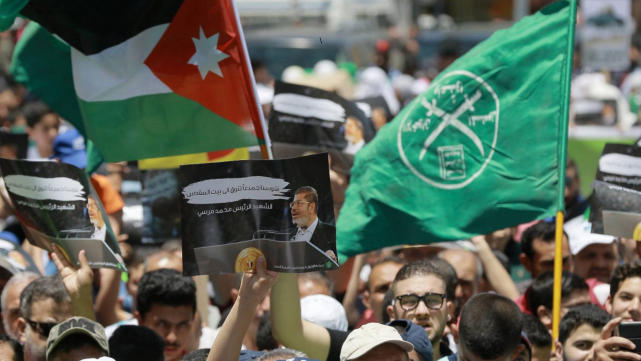

The Jordanian government officially banned the Muslim Brotherhood on April 23, 2025. This major decision was announced by Interior Minister Mazin Al Farrayeh. It marks a significant shift in Jordan’s domestic and regional politics. The ban follows rising tensions, security concerns, and instability. Jordan has also seized the Brotherhood’s property and halted its activities, claiming the group is a threat due to its involvement in activities such as using drones, making explosives, and receiving foreign support.
Jordan Takes Action Against the Brotherhood
The Interior Ministry stated that the country could no longer overlook the Brotherhood’s actions. Minister Al Farrayeh revealed that some members were secretly working against national security. This included using weapons, explosives, and advanced drone technology. Authorities also found a place where explosives were being made, linked to a prominent Brotherhood leader’s son. There were attempts to destroy documents that could connect the group to these activities.
Years of Rising Tensions
The decision to ban the Brotherhood did not happen suddenly. The group has been active in Jordan since the 1940s. In the past, it was allowed to operate because it supported the monarchy and shared conservative values. However, in recent years, the Jordanian government viewed the Brotherhood as a threat to national peace and stability. The government took several steps to limit the group’s power. In 2016, it shut down the Brotherhood’s main office in Amman. In 2020, Jordan’s top court ruled to dissolve the group for failing to register as a legal organization. Despite this, the Brotherhood’s political arm, the Islamic Action Front (IAF), continued to operate.
Escalating Threat Leads to Ban
The situation worsened in recent months. The Washington Institute reported that 16 Brotherhood members were arrested for possessing explosives and building drones. Two of the leaders arrested admitted to receiving financial support from foreign groups, including Hezbollah and Hamas. These revelations showed that the Brotherhood was involved in highly dangerous activities that the Jordanian government could no longer tolerate.
Brotherhood's Shift Toward Radicalism
Though the Brotherhood claimed to oppose violence for years, it has recently been linked to militant actions. Jordanian officials believed that some members were secretly involved in violent activities, even as the group publicly maintained a moderate image. This year, weapons found in Jordan were connected to Brotherhood-affiliated groups that support Hamas. The Brotherhood’s connection to Hamas is concerning for Jordan, especially since it often organizes protests featuring Hamas flags. These protests sometimes lead to clashes with the police, further raising tensions.
Concerns Over Iran's Influence
Jordan is particularly worried about the possible links between the Brotherhood and Iran. In recent years, Iran and its allies, such as Hezbollah and Hamas, have been smuggling weapons and spreading their influence. Jordan’s intelligence services uncovered plans to build drones and rockets, suggesting Iran’s involvement. This fits into Iran’s broader strategy to surround Israel with threats and weaken pro-Western governments like Jordan’s.
US Influence and Tensions
The decision to ban the Brotherhood also relates to Jordan’s relationship with the United States, especially during Donald Trump’s presidency. Trump’s plan to resettle Palestinian refugees in Jordan caused great concern in the country. Jordan already hosts millions of Palestinian refugees and strongly opposed the idea. The Brotherhood took advantage of public anger over this issue, organizing protests against the government. As tensions with Israel increased, many Jordanians became more critical of the government’s ties to the US and Israel.
Future of the Islamic Action Front (IAF)
The ban raises questions about the future of the IAF, the Brotherhood’s political wing. While the IAF is legally registered as a separate entity, it shares many members and ideas with the Brotherhood. This makes it unclear whether the IAF will be allowed to continue operating. The IAF performed strongly in the 2024 elections, surprising Jordan’s intelligence services. The group gained support due to dissatisfaction with Gaza, corruption, and high unemployment.
Political Climate in Jordan
Jordan’s political climate is increasingly shaped by the ongoing Gaza conflict. Over half of Jordan’s population is of Palestinian origin, and many feel a deep connection to the events in Gaza. King Abdullah has tried to balance condemning Israeli attacks while cooperating with Israel on security matters. However, public anger is mounting. Many Jordanians feel their leaders aren’t doing enough to protect Palestinian rights or address the violence.
Conflict with the Monarchy
The Brotherhood’s growing radicalism and foreign connections have led to direct conflict with Jordan’s security forces. King Abdullah publicly condemned actors who were “receiving orders from abroad,” referring to the Brotherhood. This marks a sharp shift from the Brotherhood’s role as a political adversary to a national security threat. This situation echoes Jordan’s 1970 Black September conflict, where forces clashed with Palestinian factions challenging the monarchy’s authority.
The Future of Jordan’s Stability
Jordan’s ban on the Muslim Brotherhood is more than just a security measure; it is a clear political statement. Internally, it could further strain tensions in a country already dealing with economic hardship and war-related trauma. Externally, it sends a strong message to Iran, Hamas, and the US that Jordan will not tolerate destabilization or movements with ties to terrorism.
Moving forward, the Brotherhood’s next steps will determine its future—whether it fights back politically or quietly reorganizes. For Jordan, the path ahead is equally uncertain. A harsh crackdown could spark backlash, while leniency might invite further defiance. Regardless of the outcome, Jordan’s era of peaceful coexistence with the Brotherhood seems to be over.