
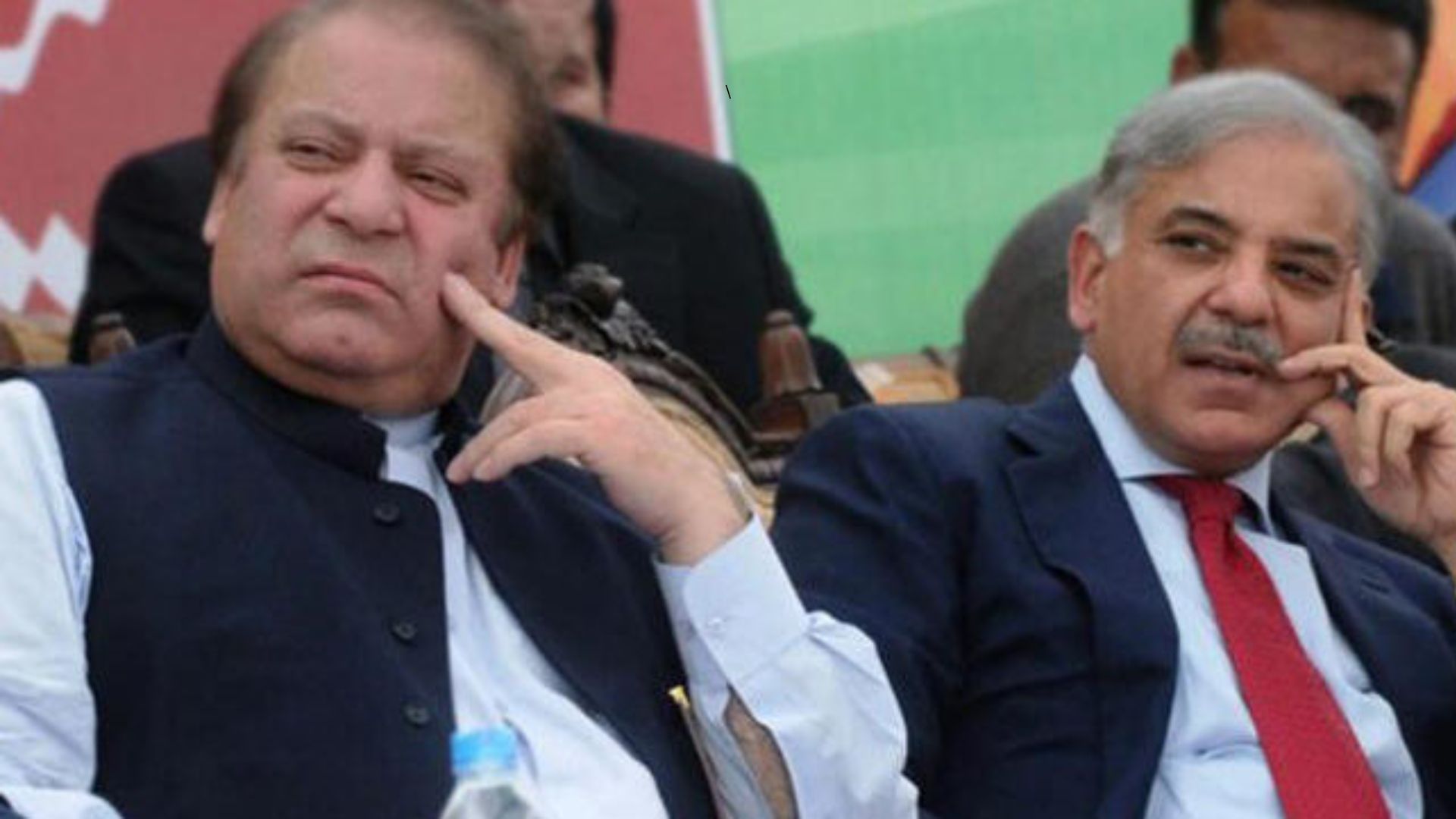

India and Pakistan have long alternated between peace talks and violent confrontations. A central figure in this cycle is the Sharif brothers—Nawaz and Shehbaz Sharif. Over their collective twelve years in power, they presented themselves as advocates for peace, only to betray those efforts with acts of violence. While they claimed to seek peaceful relations with India, their actions often said otherwise. This article explores their role in perpetuating conflict, despite claims of peace.
Nawaz Sharif’s Broken Promise of 1999
In 1999, Nawaz Sharif, Pakistan’s Prime Minister at the time, made a bold move toward peace by inviting Indian Prime Minister Atal Bihari Vajpayee to Lahore. This visit led to the Lahore Declaration, which symbolized hope for better relations. However, just weeks later, Pakistani forces, under General Pervez Musharraf’s orders, launched the Kargil War—betraying the promises made during the meeting.
Nawaz Sharif claimed he was unaware of the military’s actions, blaming the military for acting without his consent. However, this raised serious doubts. If he truly didn't know, it exposed his weakness. If he was involved, it meant he had been complicit in the betrayal. Either way, India’s trust was shattered, and lives were lost on both sides.
Modi’s Lahore Visit and the Pathankot Attack
In 2015, Indian Prime Minister Narendra Modi made a surprise visit to Lahore to meet Nawaz Sharif. This goodwill gesture aimed to improve relations. However, shortly after, militants attacked the Pathankot Air Force base, with links to Pakistan-based terror group Jaish-e-Mohammed.
Though Nawaz Sharif condemned the attack, it was clear that the same terror networks operating during Kargil were still active. This attack reinforced the troubling pattern—peace talks were followed by violence, revealing deep-rooted issues in Pakistan’s approach to peace with India.
The Shift After the Uri Attack: India’s Response
In 2016, the Uri attack marked a turning point in India’s policy toward cross-border terrorism. Militants attacked an Indian Army base in Jammu and Kashmir, killing 19 soldiers. The attack was traced to Pakistan-based groups. India responded with surgical strikes across the Line of Control (LoC), targeting terrorist camps in Pakistan-administered Kashmir.
This response signaled a shift. India no longer saw Pakistan’s civilian government and military as separate entities. The Sharif government’s failure to curb terrorism was now seen as a deliberate choice, not an inability to control rogue elements.
Shehbaz Sharif: Continued Violence and Hostility
When Shehbaz Sharif became Prime Minister in 2022, Pakistan’s approach toward India showed little change. Violence against India escalated under his leadership.
In January 2023, militants attacked Hindu homes in Rajouri, Jammu and Kashmir, targeting innocent civilians. The Resistance Front (TRF), suspected to have links to Pakistan, claimed responsibility. This attack demonstrated an increase in militancy with cross-border support.
In June 2024, militants armed with American-made M4 guns ambushed pilgrims in Reasi, Jammu and Kashmir. The TRF initially claimed responsibility, but later withdrew its statement. Despite this, Indian intelligence pointed to state support behind the attack.
In April 2025, militants attacked tourists in Pahalgam’s Baisaran Valley, killing 28 people. The TRF justified the attack, claiming it was a response to “demographic changes.” Indian officials condemned the attack as an attempt to internationalize the Kashmir issue.
Diplomacy as a Tool for Deception
Despite their public assertions of peace, the Sharif brothers' actions towards India have been anything but peaceful. They maintained close ties with Pakistan’s military establishment, which supported anti-India terrorist groups. Meanwhile, the Sharifs used diplomacy to deflect international pressure and deny Pakistan’s involvement in terrorism.
This partnership between the civilian government and the military suggests that Pakistan’s foreign policy is not divided. Instead, it is carefully coordinated. While the military provided resources for terrorism, the Sharifs offered diplomatic cover.
The Myth of Civil-Military Tension in Pakistan
Many international discussions suggest that Pakistan’s civilian government, represented by the Sharifs, is at odds with the military. This narrative assumes that the civilian leadership is often undermined by the military’s actions. However, in the case of the Sharif brothers, this narrative doesn’t hold.
Their policies regarding India and Kashmir showed a shared goal between the Sharifs and the military: opposing Indian sovereignty over Kashmir. The military provided the infrastructure for terrorism, while the Sharifs gave diplomatic cover. This cooperation between the civilian government and the military makes the idea of a civil-military divide ineffective in explaining Pakistan’s stance toward India.
Diplomatic Deception: A Strategy for Manipulation
The Sharif brothers used diplomacy as a tool for manipulation. Every peace effort they initiated was followed by an attack. From Kargil to Pathankot, and from Uri to Pahalgam, the pattern was clear. Peace talks were used to distract from ongoing militant activities. The Sharifs never truly aimed to resolve conflicts. Instead, they used diplomacy to prepare for more violence.
Twelve Years of Missed Opportunities for Peace
Over the combined twelve years of Nawaz and Shehbaz Sharif’s rule, there was no progress toward peace. Instead, their governments continued violence and missed opportunities. They failed to dismantle terror networks. These networks evolved under new names like the TRF and the People’s Anti-Fascist Front, but their objectives remained unchanged.
India learned not to trust the Sharifs. The belief that civilian governments in Pakistan would act differently has given way to skepticism. The attacks on Indian soil, including those in Pathankot, Uri, Rajouri, Reasi, and Pahalgam, serve as grim reminders of this painful lesson.
Conclusion: No More Illusions
India must now abandon any illusions that the Sharif brothers were ever serious about peace. Their actions reveal they were not peacemakers, but part of a strategy that used diplomacy to mask ongoing hostilities.
As the saying goes, “The blood that has soaked Indian soil over the years has come not just from the barrels of terrorist guns but from the boardrooms of Pakistani power, where monsters masquerade as moderates and every olive branch hides a blade.”
India can no longer afford to be deceived by false gestures of peace. It must learn from the past and stay vigilant in its dealings with Pakistan, especially under the leadership of the Sharif brothers.