
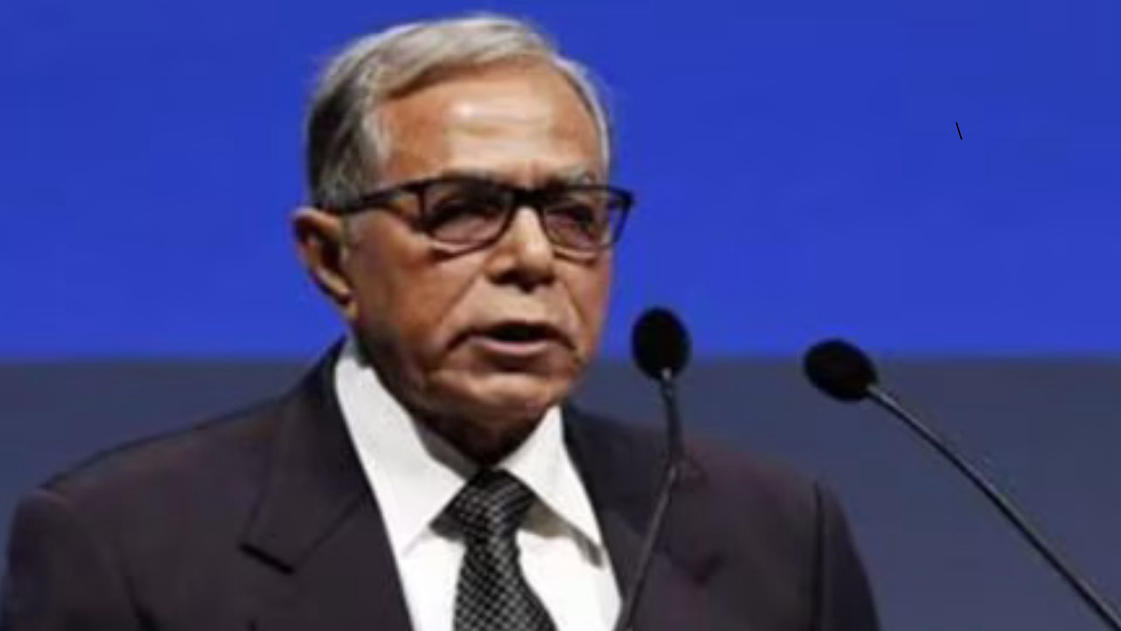

Bangladesh is facing increasing political chaos as students express outrage over the unexpected and dramatic escape of former President Mohammad Abdul Hamid. The interim government, led by Nobel laureate Muhammad Yunus, is under pressure after Hamid quietly fled the country last week, allegedly to avoid legal action over his role in past violence against protestors.
The Midnight Escape
On May 8, Hamid reportedly left Bangladesh during the early morning hours in an unusual fashion. Dressed in a traditional lungi and using a wheelchair, he boarded a Thai Airways flight from Hazrat Shahjalal International Airport. He was accompanied by his younger son Riad Ahmed and his brother-in-law Naushad Khan. His flight landed in Bangkok around 6:15 a.m. local time.
Hamid claimed he was traveling for medical treatment. However, critics argue that his sudden departure was an attempt to avoid being prosecuted in Bangladesh.
Long Political Career
Mohammad Abdul Hamid’s political journey began in the 1950s, and by 1969 he had joined the Awami League. In 1970, he became a member of parliament from the Mymensingh-18 constituency. Over time, he became a well-known figure for his simple lifestyle and humorous speeches. Hamid is also the only president in Bangladesh’s history to complete two consecutive five-year terms, serving from 2013 to 2023.
However, his legacy took a sharp turn after former Prime Minister Sheikh Hasina was removed from office in August 2024. Hamid was later accused in a murder case in Kishoreganj. The case also names Sheikh Hasina, her sister Sheikh Rehana, her son Sajeeb Wazed Joy, and daughter Saima Wazed Putul.
Accusations and Investigations
Hamid is also being investigated for his alleged involvement in violent actions during the student-led protests in 2024. Earlier this year, protesters demolished his home during what was called the "Bulldozer Programme," in which several properties linked to former leaders, including the Dhanmondi 32 museum of Sheikh Mujibur Rahman, were destroyed.
Public Backlash
After Hamid’s escape, several political and student groups questioned how he was allowed to leave. A group called Students Against Discrimination (SAD), which led previous protests, demanded answers within 24 hours.
Nahid Islam, who leads the National Citizens Party, expressed his frustration on Facebook: “The illegal fascist government’s president has been allowed to flee before our eyes. Our trust in the authorities’ pledge to deliver justice is now in doubt.”
Another group, Gana Adhikar Parishad, gave the government 48 hours to bring Hamid back. In the meantime, activists protested outside Acting Prime Minister Muhammad Yunus’ residence, calling for a permanent ban on the former ruling Awami League.
Government Response
To address the growing public anger, the interim administration set up a high-level investigation team. The committee is led by Education Adviser Prof C R Abrar, with other members including Environment Adviser Syeda Rizwana Hasan and Labour Adviser Brigadier General (Retd) M Sakhawat Hossain. They have been asked to submit a report within 15 days.
Home Affairs Adviser Mohammad Jahangir Alam Chowdhury said he would resign if he fails to find out who helped Hamid escape.
Additionally, three officials — including a police superintendent at the airport, a Special Branch officer, and the lead investigator in Hamid’s case — have been suspended pending further inquiry.
According to a report from Netra News, Bangladesh’s National Security Intelligence (NSI) and the Directorate-General of Forces Intelligence (DGFI) reportedly cleared Hamid for international travel.
Pattern of Escapes
Hamid’s escape is not an isolated incident. Since Sheikh Hasina’s removal from power, many leaders from her Awami League party have tried to flee the country. In April, Information Adviser Mahfuj Alam stated that over 100,000 party members had crossed into India.
On August 13, Hasina’s former law minister Anisul Huq and adviser Salman F Rahman allegedly tried to flee Dhaka by boat disguised as villagers. Locals recognized them and turned them over to the police. Both were arrested for their connection to the deaths of two students during the protests.