
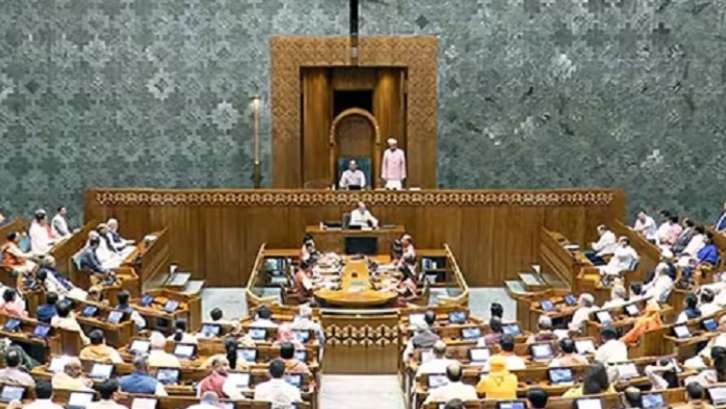

A crucial three-day special session of Parliament starts on April 16. The Centre is preparing to introduce key constitutional changes that could reshape India’s electoral structure.
The government plans to bring multiple important Bills during this session. These include the Constitution (One Hundred and Thirty-First Amendment) Bill, 2026, and the Delimitation Bill, 2026. Law Minister Arjun Ram Meghwal will introduce both. Meanwhile, Home Minister Amit Shah will present the Union Territories Laws (Amendment) Bill, 2026.
Plan to Pass Key Bills Together
The government is also expected to take a procedural step to fast-track approvals. Meghwal may move a proposal in the Lok Sabha to suspend Rule 66. This will allow the women’s reservation amendment and the Delimitation Bill to be passed together.
This move suggests that the Centre wants to link electoral boundary changes with the implementation of women’s reservation in Parliament.
Proposal to Expand Lok Sabha Strength
According to the government’s plan, the strength of the Lok Sabha could increase significantly. The number of seats may rise from 543 to around 850.
A large portion of these additional seats is likely to go to northern states. The proposal also includes implementing the long-pending one-third reservation for women in Parliament, which was approved in 2023.
Under the new system, reserved seats for women will rotate across constituencies.
Delimitation Likely to Trigger Political Clash
The session is expected to see intense political debate. The delimitation exercise has become the main point of conflict. Opposition parties fear that the changes will favour northern states while reducing representation for southern and some northeastern regions.
Leader of Opposition Rahul Gandhi strongly criticised the plan. He said it is a “dangerous plan” and warned, “One of the BJP's dangerous plans is to "gerrymander' all Lok Sabha seats to its advantage for the 2029 elections.”
He also alleged, “The proposed Bills remove all Constitutional safeguards on delimitation, giving full power to the Delimitation Commission, which the govt itself will appoint and direct.”
Concerns Over Past Delimitation Exercises
Rahul Gandhi further accused the ruling party of misusing delimitation in the past. He said, “We have seen how the BJP does this - it hijacked delimitation in Assam and Jammu and Kashmir, where it split up anti-BJP regions and communities for electoral advantage.”
He stressed that any delimitation exercise should be transparent and involve proper consultation with all stakeholders.
Southern States Step Up Opposition
Leaders from southern states have also raised strong objections. Tamil Nadu Chief Minister MK Stalin has called for a large-scale protest across the state.
In a public appeal, he said, “Let the black flag fly tomorrow in the homes, streets, and shops of Tamil Nadu! Let it stand as our symbols of resistance at the doorsteps! This is not the struggle of an individual movement; it is the struggle of Tamil Nadu!”
This highlights growing resistance from the South over the proposed changes.
Core Issue: North-South Divide
The main concern revolves around the possible imbalance between regions. Northern states, which have seen higher population growth, are expected to gain more seats.
In contrast, southern states — which contribute around 30–31% of India’s GDP — may see their share of seats reduced due to slower population growth.
Opposition parties say they are not against women’s reservation. However, they oppose linking it with delimitation. They argue that the quota for women can be implemented independently without altering the balance of representation.
Government Defends the Proposal
The government has defended its plan. Finance Minister Nirmala Sitharaman said that the Delimitation Commission will consult all political parties before making decisions.
The Centre has also argued that expanding the Lok Sabha is necessary. It says the move will reflect India’s growing population and ensure better representation.
According to sources, the proposal may allocate around 815 seats to states and 35 to Union Territories.
What Lies Ahead
As the session begins, the proposed changes are set to spark intense debate in Parliament and beyond. The outcome could have a long-term impact on India’s political landscape, especially ahead of future elections.