
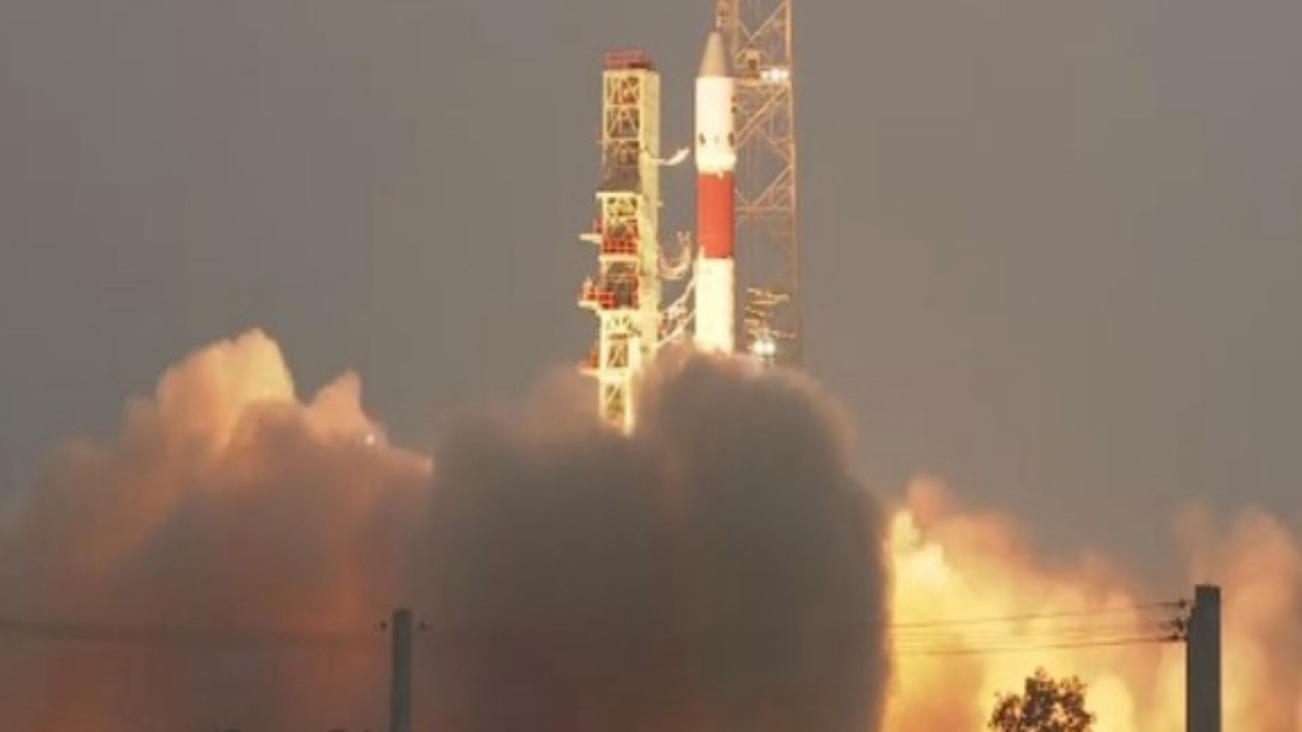

ISRO successfully completed its 101st mission. It launched the EOS-09 satellite using the PSLV-C61 rocket on Sunday. The launch occurred at 5:59 AM from the First Launch Pad at the Satish Dhawan Space Centre (SDSC), SHAR, in Sriharikota. ISRO posted on social media, "Liftoff of PSLV-C61 at 5:59 am IST from ISRO's First Launch Pad at SHAR"
🚨 Liftoff of PSLV-C61 at 5:59 am IST from ISRO's First Launch Pad at SHAR 🚀#ISRO #PSLVC61 pic.twitter.com/ZolslbNd5c
— ISRO Spaceflight (@ISROSpaceflight) May 18, 2025
Advanced Earth Observation Satellite
EOS-09 is a radar imaging satellite. Notably, it can see through clouds and take images at night. As a result, it strengthens India’s surveillance and remote sensing abilities.
Rocket Details
The PSLV-C61 rocket stood 44.5 meters tall. It weighed 321 tonnes at liftoff. Additionally, it carried the 1,696.24 kg EOS-09 satellite. This marked the 63rd PSLV mission overall and the 27th using its XL version, which supports heavier payloads.
Satellite Features and Purpose
ISRO built EOS-09 using the design of RISAT-1. It has a Synthetic Aperture Radar (SAR), allowing it to work in all weather conditions. Therefore, the satellite helps in farming, forest checks, soil analysis, and disaster response. Moreover, it follows EOS-04 and improves how often India can capture images and access data.
Precise Flight and Deployment
The PSLV-C61 completed a well-planned four-stage sequence. After about 17.6 minutes, the rocket successfully released the satellite into orbit. Afterwards, ISRO released the remaining fuel from the final stage to avoid creating space debris.
Steps to Reduce Space Junk
Importantly, ISRO follows responsible space practices. It will lower the rocket’s upper stage orbit using Orbit Change Thrusters (OCT). As a result, the stage will re-enter the atmosphere and burn up. This helps reduce long-term space debris.
End-of-Mission Plan
ISRO also designed EOS-09 to avoid leaving junk in space. The satellite has enough fuel to lower itself after its mission ends. Hence, it will fall to an orbit that ensures it burns up within two years.
Long-Term Mission Support
EOS-09 will serve for five years. It uses 2.4 kW of power. Thus, it will provide strong data for India’s earth observation efforts.