
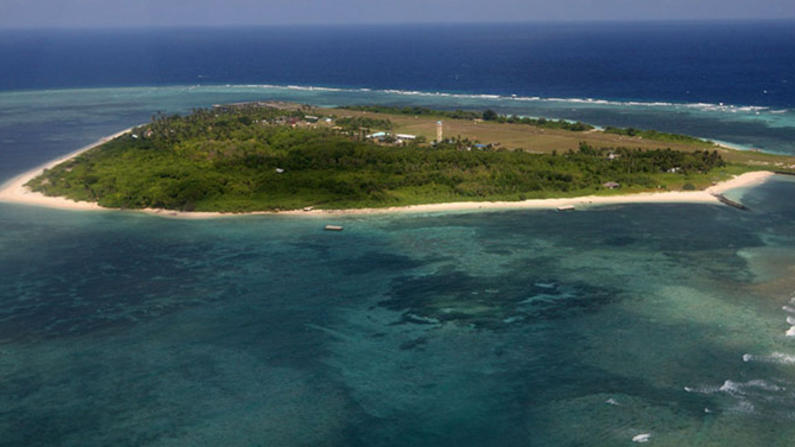

Pagasa Island, also known as Thitu, lies in the contested waters of the South China Sea. Although it covers just 37 hectares, it plays a major role in the Philippines’ territorial claims. Only around 300 people live here in modest wooden homes. They rely mostly on fishing and a few crops grown in the sandy soil.
However, Pagasa is far from peaceful. Just west of the island, dozens of Chinese ships are always present. These include vessels from China’s navy, coast guard, and a so-called maritime militia. These large fishing boats are repurposed to assert Chinese control over the region.
A Sea Under Watch
China has been aggressively expanding in the South China Sea for over a decade. It has occupied submerged reefs and built massive air bases on them. Hundreds of ships now patrol this vital waterway, which is key to trade from Chinese ports.
Most Southeast Asian countries have avoided directly challenging China’s actions. Only Vietnam and the Philippines have stood firm. Despite their smaller militaries, both nations continue to guard a few islands and reefs.
Pagasa stands out among them. It is not just a piece of rock or reef. It is real land with Filipino civilians living on it. This gives the Philippines a stronger legal claim, especially under international maritime law.
“Pagasa is very important to us,” said Jonathan Malaya, Assistant Director-General of the Philippines’ National Security Council.
“It has a runway. It can support life – it has a resident Filipino community, and fishermen living there. And given the size of the island, one of the few that did not need reclaiming from the sea, under international law it generates its own territorial sea of 12 nautical miles. So it is, in a way, a linchpin for the Philippine presence.”
Hard to Reach, But Strategically Vital
Getting to Pagasa isn't easy. From Palawan, it takes two to three days by boat, or about an hour by air. However, bad weather often delays travel.
Two years ago, the island’s airstrip was upgraded and extended. Now, large C-130 military planes can land. The island has seen progress. A new hangar now shelters aircraft. Workers are also building a control tower and dredging a small harbor for bigger ships. The marines stationed on Pagasa helped drive reporters around the tiny island, though it hardly required a vehicle.
A Long History
In 1971, the Philippines took control of Pagasa after a typhoon forced Taiwan to abandon it. Seven years later, the Philippines officially annexed the island. To strengthen its hold, the government encouraged Filipino families to settle there. The residents get monthly supplies of food and water. Electricity and phone signals only arrived four years ago.
Fishing remains the only steady job apart from government work. Yet even that has become risky.
Tensions in the Water
Larry Hugo, a local fisherman, has lived on Pagasa for 16 years. He has documented China’s growing presence in the area. He filmed the transformation of Subi Reef, just 32 km from Pagasa, into a military airbase.
In 2021, one of his videos showed a Chinese coastguard ship nearly colliding with his small boat. It gained wide attention. But since then, Larry has been forced to fish closer to shore.
“Their ships are huge compared to ours. They threaten us, coming close and sounding their horns to chase us away. They really scare us. So I no longer go to my old fishing grounds further away. I now have to fish close to the island, but the fish stocks here are falling, and it is much harder to fill our tubs like we used to,” he explained.
Life In Isolation
Realyn Limbo had been teaching on Pagasa Island for a decade. She had seen the island’s lone school transform from a simple hut into a functioning educational institution with more than 100 students, ranging from toddlers to teenagers.
She considered the island a paradise. According to her, the residents had all their basic needs met. The island remained clean and peaceful, offering children the freedom to play basketball or go swimming after school. She believed there was no need for shopping malls or material possessions in such a place.
Pagasa maintained a calm, slow-paced lifestyle. Around midday, most residents rested in hammocks or sat outside their homes. One of them, Melania Alojado, who served as a village health worker, was once seen rocking a baby to sleep.
She admitted that the biggest challenge came when someone—especially a child—fell seriously ill. In such cases, the patient needed to be evacuated to the mainland. However, as she was not a licensed nurse, she could not handle complex medical procedures. She added that flights were not always available, and bad weather often made travel impossible. When such situations occurred, they did their best to care for the sick locally.
Despite these hardships, Melania appreciated the simplicity of island life. She pointed out that they were free from many daily stresses. They received subsidised food and could also grow some of their own. She felt that life in the city required money for everything, unlike on the island.
However, space remained limited. Although a few new homes were being built, the island could not accommodate many more people. As a result, most young adults left after finishing school in search of better opportunities.
Even with its white-sand beaches and quiet surroundings, Pagasa gave the impression of a military outpost standing firm amid Chinese territorial pressure.
A Philippine pilot shared his routine experiences while flying near Subi Reef. He revealed that Chinese personnel at the Subi airbase frequently challenged their aircraft as they neared Pagasa, claiming the planes were entering Chinese territory without permission. However, he stated that they always responded by asserting that the area belonged to the Philippines. According to him, such exchanges had become routine.
Standing Firm
Jonathan Malaya confirmed that the Philippines has been filing weekly diplomatic protests with the Chinese Embassy regarding its ships near Pagasa. This marks a clear change from former President Rodrigo Duterte’s approach, which aimed to avoid conflict and attract Chinese investments.
“I think we will get more respect from China if we hold our ground, and show them we can play this game as well. But the problem of democracies like the Philippines is policies can change with new administrations. China does not have that problem,” he said.