
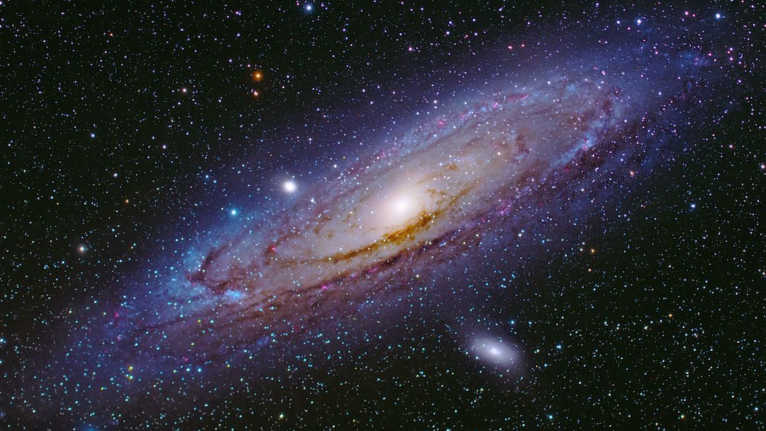

Astronomers have shared a surprising update. The Milky Way may not collide with the Andromeda galaxy after all. Previously, scientists believed a collision was certain. However, new research suggests there’s only a 50-50 chance of such an event in the next 10 billion years.
“As it stands, proclamations of the impending demise of our galaxy seem greatly exaggerated,” wrote the Finnish-led research team in Nature Astronomy.
The Timing Makes It Irrelevant for Humanity
While the update sounds promising, it won’t change much for humanity. By then, the sun will already be dead.
Lead author Till Sawala from the University of Helsinki said, “We likely won’t live to see the benefit.”
Currently, the sun is over 4.5 billion years old. Scientists expect it to die in the next 5 billion years. Before that, it will expand and possibly engulf Mercury, Venus, and Earth. Even if Earth escapes, it will turn into a dry, lifeless rock.
New Data Led to the Update
To understand this better, scientists used fresh data from NASA’s Hubble Space Telescope and the European Space Agency’s Gaia spacecraft.
Previously, astronomers thought the Milky Way and Andromeda would merge into a new galaxy called Milkomeda. Some believed this would happen in just 5 billion years.
Now, using improved simulations, scientists found more complex influences at play.
Neighboring Galaxies Impact the Outcome
The research team factored in the gravitational pull from nearby galaxies. For instance, they found that the Triangulum galaxy increases the chance of a collision. Meanwhile, the Large Magellanic Cloud reduces it.
As a result, the study concluded there’s a 50% chance the Milky Way will collide with Andromeda in the next 10 billion years.
Possible Outcomes: Collision or Flyby
According to Raja GuhaThakurta from the University of California, Santa Cruz, who was not part of the study, “The fate of our Milky Way galaxy is a subject of broad interest — not just to astronomers.”
If a collision occurs, our galaxy will lose its current shape. It will become a large cloud of stars. On the other hand, if Andromeda only passes nearby, the Milky Way could stay mostly intact.
The Sun’s Fate is Sealed
Meanwhile, the sun’s future remains predictable. “While our galaxy’s fate remains highly uncertain, the sun’s future is pretty much sealed,” said Sawala.
He added, “Of course, there is also a very significant chance that humanity will bring an end to itself still much before that, without any need for astrophysical help.”