
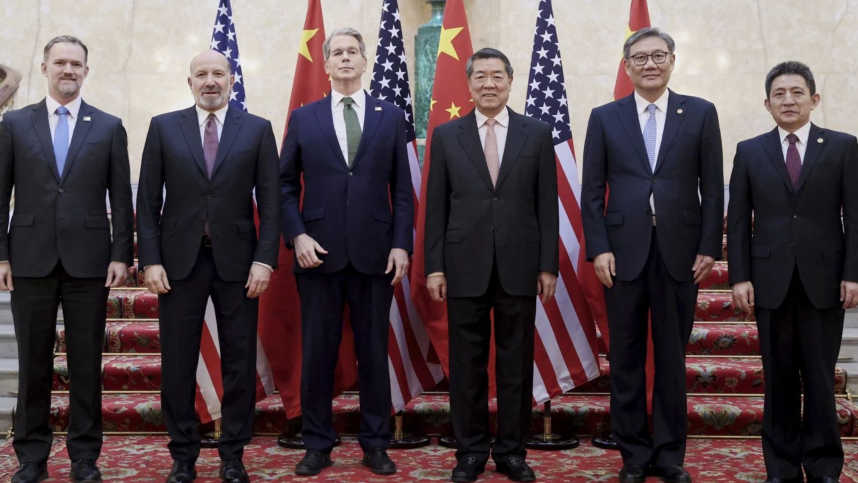

The United States and China held two days of trade talks in London. China’s Vice Premier He Lifeng led the Chinese team. On the US side, Treasury Secretary Scott Bessent and Commerce Secretary Howard Lutnick represented Washington.
Framework Agreement Announced
As a result of the talks, both countries agreed on a preliminary deal. “We have reached a framework to implement the Geneva consensus. Once the presidents approve it, we will then seek to implement it,” Lutnick said.
Focus Shifts to Rare Earths
Importantly, the negotiators addressed rare earth minerals—materials used in electric vehicle batteries and advanced electronics. US officials said they “absolutely expect” the rare earth issue to be resolved under this new framework. According to Lutnick, “We do absolutely expect that the topic of rare Earth minerals and magnets with respect to the United States of America will be resolved in this framework implementation.”
No New Meetings Yet, But Channels Open
Despite this progress, no new meetings are currently planned. However, Greer, a US official, said both nations will keep communication lines open. “We’ll talk whenever we want to,” he noted.
Export Controls Remain Sensitive
Meanwhile, export controls continue to be a sticking point. Greer said, “In eight years of negotiating with the Chinese, I’ve never had a meeting where they didn’t want to talk about export controls.”
Tensions Have Deep Roots
Previously, tensions between the two nations had risen sharply. Under former President Donald Trump, both countries engaged in a trade war. They imposed steep tariffs on each other’s exports. US tariffs rose to 145%, while China responded with 125%.
Geneva Deal Had Reduced Tariffs
Later, the Geneva consensus helped cool things down. Under that agreement, the US dropped tariffs to 30%, and China reduced theirs to 10%. Still, Trump later accused China of violating the deal—especially over its exports of rare earth minerals.