
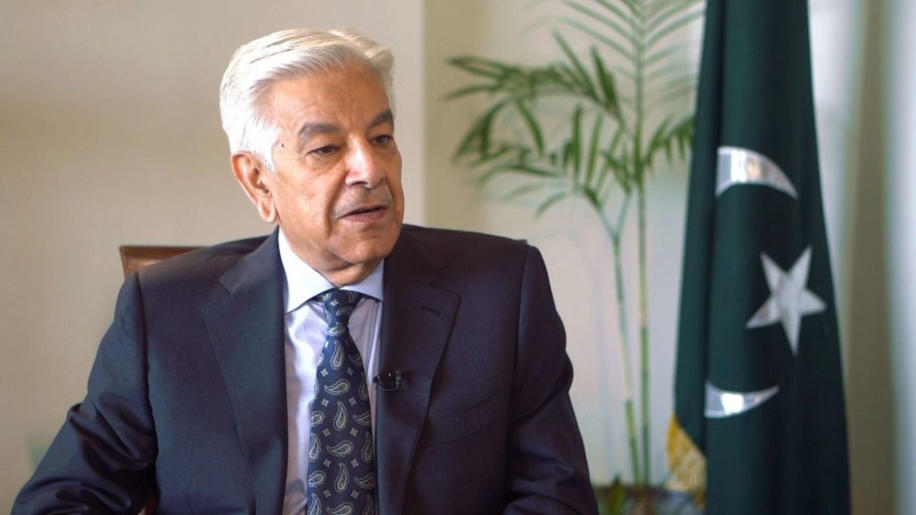

A top Iranian official recently claimed that Pakistan would retaliate with a nuclear strike if Israel ever used nuclear weapons against Iran. However, Pakistan firmly denied this statement, creating confusion during an already tense situation in the Middle East.
Iranian Commander Makes Bold Claim
On Iranian state television, General Mohsen Rezaei, a senior IRGC commander and member of Iran’s National Security Council, made a startling claim.
He stated, “Pakistan has told us that if Israel uses a nuclear bomb on Iran, then Pakistan will also attack Israel with a nuclear bomb.”
This declaration came while Iran and Israel were exchanging missile strikes, increasing fears of a broader regional conflict.
Pakistan Quickly Refutes the Statement
However, in response, Pakistan’s Defence Minister strongly denied making any such commitment.
Despite this denial, Pakistan continued to show political and moral support for Iran. After recent attacks on Tehran, Islamabad pledged to “stand behind Iran.” Moreover, it urged Muslim nations to unite against Israeli aggression.
Islamabad Pushes for Muslim Unity
Just days earlier, on June 14, Defence Minister Khawaja Asif spoke in Pakistan’s National Assembly. He warned that if Muslim countries failed to unite, they could suffer the same fate as Iran and Palestine.
He emphasized, “Israel has targeted Iran, Yemen, and Palestine. If Muslim nations don’t unite now, each will face the same fate.”
In addition, he called on Muslim nations to sever diplomatic ties with Israel. He also urged the Organisation of Islamic Cooperation (OIC) to hold an urgent meeting and formulate a common strategy.
Israel’s Nuclear Silence Continues
Meanwhile, Israel continues to follow its long-standing policy of nuclear ambiguity. It neither confirms nor denies its nuclear capabilities.
Nonetheless, international experts widely believe Israel possesses nuclear weapons. Its policy focuses on deterrence and preventing rivals from developing similar weapons.
Iran Defends Its Nuclear Programme
On the other hand, Iran maintains that its nuclear activities are peaceful. Tehran claims it only uses nuclear technology for energy production and medical research.
Being a signatory of the Non-Proliferation Treaty (NPT), Iran insists it does not seek nuclear weapons.
However, Western countries and the International Atomic Energy Agency (IAEA) continue to express serious doubts. They cite Iran’s high uranium enrichment levels, missile development, and limited transparency. These concerns suggest that Iran’s programme may have military aspects despite its official claims.