
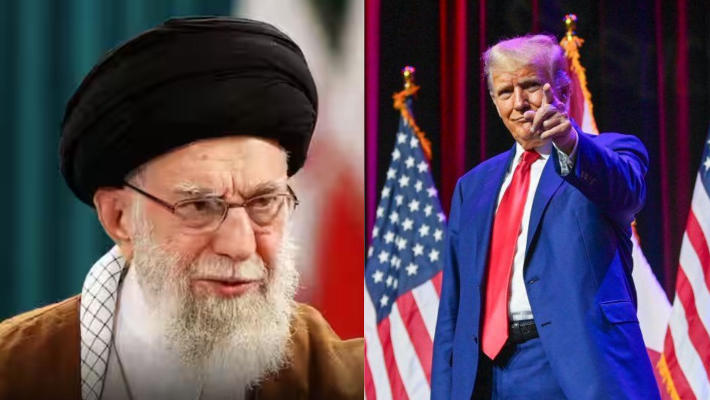

The United States has held private discussions with Iran in recent days to find a way forward on Iran’s controversial nuclear programme, according to a report. These talks took place shortly after the Israel-Iran conflict ended in a fragile truce, brokered by US President Donald Trump with assistance from Qatar. Notably, the US recently entered the conflict by launching strikes on three Iranian nuclear sites, which heightened tensions further.
Proposals Put on the Table
During these behind-the-scenes negotiations, the US reportedly presented multiple proposals to persuade Iran to abandon its nuclear weapons ambitions.
According to CNN, the main offers include:
-
$20–30 billion in foreign investment to help Iran develop a civilian nuclear programme that does not involve uranium enrichment.
-
Partial sanctions relief and access to billions of dollars frozen abroad.
-
A plan for US-backed Gulf countries to help rebuild Iran’s nuclear facilities, replacing enrichment-based sites like Fordow with non-enrichment reactors meant only for peaceful energy use.
However, despite these generous offers, the US remains firm on one condition: “Iran should not have any uranium enrichment capability.”
Five Rounds of Talks So Far
So far, the US and Iran have held five rounds of negotiations on this issue. These talks were disrupted after the recent Israeli military operation.
Still, President Trump has insisted the discussions will continue. “The two sides will meet next week to resume talks,” he said. However, Iran has not yet confirmed whether it will participate.
Trump’s “Carrot” Strategy
President Trump appears to be using a "carrots, not sticks" approach to convince Iran. His aim is to replace Iran’s weapons programme with a peaceful, non-enriching civilian nuclear programme. CNN reported that key aspects of the deal were discussed during a secret meeting led by Steve Witkoff, Trump's Middle East Envoy, along with US Gulf allies.
One US official told CNN that the proposed $20–30 billion investment would not come from the United States directly. Instead, Gulf partners would likely fund the civilian programme.
Bridge Proposal Before Conflict Escalation
Before the talks broke down due to the Israeli offensive, Witkoff had introduced a “bridge proposal.” This temporary plan would have allowed Iran to continue low-level uranium enrichment. In return, a coalition of Arab countries would eventually supply Iran with the low-enriched uranium it needed for peaceful purposes.
Although the truce has eased tensions for now, the future of Iran’s nuclear programme remains uncertain. The US is offering financial incentives and international cooperation, but it continues to oppose any uranium enrichment by Iran.
The world will be watching closely as the next round of talks may resume next week—if Iran agrees to return to the negotiating table.