
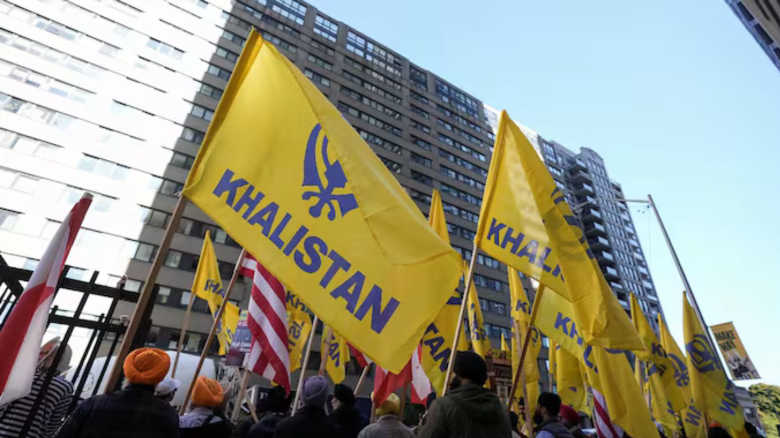

The Canada India Foundation (CIF) and The Alliance to Fight Secessionism and International Khalistani Terrorism hosted a major conference in Woodbridge, Ontario. Themed “United Against Extremism,” the event brought together security officials, journalists, community leaders, and political experts to discuss the rising threat of extremist ideologies in Canada.
Foreign-Backed Extremism Threatens Canadian Values
Speakers at the event warned that radical agendas supported by foreign powers are damaging Canada’s diverse and peaceful society. They said extremist groups are bringing in ideas that divide communities and threaten national security.
The discussion stressed that Canada needs a unified national strategy to deal with radicalization, cross-border crime, and false information campaigns.
Ritesh Malik, who chairs CIF and led the conference, clarified that the event didn’t target any one group. Instead, he said, “The goal was to preserve the peace and values that attracted immigrants to Canada.” He added that many communities now live under constant threat and urged both government officials and security agencies to take firm action.
Remembering the Air India Bombing of 1985
A key focus of the event was the 1985 Air India Flight 182 bombing, which remains Canada’s worst terrorist attack. It killed 329 people, most of them Canadian citizens.
Sanjay Lazar, an aviation expert who lost family members in the attack, described the tragedy as a direct blow to Canadian society. “The attack wasn’t just on a plane—it was an attack on Canadian values,” he said. He also urged the government to build a national memorial and teach this history in schools.
Terror’s Long-Term Impact on Communities
Another session titled “The Human Cost of Terrorism” explored the deep emotional and social impact of terror attacks. Speakers said communities like Indo-Canadians and Jewish Canadians still face threats and hate crimes.
One panelist brought up a recent shooting at a Jewish school and questioned whether it happened due to an intelligence failure or public apathy. They warned that these incidents show how vulnerable peaceful communities in Canada have become.
Multiple Threats Identified
Panelists pointed to several extremist threats Canada faces today. These include Khalistani separatists, Islamist radicals, far-left extremists, and foreign spies who pretend to be human rights activists.
Journalist Danial Bordman criticized Canada’s inaction. He warned that “ISI-backed Canadians, the Muslim Brotherhood, and Khalistani elements” are operating freely. He said the political system is not doing enough but expressed hope that the people attending the event would “push for real change.”
Fellow journalist Wyatt Claypool also spoke out against Canada’s foreign policy. He claimed the government often ignores allies like India and Israel. “Policymakers act like second-year students obsessed with diplomacy,” he said, adding that former PM Stephen Harper had taken threats more seriously than the current leadership.
Indo-Canadian Issues Also Under the Spotlight
Former Health Minister Ujjal Dosanjh praised the conference for highlighting extremism within the Indo-Canadian community. He warned that violent extremism, drug trafficking, and immigration fraud are now interconnected and harming society.
Community member Guneet Singh said the conference rightly treated extremism as a Canadian issue. “Problems like illegal immigration and extremism affect everyone, regardless of origin,” he said.
Media and Policy Criticized
Several speakers criticized the media for ignoring rising extremism and blamed public institutions for staying silent. They pointed out that extremists openly post threats and share images with weapons, yet law enforcement stays passive.
They also raised alarms about Bill 63. According to the panelists, the bill allows hate speech to spread under the disguise of free expression while silencing more balanced voices. They warned that this undermines Canada’s ability to respond to extremist threats.
Calls for Immediate Action
Rather than stop at raising concerns, the speakers demanded real solutions. They called for stronger intelligence sharing, better coordination among police agencies, and tighter immigration checks to stop radical elements from entering Canada.
They also urged Canadian news outlets to stop avoiding difficult topics and report truthfully about internal threats. One speaker said, “The Canadian Charter of Rights should protect peaceful citizens, not violent extremists.” They added that most Canadians deserve to feel safe in their country.
Organizers Plan to Submit Security Recommendations
The event concluded with a promise to draft a full report based on the conference discussions. The report will be sent to the Canadian government and national security agencies.
In his closing remarks, Ritesh Malik emphasized that Canada must protect its core values. “Silence is no longer an option,” he said. He called on Canadians to stand together to safeguard the country for future generations.