
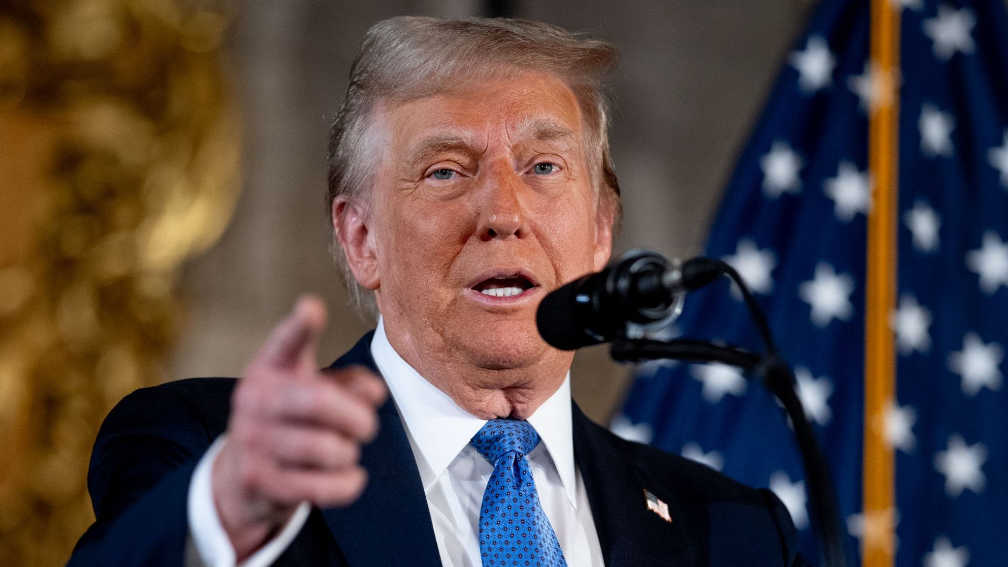

US President Donald Trump said he will not extend the 90-day suspension on new global tariffs beyond July 9. His statement comes even as India extended its trade talks in Washington, hoping to settle key issues before the deadline.
India Stays Longer to Finalize Agreement
Indian and US officials were supposed to conclude in-person trade talks by June 27. However, India extended the discussions by a day in a last effort to secure an interim deal. Bloomberg reported that this extension gave hope for a possible breakthrough.
India wants complete exemption from the 26% reciprocal tariff the US announced on April 2. Although the US suspended the additional tariff for 90 days, the original 10% tariff is still in place. If talks do not end successfully by July 8, India could once again face tariff pressure.
Trump Makes His Stand Clear
In an interview with Fox News, Trump said he does not plan to extend the pause. “I don’t think I’ll need to,” he said. “I could, no big deal.”
He added that letters notifying countries about upcoming tariffs would be sent out soon. “We’ll look at how a country treats us — are they good, are they not so good — some countries we don’t care, we’ll just send a high number out,” Trump told Fox.
He described the tariff notices as saying, “Congratulations, we’re allowing you to shop in the United States of America, you’re going to pay a 25 per cent tariff, or a 35 per cent or a 50 per cent or 10 per cent.”
The Trump administration first announced the higher tariffs on April 2. These duties will take effect unless countries, including India, strike separate trade agreements with the US. Trump noted, “There’s 200 countries, you can’t talk to all of them.” His administration’s goal was to close 90 trade deals in 90 days.
Sticking Points in India-US Talks
The Indian delegation is still resisting several US demands. One major concern is Washington’s push to open India’s agricultural market to genetically modified (GM) crops. India has rejected this, saying it could hurt local farmers.
India is also unwilling to sign any deal unless it includes better access for its exports and relief from existing US tariffs. Bloomberg reported that India has asked for both sectoral access and protection against future tariff hikes.
Despite the roadblocks, Trump said last week that “a very big” trade deal with India could be reached soon.
Why This Deal Matters
India hopes to protect its sensitive sectors while gaining easier access to the US market, which is one of the largest for global exports. For the US, the deal would help reduce its trade deficit, boost American exports, and strengthen ties with India amid ongoing tensions with China.
What the US Wants
The US wants India to open sectors like agriculture, dairy, and energy. It also wants lower tariffs on products such as soybeans, wheat, corn, ethanol, and apples—items that are major US exports to China. Washington is also asking India to allow genetically modified crops in its markets.
India’s Red Lines
India has stood firm on protecting its agriculture and dairy sectors. Officials argue that opening these areas could harm farmers and disrupt the Minimum Support Price (MSP) system. According to earlier reports by TOI, these issues have made the talks more tense at times.
India has also not allowed dairy access in any of its previous free trade agreements.
What India Is Demanding
From the start of talks, India has asked for zero-duty access for several important exports—such as textiles, leather goods, auto parts, pharmaceuticals, and engineering items.
However, US officials have made it clear that the Trump administration cannot offer zero tariffs immediately. India also wants a commitment that the US will not impose new tariffs in the future once a deal is signed.