
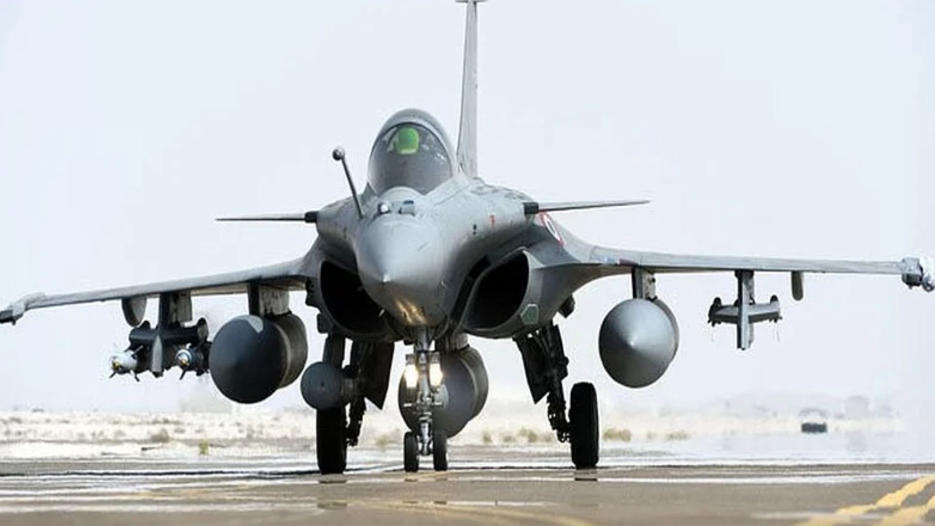

India lost some fighter jets at the start of its recent air conflict with Pakistan because the political leadership had instructed the military to strike only terrorist targets—not Pakistani military sites. This was revealed by Captain Shiv Kumar, India’s Defence Attaché to Indonesia, during a seminar in Jakarta on June 10.
Controversy Follows Jakarta Comments
Kumar’s comments were made in response to a statement by an Indonesian aerospace expert. The expert claimed India lost five fighter jets: three Rafales, one MiG-29, one Sukhoi-30, and a tactical drone during the operation.
Kumar disagreed with the number but admitted to some losses. He said, “I may not agree with him that India lost so many aircraft. But I do agree that we did lose some aircraft, and that happened only because of the constraint given by the political leadership not to attack the military establishments and their air defences.”
Political Leaders Limited Military Response
Kumar emphasized that the government had restricted the armed forces from targeting anything beyond terrorist camps. In his words, “No military installations, no civilian sites… nothing unrelated to terrorists was to be targeted.”
He was speaking at a seminar titled “Analysis of the Pakistan-India Air Battle and Indonesia’s Anticipatory Strategies from the Perspective of Air Power.”
Operation Sindoor Launched After Pahalgam Attack
India launched Operation Sindoor after a deadly terror attack in Pahalgam on April 22. That attack, carried out by Pakistan-backed terrorists, killed 26 people, mostly tourists. The military mission was India’s direct response to that tragedy.
India Changed Strategy After Early Losses
According to Kumar, India changed its tactics after the initial losses. He explained that Indian forces then focused on attacking Pakistan’s military facilities. He said, “After the loss, we changed our tactics and went for their military installations. We first achieved suppression of enemy air defences and destruction of enemy air defences (known as SEAD and DEAD in military parlance), and that’s why all our attacks could easily go through using surface-to-air missiles and surface-to-surface missile.”
He added, “On 8, 9 and 10 May, there was complete air superiority by India.”
Defence Ministry and Embassy Respond
India’s Ministry of Defence declined to comment on Captain Kumar’s remarks. However, the Indian embassy in Jakarta later issued a statement clarifying that his comments were misrepresented.
“The media reports misrepresented the purpose and focus of the presentation,” the embassy said. It added that Kumar had explained the Indian military operates under civilian control, unlike Pakistan’s military, which acts independently, “harbours terror for political gains, and uses it as a tool of state policy.”
The embassy also stated, “The objective of Operation Sindoor was to target terrorist infrastructure, and that India’s response was not meant to escalate the conflict.”
Previous Clarification by General Anil Chauhan
Kumar’s statements followed earlier remarks by India’s Chief of Defence Staff, General Anil Chauhan. Speaking in Singapore on May 31, Chauhan admitted that India lost jets on May 7 due to tactical mistakes.
He explained that those errors were quickly fixed and the Indian Air Force soon returned with more aircraft to carry out deeper precision strikes inside Pakistan. However, the Indian government has not officially commented on the aircraft losses.