
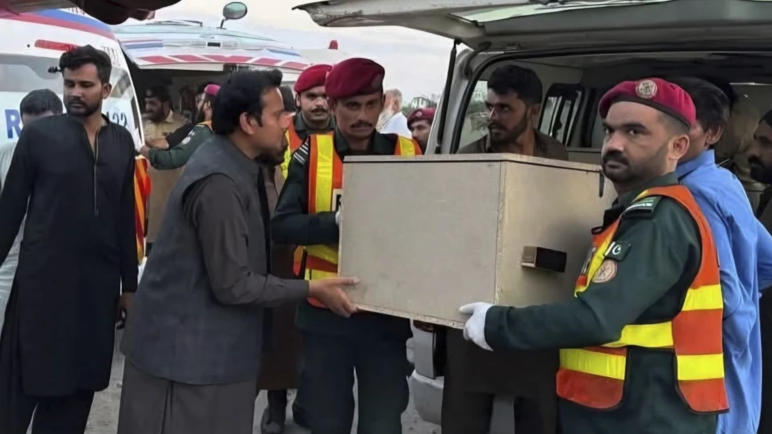

Armed men attacked several buses in Balochistan, a province in southwest Pakistan, and killed nine passengers after abducting them. Officials said the incident happened on Friday, but the abductions occurred on Thursday evening.
According to Shahid Rind, a spokesperson for the Balochistan government, the attackers stopped multiple buses and forced passengers off in different areas.
Another official, Naveed Alam, shared that authorities found the victims' bodies in the mountains after an overnight search operation. The bodies had multiple bullet wounds. So far, no group has taken responsibility for the attack.
Long-Running Conflict in the Region
The Balochistan region has seen many such incidents over the years. Ethnic Baloch separatists have often attacked people from Punjab province, accusing the Pakistani state of exploiting their land.
The Baloch Liberation Army (BLA) is one of the most active militant groups in this region, which borders both Iran and Afghanistan. These militants claim that the central government uses Balochistan's natural resources to fund projects in Punjab, leaving the local population deprived.
Civilians Caught in the Middle
In May, a member of the Baloch Yakjehti Committee (BYC) told Firstpost over the phone that ordinary people in Balochistan are suffering the most. They are stuck between armed militant groups and the Pakistani security forces.
One example is the suicide bombing that took place on March 29 in Mastung. A bomber targeted a political rally led by Sardar Akhtar Mengal and other leaders of the Balochistan National Party (BNP). The rally was moving from Wadh to Quetta.
Although no one died in the blast, it raised serious concerns. The Express Tribune reported that the militant group Daesh (Islamic State) from Khorasan province carried out the attack. The rally was being held to protest the arrest of Dr. Mahrang Baloch, chief organiser of the BYC, and other activists.
Pakistani Forces Also Accused of Abuse
The situation in Balochistan is made worse by the actions of Pakistani intelligence agencies, especially the Inter-Services Intelligence (ISI).
According to the same BYC source, the ISI uses several tactics to suppress peaceful Baloch activism. These include:
-
Making false accusations and spreading lies about activists
-
Harassing activists and threatening their families
-
Misusing anti-terror laws to arrest peaceful protesters
“These actions collectively aim to dismantle the peaceful Baloch movement through fear, legal persecution, and economic strangulation,” the source said.
The activist also accused the government of ignoring the human rights violations in Balochistan because of its focus on exploiting the region’s rich natural resources.