
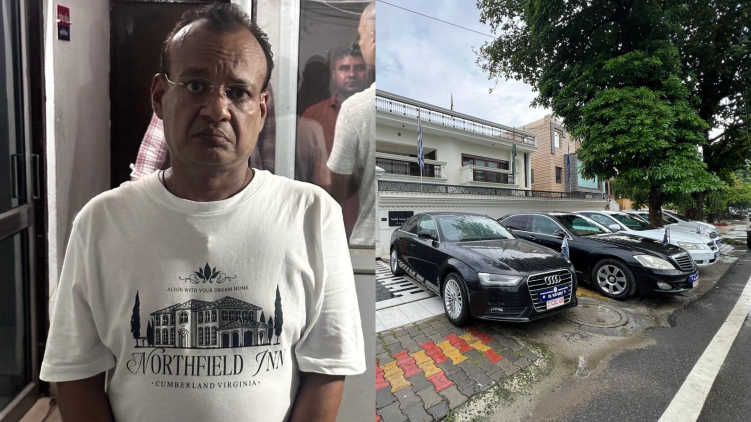

The Uttar Pradesh Special Task Force (STF) arrested a 45-year-old man, Harsh Vardhan Jain, for running a fake embassy in Ghaziabad. He posed as the ambassador of Westarctica, a self-declared micronation in Antarctica. Jain operated the fake embassy from a two-storey house in Kavi Nagar and used forged documents to cheat people.
According to the STF, Jain used fake seals of the Ministry of External Affairs (MEA) and promised international deals to lure people. He also claimed to help businesses with foreign investments and work permits.
What Are Micronations?
Micronations are self-declared countries that are not recognised by any real government or international body. These small "nations" often start as political protests, artistic ideas, or social experiments. Some founders use them for fun, while others use them for scams or crimes.
Despite having no legal status, many micronations have their own flags, currencies, anthems, and passports. They are not treated as real countries under international law.
Micronations Around the World
Micronations have existed since the 1960s. One example is New Atlantis, founded by American author Leicester Hemingway in 1964. He built a raft off Jamaica’s coast and declared it a country, though it was later destroyed by a cyclone.
The Principality of Sealand is another well-known micronation. It sits on a sea fort in the North Sea. Paddy Roy Bates claimed it in 1967 and declared independence. He gave it a flag, money, national anthem, stamps, and a football team.
Australia’s first micronation was the Principality of Hutt River, started in 1970. In Scotland, psychic Uri Geller bought an island and declared it the Republic of Lamb, donating proceeds from citizenship to a children’s heart charity.
There’s also the Republic of Minerva, built on coral reefs in the Pacific, and the Royal Republic of Ladonia in Sweden, created in 1986 by artist Lars Vilks as a protest. Ladonia now promotes freedom of art and expression.
Kailasa is another micronation, founded by controversial Indian godman Nithyananda. He bought an island near Ecuador and declared it a country, despite being wanted in India for rape and abduction.
Why People Create Micronations
Founders of these micronations usually know they are not running real countries. Still, many take their roles seriously. Some want to make political statements, while others simply enjoy the fantasy.
Harry Hobbs, co-author of How to Rule Your Own Country, told Forbes in 2023, “They are very serious about this. Pretending to be a king or a president takes a lot of effort. I think the psychological strength you need to do this constantly when no one recognises you must be quite difficult. But generally speaking, it is for fun. A lot of them also do it as a way to build a community.”
He added, “I think the best ones are really designed for a clear political purpose. There’s the famous Gay and Lesbian Kingdom of the Coral Sea Islands. They seceded from Australia to protest legislation banning same-sex marriage and formed a gay and lesbian kingdom. They sailed to an island in the Great Barrier Reef, planted a flag, and set up a country.”
However, sometimes these micronations cause confusion. In 2002, Ladonia received applications from migrants who thought it was a real country. The Gay and Lesbian Kingdom also got letters from people seeking asylum.
Ghaziabad Man’s Fake Embassy Scam
Harsh Vardhan Jain went far beyond pretending. According to the UP STF, Jain not only claimed to represent Westarctica, but also other micronations like Saborga, Poulvia, and Ladonia. None of these are recognised nations.
SSP Sushil Ghule, who led the STF raid, said, “Jain claimed to be the consul or ambassador of Westarctica, Saborga, Poulvia, and Ladonia — none of which are recognised as sovereign nations. He used diplomatic insignias and paraphernalia to create an illusion of official legitimacy.”
Police found that Jain edited photos to make it seem he met global leaders. He also used fake MEA seals to make credentials look real. According to the STF, “He used the guise of diplomacy to influence businessmen, promise them access to international markets, and run a hawala network through shell companies.”
Jain tricked individuals and companies by offering them foreign work permits and diplomatic privileges. Police say he earned large amounts of money by making fake promises.
Cash, Cars, and Fake Documents Seized
The STF recovered ₹44.7 lakh in cash, foreign currency from several countries, and four luxury cars with fake diplomatic number plates. They also found forged diplomatic passports and MEA seals.
This case has shown how scammers are using the idea of micronations to commit fraud. While micronations can seem like harmless experiments or protests, they become dangerous when used to deceive and steal.