
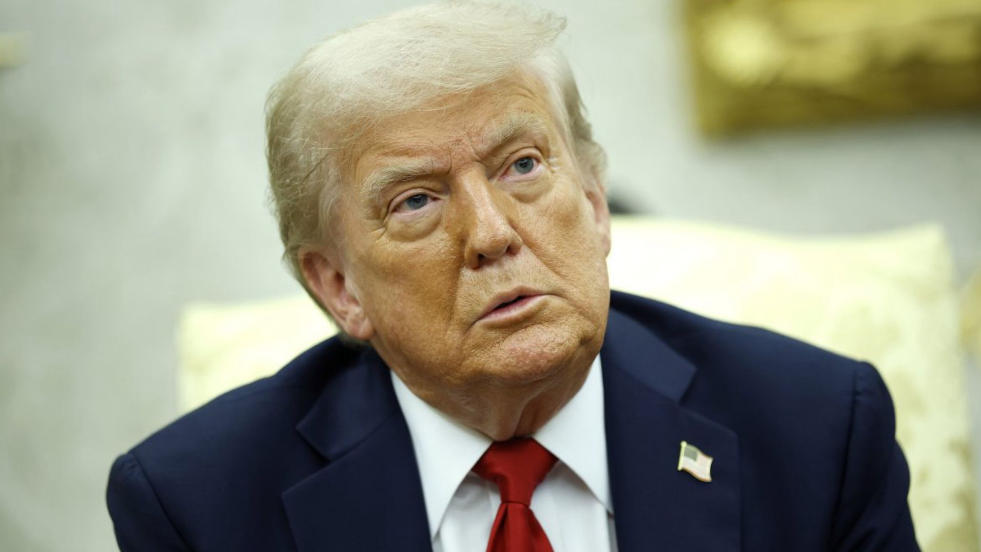

US President Donald Trump announced that the leaders of Thailand and Cambodia have agreed to meet soon for ceasefire negotiations after three days of intense border fighting. The clashes have already killed more than 30 people and forced over 130,000 to flee their homes.
While in Scotland, Trump shared this update through a Truth Social post. He said he had spoken individually with both Cambodian Prime Minister Hun Manet and Thailand’s acting Prime Minister Phumtham Wechayachai. Trump warned them that if the fighting continued, it could threaten future trade agreements with the US. “Both parties are looking for an immediate ceasefire and peace,” Trump posted on Truth Social.
He explained that both sides were keen to return to peaceful relations and resume trade. “They have agreed to immediately meet and quickly work out a ceasefire and, ultimately, PEACE!” he added.
So far, there is no official confirmation from the White House or the embassies about when or where these talks will take place.
Thailand Seeks Sincerity from Cambodia
Thailand has shown interest in a ceasefire “in principle.” However, acting Prime Minister Phumtham stressed that Cambodia must show genuine commitment. He posted on Facebook that he asked Trump to pass on Thailand’s message of wanting direct talks for long-term peace.
Violence Escalates Along the Border
This recent outbreak is the worst in over ten years between the two countries. On Saturday, fighting spread to new areas—Trat Province in Thailand and Pursat Province in Cambodia—about 100 km from the original battle zone.
The tensions began after a Cambodian soldier died in late May. That death led to both sides sending more troops to the disputed 817-kilometre border.
A major source of tension has been over ancient temples, especially the Preah Vihear temple. In 1962, the International Court of Justice (ICJ) awarded it to Cambodia. But Thailand has never fully accepted that ruling.
Death Toll and Accusations Rise
By Saturday, Thailand reported 20 deaths, including seven soldiers and 13 civilians. Cambodia reported 13 deaths, which included five soldiers and eight civilians.
Cambodia’s defence ministry accused Thailand of illegal aggression and a military buildup. It called on the world to condemn Thailand’s actions.
Meanwhile, Thailand blamed Cambodia for using landmines and launching cross-border attacks. Thai officials insisted they still preferred a peaceful bilateral resolution.
International Reactions and Legal Disputes
As the violence grew, the Indian embassy in Cambodia issued a travel advisory, asking Indian citizens to avoid the border areas.
Thailand also brought the matter to the UN Security Council on Friday. Thai diplomats urged the international community to notice what they described as Cambodian “aggression.”
In response, Cambodia asked the ICJ to step in again. However, Thailand rejected this, saying the court has no authority over the issue.