
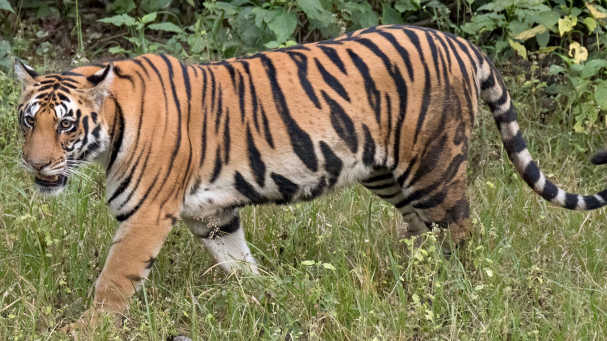

International Tiger Day, also called Global Tiger Day, is observed every year on July 29. The day was first celebrated in 2010, when 13 tiger-range countries came together in St. Petersburg, Russia, for the Tiger Summit. During this summit, these countries made a historic commitment to double the wild tiger population by 2022, a goal known as TX2.
Now, in 2025, International Tiger Day continues to highlight the importance of tiger conservation and the urgent need to protect these iconic animals. The theme this year is “Restore Their Roar,” which calls on people, governments, and organizations to unite in saving tigers before it’s too late.
Why Tigers Are So Important
Tigers are not just beautiful big cats. They are apex predators, which means they sit at the top of the food chain. By hunting herbivores like deer and wild boars, they help maintain balance in forests. If tigers disappear, it would lead to overgrazing and damage to plant life, affecting the entire ecosystem.
Also, tiger habitats are home to thousands of other species. So, saving tigers means protecting vast areas of forests, rivers, and biodiversity. In simple terms, "When you protect the tiger, you protect the forest", as conservationists often say.
How Many Tigers Are Left?
In 1900, around 100,000 tigers roamed across Asia. Today, only about 5,574 wild tigers remain worldwide, according to the 2023 report by the Global Tiger Forum (GTF). The largest populations are found in India, Russia, Bhutan, Nepal, and Bangladesh.
India is home to more than 70% of the world’s wild tigers, with 3,682 tigers as of the 2022 All India Tiger Estimation Report. This is a major increase from 1,411 tigers in 2006. However, tigers in many other parts of Asia are still critically endangered or have gone extinct, such as in Cambodia, Vietnam, and Laos.
Threats Tigers Face Today
Despite conservation progress, tigers still face serious threats:
-
Poaching: Tigers are hunted for their skins, bones, and body parts, which are illegally sold in black markets. Their bones are especially in demand for traditional Chinese medicine.
-
Habitat Loss: Expanding agriculture, deforestation, mining, and infrastructure projects have shrunk tiger habitats. Tigers have lost more than 93% of their historical range, according to WWF.
-
Human-Wildlife Conflict: As humans move closer to tiger habitats, clashes increase. Tigers may attack livestock, and in rare cases, humans. In return, people sometimes kill tigers out of fear or revenge.
What Countries Are Doing to Help
Many countries have taken steps to protect tigers:
-
India launched Project Tiger in 1973, one of the world’s most successful conservation programs. It has established 54 tiger reserves covering over 75,000 sq km.
-
Nepal became the first country to double its tiger population from 121 in 2009 to 355 in 2022.
-
Bhutan recently reported a rise in tiger numbers from 103 in 2015 to 131 in 2023, showing strong conservation results.
-
Russia’s Siberian tiger population is stable thanks to anti-poaching efforts and protected forests.
However, some Southeast Asian countries continue to struggle with weak laws and illegal wildlife trade.
How Can We Help?
Everyone can contribute to tiger conservation:
-
Support organizations like WWF, WCS, Panthera, and Wildlife SOS, which work to protect tigers and their habitats.
-
Avoid buying products made from wild animals.
-
Share information and raise awareness about tiger conservation.
-
Support eco-tourism that respects nature and contributes to local communities.
Even small actions matter. Public pressure can push governments to act, increase funding, and tighten anti-poaching laws.
A Race Against Time
International Tiger Day 2025 is a reminder that saving tigers is a race against time. While some countries have made progress, many tiger subspecies still face extinction. The South China tiger and the Javan tiger are already considered extinct in the wild.
Conservation efforts must be stronger, faster, and more global. If the tiger vanishes, it won’t be just the loss of a species—it will signal the failure of our planet to protect nature for future generations.