
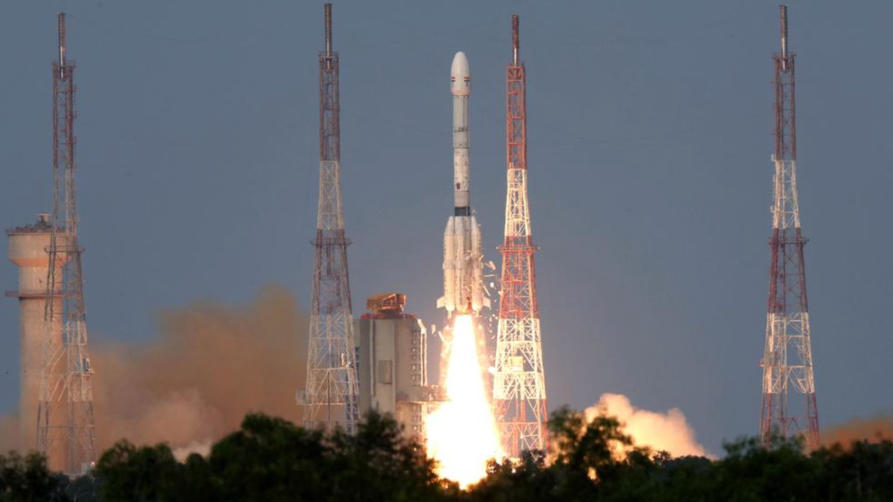

India launched the world’s most expensive Earth-imaging satellite, NISAR, on Wednesday. The launch took place at Sriharikota in Andhra Pradesh. This satellite costs $1.3 billion.
Importantly, NISAR is a joint project between ISRO and NASA. This marks their first major space collaboration. The GSLV-F16 rocket lifted off at 5:40 pm, carrying the satellite into space.
Soon after the launch, ISRO confirmed on X, “Liftoff. And we have liftoff! GSLV-F16 has successfully launched with NISAR onboard.”
GSLV-F16/NISAR
— ISRO (@isro) July 30, 2025
Liftoff
And we have liftoff! GSLV-F16 has successfully launched with NISAR onboard.
Livestreaming Link: https://t.co/flWew2LhgQ
For more information:https://t.co/XkS3v3M32u #NISAR #GSLVF16 #ISRO #NASA
ISRO Chairman Says It’s a Milestone for India
Before the launch, ISRO Chairman Dr. V. Narayanan spoke to NDTV. He explained how far India’s space journey has come. “From that humble beginning (the launch of India’s first satellite, Aryabhata, with Russia’s support, in 1975) when India relied on other nations for satellite technology, we are now gradually occupying a leadership role... Today, two great countries have built an important satellite together, and I'm extremely happy that it will be launched by our vehicle from Indian soil,” he said.
Following the successful launch, he expressed his joy, saying, “I am extremely happy. NISAR has been successfully and precisely injected into its intended orbit.”
NISAR Enters a New Kind of Orbit
Interestingly, NISAR weighs 2,392 kilograms and was placed in a Sun Synchronous Polar Orbit. Usually, ISRO uses its PSLV rockets for such missions. However, this time, it used a GSLV rocket — a first for this type of orbit.
Notably, the satellite took over a decade to develop. It will remain in space for five years. It will orbit Earth every 97 minutes and send back images every 12 days.
A Game-Changer for Disaster Prediction
NISAR stands out for its dual radar system. NASA provided the L-band radar, while ISRO added the S-band radar. Together, they will capture highly accurate images of Earth’s land and parts of the ocean.
As a result, scientists will be able to monitor climate changes, track natural disasters, and improve agriculture planning. The satellite’s precise imaging ability will help issue timely warnings for floods, landslides, and earthquakes.
Ultimately, this mission is expected to save lives and support research worldwide.