
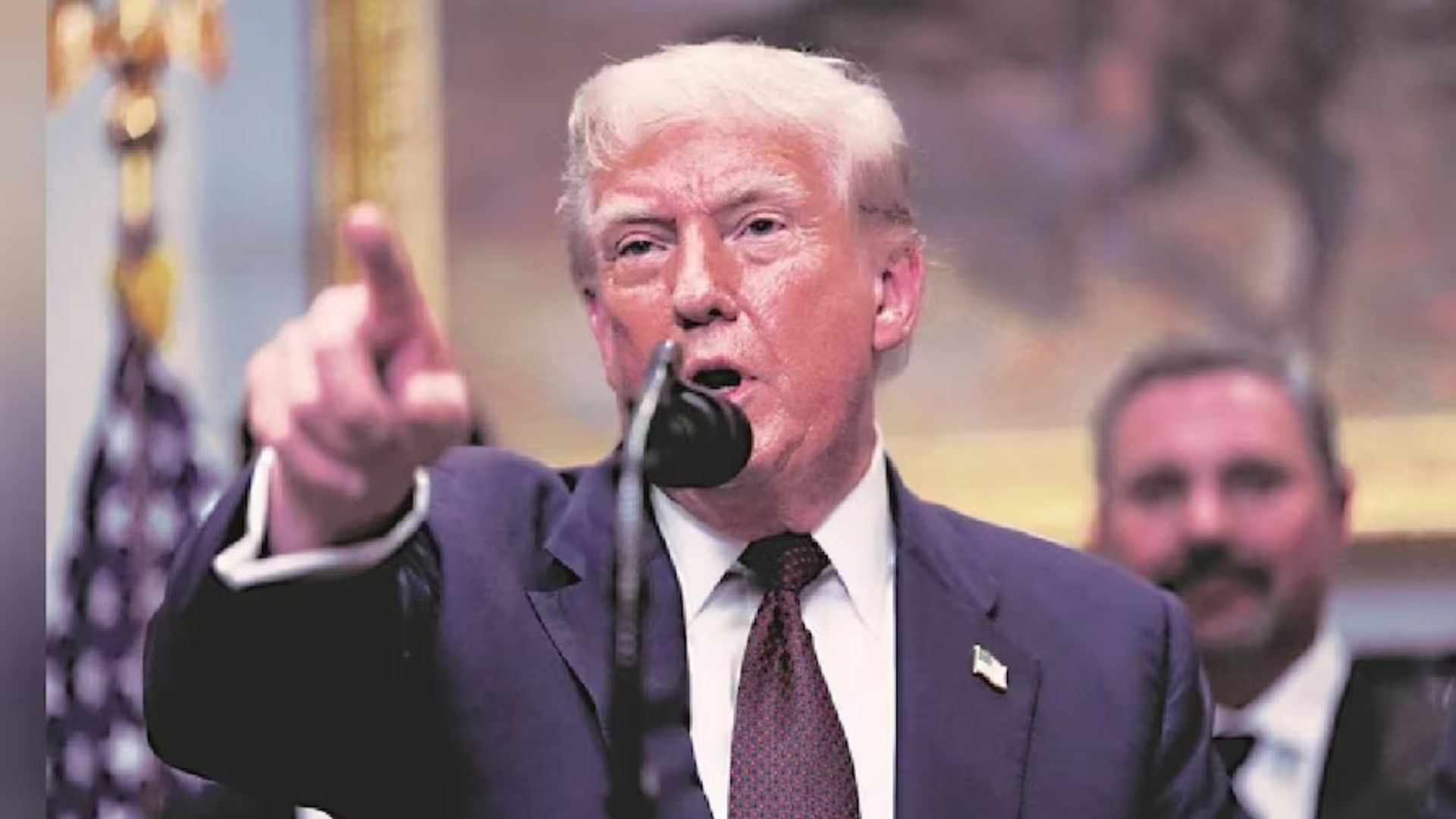

President Donald Trump again claimed on Sunday that his administration reduced prescription drug prices by over 1,500 percent. He told reporters, “Well, one of the things they're going to be talking about pretty soon are the tremendous drop in drug prices. You know, we've cut drug prices by 1,200, 1,300, 1,400, 1,500 percent. I don't mean 50 percent. I mean 14-, 1,500 percent.”
White House Defends the Statement
When asked to explain Trump’s figures, White House spokesperson Kush Desai backed the president. He told Newsweek, “It’s an objective fact that Americans are paying exponentially more for the same exact drugs as people in other developed countries pay, and it’s an objective fact that no other Administration has done more to rectify this unfair burden for the American people.”
Experts Say the Math Is Impossible
Economists quickly responded and said Trump's numbers were mathematically wrong. They noted that a 100 percent price cut would make a drug free. A reduction beyond that would mean drug companies would have to pay patients to take the medicine. Harvard professor Jeffrey Frankel told Newsweek, “They are indeed mathematically impossible. If he cut prices 90 percent, the drugs would cost 1/10 as much as before. If 100 percent, then they would cost zero. If cutting 1,000 percent means a thing, then it means that the drug company pays you (a lot) to take the drug.” Frankel also said, “It's almost as if Trump is making fun of his supporters, seeing what increasingly absurd statements he can get away with.”
Trump Repeats Claims in Multiple Appearances
Earlier, Trump made similar claims during an interview on Newsmax. He again mentioned drug price cuts of “1,000 percent” and “1,200 percent.” These remarks followed the president’s letters to 17 pharmaceutical companies, urging them to lower drug prices in the U.S. to match those in other wealthy nations. However, the White House’s official fact sheet released Thursday did not mention any percentages. It only said that the companies’ responses to Trump’s executive order from May had “fallen short.”
Economists and Professors Respond with Criticism
University of Michigan economist Justin Wolfers said this issue didn't require an expert. He told Newsweek, “This is not a question for an economist, but rather a sixth grader.” He added that his son, Oliver, had studied percentages and found Trump’s math made no sense. Wolfers shared, “I just checked with my sixth grader (Oliver Wolfers), and he confirmed that he has studied percentages and that the president's math does not make sense 'because then the prices would be negative.' He added, 'Is he an idiot?' before returning to watching YouTube.” Wolfers said he agreed with his son’s analysis but encouraged him to use more respectful language. At McMaster University, professor Pau Pujolas offered a simple example: “If your grocery bill is $100 and you get a 50 percent reduction in price, you pay $50. If you get a 75 percent reduction, you pay $25. If you get a 99 percent reduction, you pay $1. If you get a 100 percent reduction, you pay $0. You can't get a reduction larger than that... so 1,200 percent doesn't make sense.” He added that firing the Bureau of Labor Statistics chief, Erika McEntarfer, was a more damaging mistake than Trump’s poor math.
Trump Doubles Down at Republican Dinner
At a dinner in July, Trump made another round of exaggerated claims. He said, “This is something that nobody else can do. We're gonna get the drug prices down—not 30 or 40 percent, which would be great, not 50 or 60 percent. No, we're gonna get them down 1,000 percent, 600 percent, 500 percent, 1,500 percent. Numbers that are not even thought to be achievable.”
White House Pushes for Immediate Price Relief
Despite the backlash, the White House defended its efforts to push drugmakers to lower prices. The fact sheet stated, “From this point forward, President Trump will only accept from drug manufacturers a commitment that provides American families immediate relief from vastly inflated drug prices and an end to the freeriding by European and other developed nations on American innovations.”
Critics Question the Intent Behind the Claims
Journalist James Surowiecki posted on X in response to Trump’s latest comments. He wrote, “It's not just that the math here is nonsensical. It's that Trump hasn't actually cut drug prices yet at all. He's literally just sent letters to drugmakers telling them to cut prices. Does he know that and is lying? Or is he deluded? We have no idea.”
What Comes Next Remains Unclear
So far, neither Trump nor the White House has explained what the 1,500 percent figure actually means. The letters sent to drug companies gave them 60 days to submit a plan to reduce drug prices. It remains to be seen how they will respond and whether any real changes will follow.