
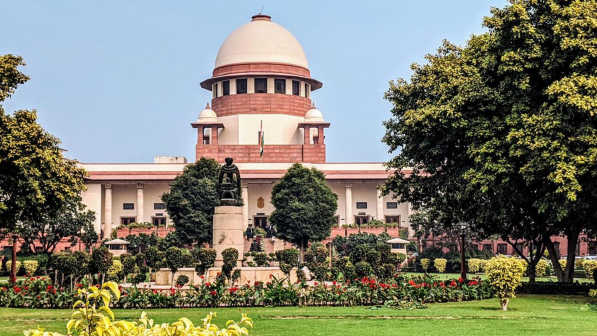

The Supreme Court said that a key clause in India’s anti-corruption law helps protect upright public servants from being unfairly targeted after a new government takes over on August 5, 2025,. The clause, known as Section 17A of the Prevention of Corruption Act, was added in July 2018.
This section blocks any investigation or inquiry against a public servant for actions taken while performing official duties—unless the competent authority gives prior approval.
“Honest officers will be protected”
Justice K.V. Viswanathan, part of the Bench led by Justice B.V. Nagarathna, stressed the importance of this protection. He said, “Honest officers who do not toe the line after a change in government will be protected.”
The court was reviewing a petition filed by Centre for Public Interest Litigation (CPIL), represented by lawyer Prashant Bhushan. He argued that Section 17A weakens the anti-corruption law because the government, which often needs to be investigated, is also the body that gives permission.
Petition Seeks Removal of Clause
Mr. Bhushan told the court that only around 40% of cases involving the CBI get prior approval under Section 17A. He claimed that many states refuse to give sanction, and this blocks fair investigation. He also said that letting the government decide on approvals makes it “a judge in its own cause.” Instead, he suggested giving this power to an independent authority.
Need for Balance, Says Court
But the Supreme Court didn’t agree with striking the clause down completely. Justice Viswanathan said the goal is to protect committed officers from false cases. He added, “There are officers who give their life and soul to the country. How does we ensure that they do not become prey to frivolous prosecution for their official actions or recommendations made in the line of duty.”
Justice Nagarathna made a key point. She said, “Honest officers must be protected while dishonest ones must be investigated. The former must not do their work with a Damocles sword hanging over their heads. Their hands should not shake before taking an official decision or we would run the risk of complete policy paralysis.”
She also explained that the court cannot assume all officers are good or bad. She added, “The implementation of a provision on the ground is quite different from the question of its constitutionality. Ultimately, a balance has to be struck.”
Government Defends the Clause
Representing the Union government, Solicitor General Tushar Mehta and Additional Solicitor General Aishwarya Bhati defended the need for Section 17A. They said that without this clause, anyone with a personal grudge could push an NGO to file a case against an official.
When Justice Viswanathan raised concern that the government may not act against its favourite officers, Mr. Mehta replied that this bias exists across all branches of governance. He said if there are issues, courts can review cases individually.
Mr. Mehta also reminded the court of its role. “He [Bhushan] cannot ask the Supreme Court to assume legislative functions,” he said, urging the judges not to strike down the law.
Verdict Awaited
After listening to both sides, the Supreme Court reserved its verdict. The judgment on whether Section 17A should stay or be revised will come later.