
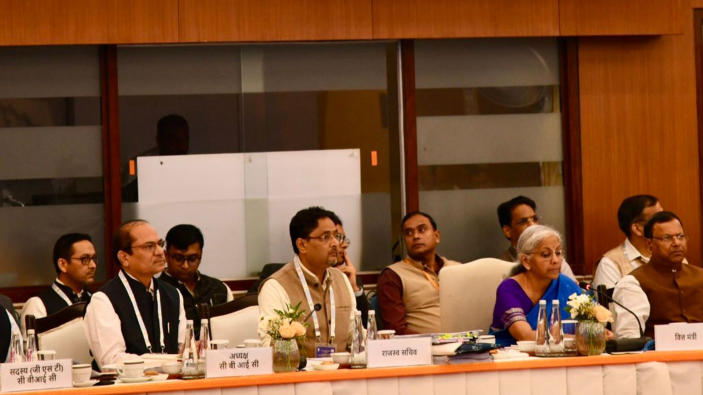

The GST Council on Wednesday approved a sweeping reform of India’s indirect tax system. Earlier, there were four tax rates – 5%, 12%, 18%, and 28%. Now, there will be only two main slabs, 5% and 18%, along with a special 40% slab for luxury and sin goods.
Moreover, the new rates will come into effect on September 22, just in time for the Navaratri festival, a key shopping season.
After a marathon 10.5-hour meeting, Union Finance Minister Nirmala Sitharaman announced the decision. She confirmed that all states supported the move unanimously. According to her, this change will simplify compliance, reduce costs, and directly benefit consumers.
PM Modi Praises the Decision
Meanwhile, Prime Minister Narendra Modi welcomed the reform and called it historic. He said the simplified structure would improve the lives of citizens, especially farmers, MSMEs, small traders, and the middle class. Furthermore, he said the overhaul would boost the economy and create new opportunities for growth.
Goods and Services That Will Become Cheaper
As a result of the new structure, many goods and services will become more affordable for consumers.
To begin with, life and health insurance policies will now have zero GST, down from 18%.
In addition, common food items like paneer, paratha, roti, pizza bread, khakra, chena, and ultra-high temperature (UHT) milk will be fully exempt from GST.
Furthermore, dairy products and packaged foods such as butter, ghee, condensed milk, cheese, jams, jellies, dry fruits, ice cream, pastries, biscuits, corn flakes, and cereals will now attract 5% GST, compared to the earlier 12–18%.
The agriculture sector will also see relief. For example, key inputs like sulphuric acid, nitric acid, ammonia, biopesticides, and micronutrients will now be taxed at 5%, down from 12–18%. Similarly, tractors, threshers, and soil-preparation machinery will also come under the 5% slab.
In the automobile sector, smaller vehicles will become cheaper. Small cars with petrol engines under 1200cc or diesel engines under 1500cc, along with motorcycles up to 350cc, will now face 18% GST instead of 28%. Small hybrid cars will also benefit from this cut. However, electric vehicles (EVs) will continue to be taxed at 5%, encouraging their use.
Moreover, many everyday household products such as shampoo, toothpaste, toothbrushes, soaps, talcum powder, hair oil, feeding bottles, utensils, bicycles, umbrellas, and bamboo furniture will now come under 5% GST, making them more affordable.
Additionally, the GST on cement has been slashed from 28% to 18%, and auto parts will also move to the 18% slab, which is expected to reduce construction and repair costs.
Goods That Will Become Costlier
On the other hand, certain luxury and non-essential products will now face higher taxes under the new 40% slab.
Soft drinks, colas, fruit-based aerated drinks, and all carbonated beverages will now be taxed at 40%, up from 28%. Likewise, energy drinks and caffeinated beverages will also face a 40% tax.
Similarly, high-end vehicles will see a price increase. Cars with petrol engines above 1200cc or diesel engines above 1500cc, and those longer than 4,000 mm, will now fall under the 40% slab. The same rate applies to motorcycles above 350cc, racing cars, yachts, and personal-use aircraft.
Furthermore, flavored drinks and aerated waters containing sugar or sweeteners will also move into the 40% tax category.
Meanwhile, products like pan masala, gutkha, cigarettes, chewing tobacco, and bidis will remain under the current 28% GST plus a compensation cess until all pending dues are cleared. After that, they will shift to the 40% slab.
Goal of the Reform
Ultimately, the government aims to streamline GST, making it simpler for businesses and fairer for consumers. Therefore, officials expect this reform to boost consumption, reduce tax disputes, and strengthen important sectors like agriculture, automobiles, construction, and retail.