
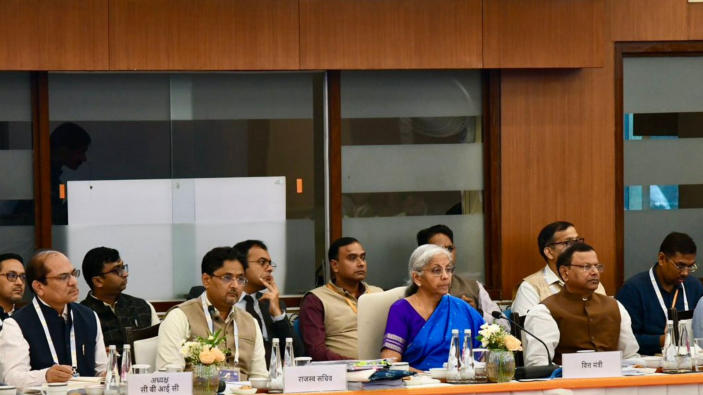

The 56th meeting of the Goods and Services Tax (GST) Council began on Tuesday, September 3. Union Finance Minister Nirmala Sitharaman chaired the session, while finance ministers from all states also attended. The Council is discussing rate rationalisation, slab restructuring, and the future of the compensation cess.
However, the final decisions will be announced on Thursday, September 4, by Finance Minister Sitharaman.
Union Minister for Finance and Corporate Affairs Smt. @nsitharaman chairs the 56th meeting of the GST Council, in New Delhi, today.
— Ministry of Finance (@FinMinIndia) September 3, 2025
The participants included Union Minister for State for Finance Shri @mppchaudhary, Chief Ministers of Delhi, Goa, Haryana, Jammu and Kashmir,… pic.twitter.com/pqz8upYg1U
Current GST Structure and Planned Reforms
At present, the GST system has four main slabs — 5%, 12%, 18%, and 28%, along with a 3% slab for jewellery.
Now, the Centre has proposed a simpler structure with only two tax rates — 5% and 18%. Additionally, it has suggested a special 40% rate for luxury and sin goods.
If approved, this would mark a historic overhaul of India’s indirect tax system.
What Could Become Cheaper
The GST Council is likely to reduce taxes on several essential goods and services.
-
Automobiles and Auto Parts – Taxes may drop from 28% to 18%, giving a boost to the auto sector.
-
Fertiliser Acids and Bio-Pesticides – Rates may be unified at 5%, down from 12% and 18%, which would benefit the agriculture sector.
-
Daily Food Essentials – Items such as ghee, nuts, bottled water, namkeen, medicines, and footwear may move from 12% to 5%, reducing household costs.
-
Household Goods – Common items like pencils, umbrellas, bicycles, and hairpins may also fall to the 5% slab.
-
Electronics – Certain TVs, washing machines, and refrigerators may shift from 28% to 18%, leading to lower prices.
-
Green Energy Products – Solar cookers and water heaters may move from 12% to 5%, encouraging clean energy adoption.
-
Textile Industry Relief – Synthetic yarns, sewing threads, carpets, and gauze may see a reduction from 12% to 5%, offering industry-wide relief.
-
Footwear – Shoes below ₹2,500 may drop to 5%, while those above ₹2,500 may rise to 18%.
-
Insurance for Senior Citizens – GST on life and health insurance premiums for senior citizens may be fully exempted.
-
Apparel Price Limit Change – The threshold for 5% GST on clothes may increase from ₹1,000 to ₹2,500, making mid-range clothing more affordable.
These potential changes aim to ease the financial burden on consumers while supporting key industries.
What Could Become Costlier
On the other hand, some products may face steeper taxes to increase revenue and discourage harmful consumption.
-
Sin Goods – Products like tobacco, cigarettes, gutkha, pan masala, and alcohol may rise from 28% to 40%, making them significantly more expensive.
-
Coal and Related Fuels – Taxes on coal, briquettes, lignite, and peat-based fuels may jump from 5% to 18%, signalling a revenue-focused shift.
-
Premium Clothing – Readymade garments priced above ₹2,500 may move from 12% to 18%, raising their cost.
Opposition States Push for Revenue Protection
Before the Council meeting, eight opposition-ruled states met to discuss their concerns. These states include Himachal Pradesh, Jharkhand, Karnataka, Kerala, Punjab, Tamil Nadu, Telangana, and West Bengal.
They demanded a clear compensation plan to offset revenue losses that may occur after the removal of the 12% and 28% slabs.
For instance, West Bengal and others proposed that any extra levy above the 40% rate should go directly to states to help cover their financial shortfall.
Compensation Cess Timeline
The compensation cess was introduced in July 2017 to help states recover from revenue losses due to GST implementation.
-
Initially, it was planned for five years, ending on June 30, 2022.
-
During the Covid-19 crisis, the Centre borrowed funds to support states and extended cess collection until March 31, 2026.
-
Currently, all collected cess is used to repay Covid-era loans.
-
By October-November 2025, loan repayment will be completed, and the compensation cess will end permanently.
Final Decision Expected on September 4
The Council will continue its detailed discussions on Wednesday.
Finance Minister Nirmala Sitharaman will announce the final decisions on September 4. These decisions are expected to reshape India’s tax landscape, directly impacting prices across multiple sectors and influencing economic growth in the coming years.