
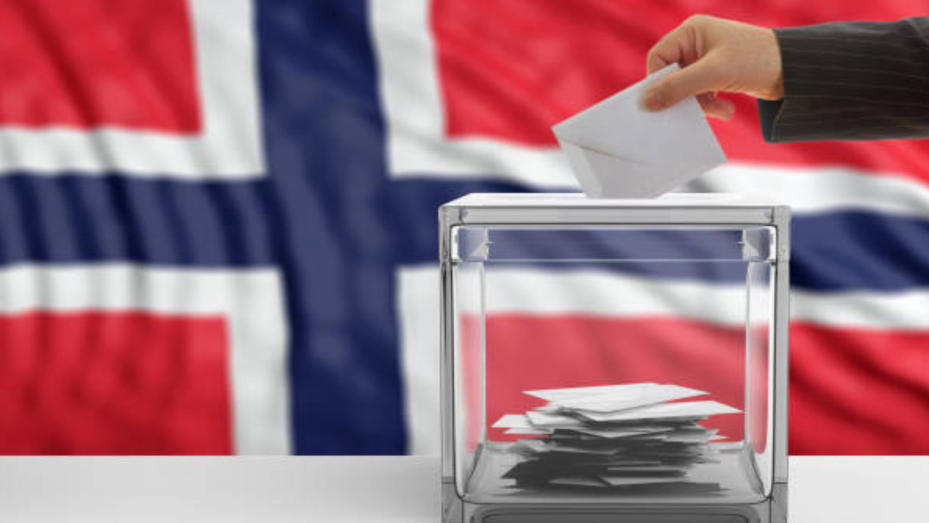

Norwegians headed to the polls on Monday, September 8, for a crucial election shaped by international tensions and local economic concerns. The outcome will determine whether Prime Minister Jonas Gahr Store’s Labour government can hold on to power.
The vote comes at a time when global issues such as the war in Ukraine and US President Donald Trump’s newly imposed tariffs weigh heavily on voters’ minds.
Store Holds Narrow Lead
Jonas Gahr Store, a veteran Labour leader, entered election day with a slim lead in opinion polls. Analysts believe that global instability could push voters to favor his government for the sake of continuity.
“Stability is really important. The security situation in the world is quite unstable, it’s quite an unstable world,” pensioner Olav Hetland told AFP, reflecting the sentiment of many voters.
Political scientist Johannes Bergh explained that Store’s foreign policy experience may work in his favor. “The fact that Donald Trump was elected president in the United States, the talk about tariffs, and international trade is much more uncertain, there’s a war in Ukraine — all of those international issues make voters rally around the sitting government,” he said.
According to poll aggregator pollofpolls.no, Labour and its allies are projected to win 88 of the 169 seats in parliament. Voting began at 9 a.m. (0700 GMT), with first projections expected after polls close at 9 p.m.
Domestic Issues Dominate Campaign
Despite international concerns, most of the campaign revolved around everyday challenges such as rising living costs, healthcare, inequality, and education. A hotly debated issue was whether to abolish Norway’s wealth tax, which has prompted some wealthy citizens to move abroad.
Julie Myrene, a 32-year-old customer support worker, said tax policy shaped her decision. “Because a lot of wealthy Norwegians have moved out,” she explained.
Nearly half of the country’s eligible voters, a record 1.9 million people, cast their ballots early.
Left Bloc Faces Internal Divisions
Store currently leads a single-party minority government. Earlier this year, he gained political ground by ending an unpopular coalition with the Centre Party and bringing back former NATO chief Jens Stoltenberg, a widely respected figure.
To form a majority, Store will need support from four other left-leaning parties. However, the left bloc remains deeply divided.
The Labour Party supports continuing oil drilling, while the Greens want to phase it out entirely. They also disagree over relations with the European Union. Labour and the Greens favor eventual EU membership, while the Centre Party and the far-left strongly oppose it, reflecting broader public skepticism.
In addition, the far-left has pushed for Norway’s sovereign wealth fund to divest from Israel, a move Labour has firmly rejected.
Challenges for the Right-Wing Bloc
The right-wing opposition is also grappling with internal challenges. Former Prime Minister Erna Solberg’s Conservative Party has slipped behind the anti-immigration Progress Party in recent polls. This shift has set up a tight race between Solberg and Progress leader Sylvi Listhaug for leadership of the bloc.
The bloc also includes two smaller centre-right parties, but divisions persist over climate policy, immigration, and EU relations.
High Stakes for Norway and Beyond
Norway’s position is critical on the global stage. The NATO member shares a border with Russia and relies heavily on exports, making foreign policy and trade key factors in this election.
The final results will not only shape the country’s domestic policies but also influence its role in international affairs amid an increasingly uncertain world.