
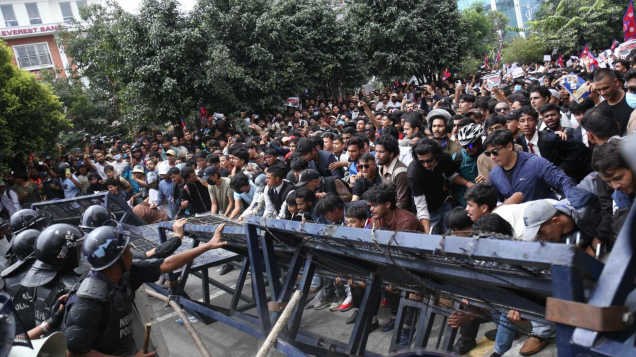

Nepal’s government has withdrawn its ban on several social media platforms after the move sparked massive protests that turned violent, leaving 19 people dead.
Communications Minister Prithvi Subba Gurung announced the decision late Monday after a Cabinet meeting. The reversal came as the country faced one of its most intense periods of unrest in more than a decade.
Since Friday, major social media platforms like Facebook, YouTube, and X were inaccessible in Nepal. The government had blocked 26 unregistered platforms, claiming it was necessary to control the spread of fake news.
Government’s Justification Faces Criticism
Prime Minister KP Sharma Oli’s administration defended the ban as a step to curb misinformation. However, rights groups strongly opposed it, calling it an attempt to silence dissent.
The ban quickly triggered anger and confusion among citizens, especially young people who rely heavily on social media for communication and activism.
Protests Fueled by Deeper Frustrations
Organizers said the demonstrations were not just about the social media ban. They reflected deep frustration over worsening economic conditions and widespread corruption.
“All the Nepali citizens are fed up with corruption. Every youth is going outside the country. So, we want to protect our youth and make the country’s economy better,” a protester told Reuters.
The protests spread across Nepal, with the capital Kathmandu witnessing the most intense clashes.
Casualties and Clashes Across Nepal
According to police spokesman Shekhar Khanal, at least 17 people were killed in Kathmandu and two others died in the eastern city of Itahari.
Around 400 people were injured, including 100 police officers, as security forces clashed with demonstrators.
Home Minister Steps Down
In a dramatic development, Nepal’s Home Minister Ramesh Lal Lekhak resigned, taking full moral responsibility for the deaths.
“There was a huge loss of human lives in today’s protest. I have to take moral responsibility for that, and I will not sit in the post on moral grounds,” Lekhak told OnlineKhabar.
He submitted his resignation to Prime Minister KP Sharma Oli during the Cabinet meeting at the Prime Minister’s residence in Baluwatar.
Party leaders confirmed that Lekhak informed them of his decision earlier at a meeting held at President Sher Bahadur Deuba’s residence.
A Moment of Reckoning for Nepal
The deadly protests have exposed growing discontent among Nepal’s youth and raised questions about the government’s handling of civil liberties.
The decision to lift the ban aims to calm tensions, but analysts warn that unless the government addresses deeper economic and governance issues, unrest could return.