
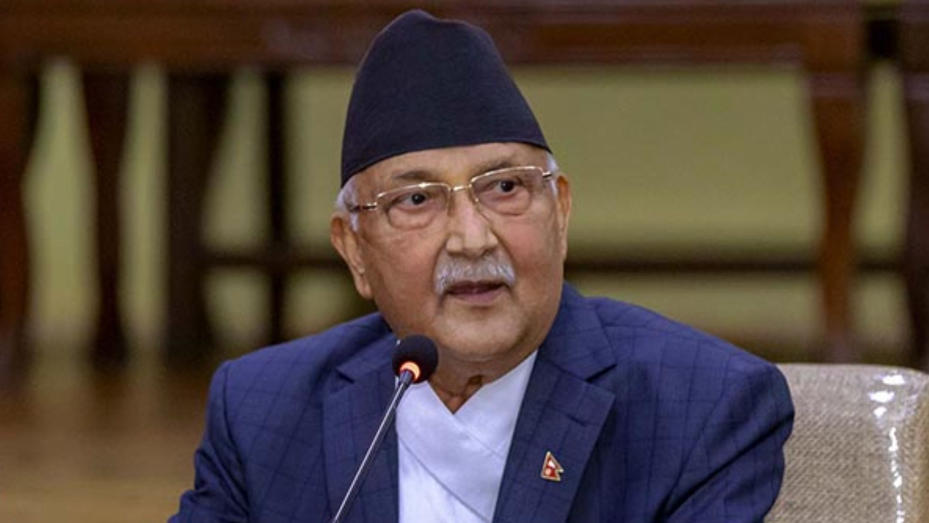

A day after a police crackdown left 19 protesters dead and hundreds injured, Nepal’s Prime Minister KP Sharma Oli resigned on Tuesday. In a letter to President Ram Chandra Paudel, Oli wrote, “Considering the current situation and to facilitate the resolution of political deadlock and problems, I have resigned from the post of Prime Minister as per Article 76(1) of the Constitution.”
Oli’s resignation followed the departure of three ministers. Home Minister Ramesh Lekhak resigned Monday evening, while Agriculture Minister Ramnath Adhikari and Water Supply Minister Pradeep Yadav quit on Tuesday morning. Reports suggest several other ministers were preparing to resign as well.
Lekhak and Adhikari belong to the Nepali Congress (NC), while Yadav represents the Janata Samajbadi Party. Before Oli stepped down, NC President Sher Bahadur Deuba faced pressure from party leaders to leave the coalition government, according to Kantipur.
Army Evacuates Ministers as Protesters Attack
The Nepali army evacuated ministers from Kathmandu’s Bhaisepati neighborhoods using helicopters. Protesters were targeting politicians’ homes and party offices, The Kathmandu Post reported.
Media footage showed private and army helicopters flying in and out of the area. Senior security officials said the army also secured the parliament building and provided high-ranking officials protection at military barracks.
Despite these measures, protesters stormed the parliament building and set parts of it on fire. Witnesses told Nepal’s Khabar Hub that demonstrators breached security barriers, forced their way inside, and torched sections of the complex. Thick smoke rose as security forces tried to regain control.
Protesters also set fire to Oli’s private residence in Bhaktapur and the Nepali Congress’ central office in Sanepa, Lalitpur.
Youth-Led Protests Trigger Mass Movement
On Monday, thousands of young Nepalis took to the streets nationwide to protest government corruption and a social media ban. Many students wore school or college uniforms and carried placards reading, “Shut down corruption and not social media,” “Unban social media,” and “Youths against corruption,” according to Reuters.
Police set up barricades near the parliament in Kathmandu. When protesters breached the restricted zone, authorities responded with water cannons, tear gas, and live bullets. The police crackdown resulted in 19 deaths—17 in Kathmandu and two in Sunsari district—and over 400 injuries.
Ministers Resign Over Repression
Agriculture Minister Ramnath Adhikari expressed moral outrage in his resignation letter. “After the killing and suppression of innocent young children, the nation has been plunged into mourning. Remaining in government under such circumstances goes against my moral values and the teachings of my party,” he said. “I extend a moral apology to the nation and the people, and I hereby tender my resignation from the post of Minister, expressing my objection to this undemocratic action by the government.”
Water Supply Minister Pradeep Yadav also resigned, saying he could not support the government’s repressive measures.
Social Media Ban Sparks Wider Anger
The immediate trigger for Monday’s protests, dubbed the ‘Gen Z protest,’ was the government’s ban on 26 social media platforms, including Facebook, Instagram, and X. However, the demonstrations reflected broader frustrations over political instability, successive governments’ failures, and widespread corruption in Nepal.