

Nepal is facing one of its worst political crises in years as youth-led protests spiraled out of control. The demonstrations, triggered by a government ban on social media, have now grown into a massive uprising against corruption, unemployment, and political privilege.
On Monday, violent clashes erupted in Kathmandu when police opened fire on crowds of protesters. The gunfire killed 19 people and injured hundreds, intensifying public anger.
Former Prime Minister and Wife Attacked
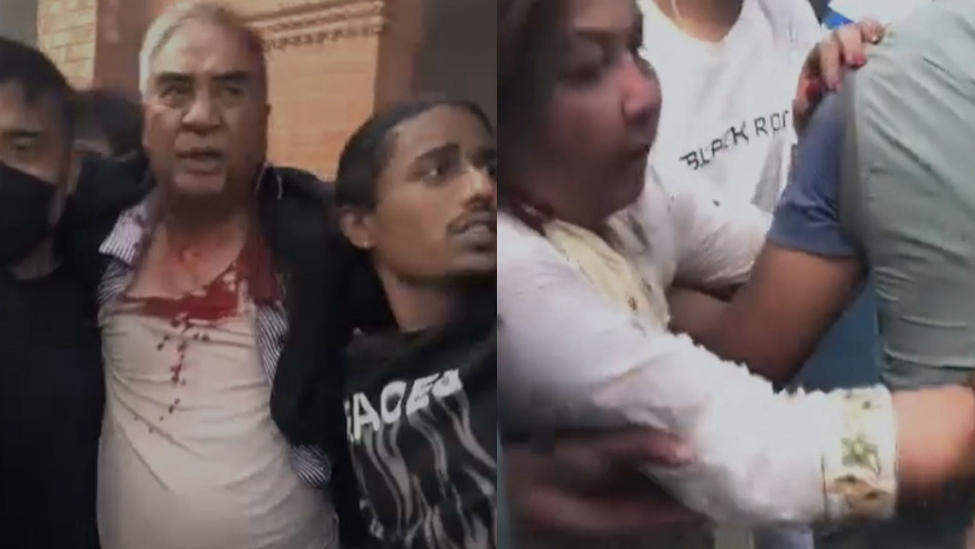
The unrest reached shocking levels on Tuesday when mobs attacked senior political figures. Protesters beat five-time Prime Minister Sher Bahadur Deuba and his wife, Arzu Rana Deuba, who also serves as Nepal’s foreign minister. Videos shared on social media showed both bleeding as party members rushed to bring them to safety.
Deuba leads the Nepali Congress, the country’s largest party and a key part of the ruling coalition.
Former PM’s Wife Dies in Arson Attack
In another brutal incident, protesters set fire to the home of former Prime Minister Jhala Nath Khanal in Dallu. His wife, Rajyalaxmi Chitrakar, was trapped inside and suffered severe burns. She later died at a hospital, eyewitnesses confirmed.
Widespread Attacks on Politicians’ Homes
The violence spread rapidly as mobs targeted other senior leaders. Hours before Prime Minister KP Sharma Oli resigned, protesters torched his private residence in Balkot. They also attacked properties belonging to:
-
President Ram Chandra Paudel
-
Former Prime Minister Pushpa Kamal Dahal
-
Communication Minister Prithvi Subba Gurung
-
Former Home Minister Ramesh Lekhak
Eyewitnesses reported that multiple government buildings and political offices were set ablaze.
Security Forces Urge Calm
As the crisis worsened, the top brass of the Nepali Army and other security agencies issued a joint statement. They appealed to protesters to exercise restraint and called for dialogue to restore peace.
President Ram Chandra Paudel, the ceremonial head of state, also urged calm. After accepting Oli’s resignation, he appointed him to lead a caretaker government until a new administration is formed. However, Oli’s exact authority under this arrangement remains unclear.
Social Media Ban Lifted, But Anger Grows
The government lifted the social media ban on Tuesday in an effort to calm the situation. Initially, the ban on Facebook, X, YouTube, and other platforms had sparked anger after authorities claimed tech companies failed to register with the government.
However, lifting the ban did little to ease tensions. Protesters remained furious over the deaths of demonstrators and long-standing accusations of corruption and nepotism in politics.
Deep-Rooted Frustrations Behind the Uprising
The movement, now known as the Gen Z protests, reflects much deeper frustrations. Many young Nepalis believe political leaders and their children, often called “nepo kids,” enjoy wealth and privilege while ordinary citizens face unemployment and poverty.
According to the World Bank, youth unemployment was around 20 percent last year. Government estimates show that over 2,000 young Nepalis leave the country daily to work in the Middle East or Southeast Asia.
This deep inequality, combined with anger over the social media ban, created the spark for the current uprising.
A Country at a Crossroads
Despite the resignation of the prime minister and the lifting of the ban, protests continue to grow. The crisis has exposed the growing divide between Nepal’s political elite and its youth, leaving the country at a critical turning point.
The coming days will determine whether dialogue can bring peace — or if Nepal will descend further into unrest.