
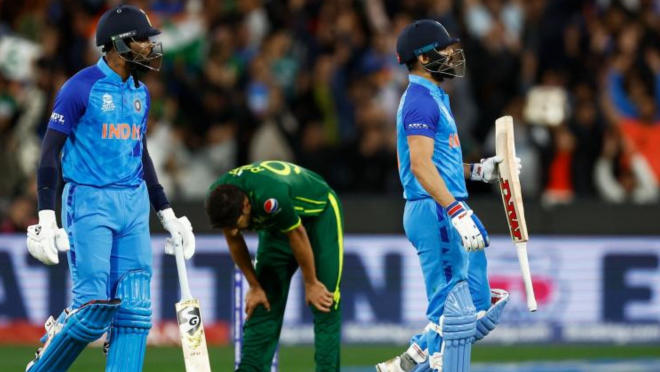

The upcoming India-Pakistan Asia Cup match carries heavy emotions. The April 22 terror attack in Pahalgam, which killed 26 innocent people, still casts a dark shadow over the nation.
In response, the armed forces launched Operation Sindoor, a strong retaliatory strike. This operation, as many believe, “stands as testimony to India’s unwillingness to take terror lying down.”
Against this backdrop, cricket seems secondary. Many feel that “a game of cricket seems insignificant, even insensitive,” while families continue to mourn.
Uneasy Build-Up to the Match
India will face Pakistan on Sunday in a Group A match at the Dubai International Cricket Stadium. Under normal circumstances, this clash would dominate headlines.
However, this time the focus is different. The buildup has been “uneasily tense and respectfully mindful of public sentiment,” with players aware that the match represents far more than sport.
The BCCI has guided the team’s participation based on government policies. As India’s governing body for cricket, it follows the directives of the Government of India, which has set strict rules on matches involving Pakistan.
No Bilateral Matches but Multination Events Allowed
The government recently banned bilateral matches with Pakistan across all sports. This means the two countries will no longer play one-on-one series anywhere in the world.
However, India can still compete in multination tournaments, such as the Asia Cup, Asian Games, or Olympics, even when Pakistan is involved. Officials explained that refusing to play in these events would bring heavy penalties and harm India’s image internationally.
The sports ministry clarified, “It is relevant to take into account India's emergence as a credible venue to host international sports events. Accordingly, Indian teams and individual players will take part in international events that also have teams or players from Pakistan.”
India’s stance is also influenced by its bid to host the 2030 Commonwealth Games and the 2036 Olympics, where compliance with international rules is crucial.
Public Discontent Over Playing Pakistan
Many Indians are upset about the timing of this match. For them, playing Pakistan so soon after the terror attack feels wrong.
On Saturday, India’s assistant coach Ryan ten Doeschate acknowledged this sentiment. He said, “It’s a very sensitive issue and I’ve got no doubt the players share the compassion and feeling of the vast majority of the Indian public.”
He added that the Asia Cup itself was uncertain at first, saying, “The Asia Cup was in a limbo for a long period of time, we didn’t think we were going to be coming at one stage. Obviously, you know what the Indian government’s stance in it is.”
Ten Doeschate explained that the team had discussed these emotions internally. “The players have to put those sentiments and the emotions behind,” he said. “We’re aware of people’s feelings; at the same time, we’ve got to go out, and the guys get a chance to play for their country. They’ll be as professional and focused as they can be given the circumstances. Hopefully, the way we play can represent how players feel about the country.”
Immense Pressure on the Players
India-Pakistan games always carry high expectations. This time, the pressure is even greater, as some fans see victory as a matter of national pride.
Players know they will be under constant scrutiny. Their “every action, gesture, smile, and shrug” will be closely analyzed by millions watching back home. This level of attention adds a heavy burden on top of the challenge of playing on such a big stage.
In May, when asked if India should continue playing Pakistan in multination events, head coach Gautam Gambhir said, “My personal answer to this is absolutely no. Till all this (terrorism) doesn’t stop, there should not be anything between India and Pakistan.”
Now, Gambhir’s focus is on preparing the team mentally. Ten Doeschate revealed, “Gauti’s message has been very professional, about not worrying about things that are not in our control and being emotionless when approaching the cricket side of things.”
Focus Turns Back to Cricket
Despite the political and emotional backdrop, the players will aim to focus on cricket once the game begins. Their priority will be to give their best performance for the country.
India currently leads Pakistan 10-3 in T20Is. The team will try to extend this record to 11-3.
Even if they fall short, Ten Doeschate believes it won’t be due to a lack of effort. “They’ll stretch every sinew to represent their country,” he said, emphasizing that commitment and hunger will drive their performance, no matter the outcome.