
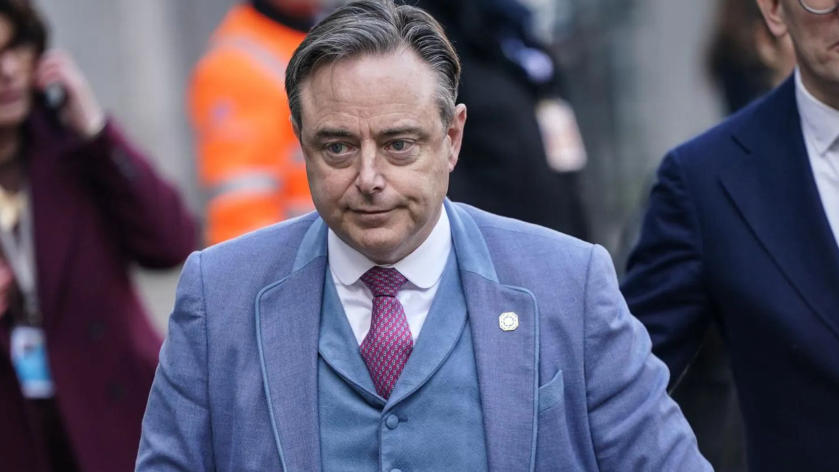

Belgian Prime Minister Bart De Wever issued a sharp warning to EU leaders on Thursday. “There’s no free money — there are always consequences,” he said at a summit in Copenhagen. He urged his counterparts to give written guarantees that they would share the risks of using frozen Russian assets to finance loans for Ukraine.
EU Push for Ukraine Loan
On Wednesday, EU leaders backed a plan to support Ukraine with a €140 billion ($164.5 billion) loan. The idea is to leverage frozen Russian central bank assets as collateral. However, the leaders admitted that the plan faces serious legal and financial barriers.
International law blocks outright seizure of sovereign assets. Therefore, the EU must find a structure that respects Russia’s claims while also protecting participants like Belgium from retaliation.
Belgium Holds the Largest Share
Most of Russia’s frozen assets in Europe are located in Belgium. They are mainly held at Euroclear, the central securities depository. This makes Belgium especially vulnerable.
“I explained to my colleagues yesterday that I want their signature saying, if we take (Russian President Vladimir) Putin’s money, we use it, we’re all going to be responsible if it goes wrong,” De Wever told reporters.
Legal and Geopolitical Risks
The European Commission has suggested using interest earned on the frozen assets to support Ukraine in 2026 and 2027. This move comes as US military aid slows down and EU budgets tighten.
Moscow has condemned the idea as “pure theft.” It has already filed lawsuits in Russian courts against Euroclear and its Moscow depository holdings.
Belgium fears wider risks, including personal threats. “The director of Euroclear already lives under close protection, so it is risky what we are going to do,” De Wever said. He insisted, “I want everybody to be aware of that, and I want a signature (that says) we’re going in that boat with you, whatever it takes, wherever it may sail, and whatever it might encounter.”
Europe and G7 Debate Way Forward
The EU’s plan essentially front-loads possible Russian reparations by using cash from frozen assets. To shield Belgium and others, the loan would require guarantees from EU states and possibly G7 partners.
On Wednesday, G7 finance ministers confirmed they are studying “coordinated and legally sound” ways to use frozen Russian funds. Key questions remain about how much risk each country will take and which nations will benefit from Ukraine’s spending.
Push for Transparency
De Wever also demanded clarity about where Russian assets are located. He criticized the secrecy around the issue.
While Belgium holds the largest share, a European Parliament report suggested France has about €19 billion and Luxembourg between €5–20 billion. Outside Europe, estimates include €28 billion in Japan, €26 billion in the UK, €15 billion in Canada, €6 billion in Switzerland, and €4 billion in the US. These numbers remain unverified and may exceed the often-cited $300 billion total frozen across G7 nations.
Not All EU Members On Board
EU foreign policy chief Kaja Kallas admitted the plan is far from finalized. “It’s not supported by everybody yet. We still have a lot of work to do,” she said.