
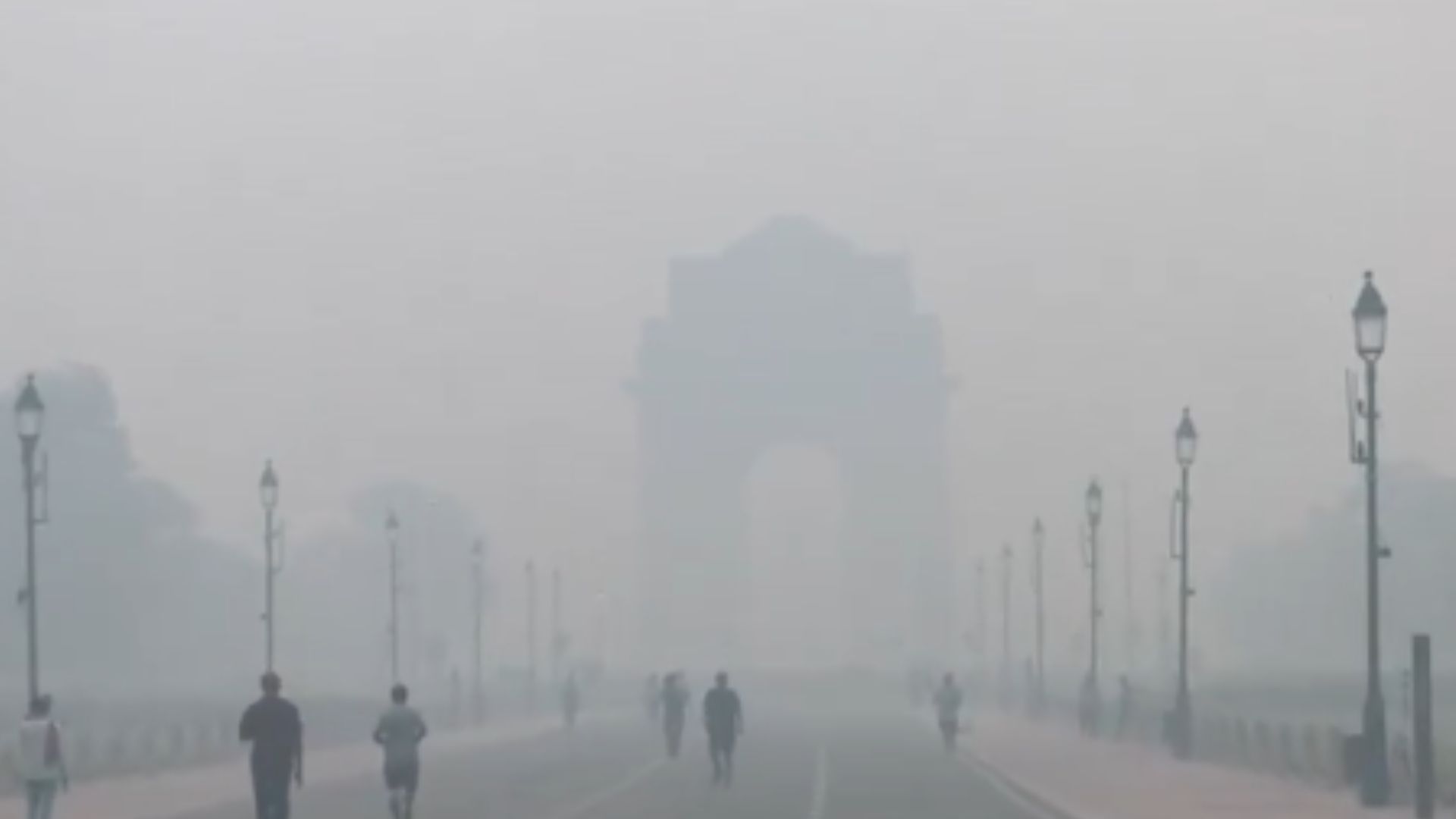

Delhi woke up to thick smog and poor visibility on Tuesday after widespread firecracker use during Diwali night celebrations. Out of 37 monitoring stations across the National Capital Region (NCR), 34 reported air pollution levels in the ‘red zone,’ showing ‘very poor’ to ‘severe’ air quality.
At 6:05 am, the city’s average Air Quality Index (AQI) was 347, according to real-time data. The 24-hour average AQI released by the Central Pollution Control Board (CPCB) stood at 345 — both falling under the ‘very poor’ category.
What Is Delhi’s AQI Category and Its Meaning
According to the CPCB, AQI readings are classified as follows:
-
0–50: Good
-
51–100: Satisfactory
-
101–200: Moderate
-
201–300: Poor
-
301–400: Very Poor
-
401–500: Severe
An AQI above 300 can trigger breathing difficulties, especially for children, the elderly, and people with respiratory illnesses.
Areas With Severe Pollution Levels in Delhi
Data from the CPCB’s SAMEER app revealed that three areas in Delhi recorded AQI levels above 400, marking them as ‘severe’:
-
Bawana: 418
-
Jahangirpuri: 404
-
Wazirpur: 408
Meanwhile, three stations reported AQI levels below 300, placing them in the ‘poor’ category — DTU (242), IGI Airport T3 (294), and Sri Aurobindo Marg (209).
Pictures shared by PTI showed dense smog reducing visibility on major roads and highways early in the morning.
Delhi Air Pollution Expected to Worsen Further
Weather experts warned that Delhi’s air quality could deteriorate further into the ‘severe’ category by Tuesday night and Wednesday. Calm winds and lower temperatures are likely to trap pollutants close to the ground, intensifying smog formation.
Noida and Ghaziabad AQI Also ‘Very Poor’
The air quality crisis was not limited to Delhi. According to the SAMEER app, Noida’s AQI reached 324, while Ghaziabad recorded 326, both categorised as ‘very poor.’ Residents in these areas also experienced dense smog and reduced visibility after Diwali celebrations.
Authorities Enforce Stage II of GRAP in Delhi-NCR
To tackle the worsening situation, the Commission for Air Quality Management (CAQM) implemented Stage II of the Graded Response Action Plan (GRAP) on Sunday across Delhi-NCR. This stage includes tighter controls on construction, industrial emissions, and vehicle movement.
Earlier, on October 15, the Supreme Court had allowed the sale and use of green firecrackers during limited hours — from 6 am to 7 pm and again from 8 pm to 10 pm on Diwali eve and the festival day. However, despite these restrictions, widespread use of firecrackers contributed significantly to the pollution spike.