
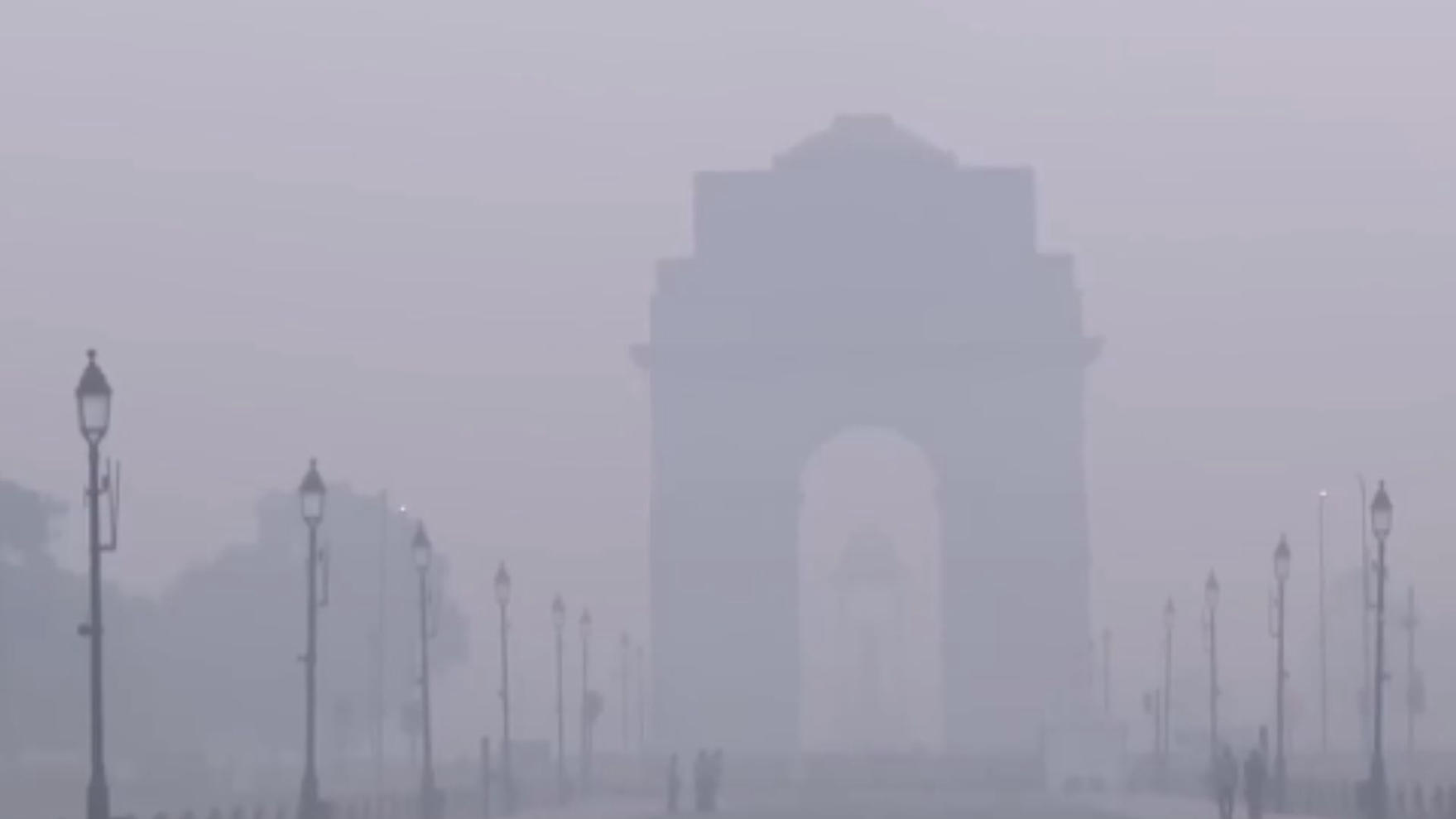

The festive mood in Delhi-NCR dimmed on Diwali eve as residents battled worsening air pollution. On Sunday night, the city’s Air Quality Index (AQI) deteriorated sharply, prompting authorities to enforce Stage 2 of the Graded Response Action Plan (GRAP-2).
According to data from the Central Pollution Control Board (CPCB), 24 out of Delhi’s 38 monitoring stations reported air quality in the “very poor” category. Anand Vihar recorded the worst pollution levels, entering the “severe” zone with AQI readings crossing 400.
By Monday morning, the situation had not improved. Most monitoring stations showed AQI levels above 300, with Anand Vihar still in the “severe” range at over 400.
Monday Morning Air Quality Data
As per CPCB readings taken at 6 a.m. on Monday, October 20, Anand Vihar registered the worst AQI at 414, while Sri Aurobindo Marg reported the best air quality at 158, which falls in the “moderate” category.
Here’s a summary of the AQI status across the city:
-
Severe (Above 400): 1 station
-
Very Poor (301–400): 29 stations
-
Poor (201–300): 4 stations
-
Moderate or Better (0–200): 1 station
According to CPCB standards, AQI between 0–50 is “good,” 51–100 is “satisfactory,” 101–200 is “moderate,” 201–300 is “poor,” 301–400 is “very poor,” and 401–500 is “severe.”
On Diwali eve, the AQI at 4 p.m. stood at 296 (“poor”), but by 10 p.m., it had worsened to 306, slipping into the “very poor” zone.
Stage 2 of GRAP Comes Into Effect
The Commission for Air Quality Management (CAQM) activated Stage II of the GRAP across Delhi-NCR on Sunday evening after the AQI crossed the “very poor” threshold. GRAP Stage I had already been in place since October 14.
Under Stage 2, twelve preventive actions are enforced to curb pollution. These include:
-
Strict curbs on the use of diesel generator sets.
-
Restrictions on interstate buses entering Delhi unless they are EVs, CNG, or BS-VI diesel compliant.
-
Increased parking fees to discourage private vehicle use.
Officials said these measures are aimed at preventing further deterioration of air quality during and after the festival.
Supreme Court Allows Green Crackers
Ahead of Diwali, the Supreme Court permitted the sale and bursting of green firecrackers in Delhi-NCR, under specific conditions. Their use was allowed only within fixed time slots — 6 a.m. to 7 p.m. and 8 p.m. to 10 p.m. — both on the day before Diwali and on the festival day.
Authorities said the impact of these crackers on the city’s AQI will become clearer in the coming days.
Delhi Weather Conditions
According to the India Meteorological Department (IMD), Delhi recorded a maximum temperature of 33.3°C, which is 0.9°C above normal, and a minimum temperature of 20.6°C, 2.2°C higher than average.
The IMD forecast for Monday predicted morning mist with temperatures likely to remain around 33°C (maximum) and 21°C (minimum).
Experts said calm wind conditions and a temperature inversion could worsen pollution by trapping pollutants near the surface.