
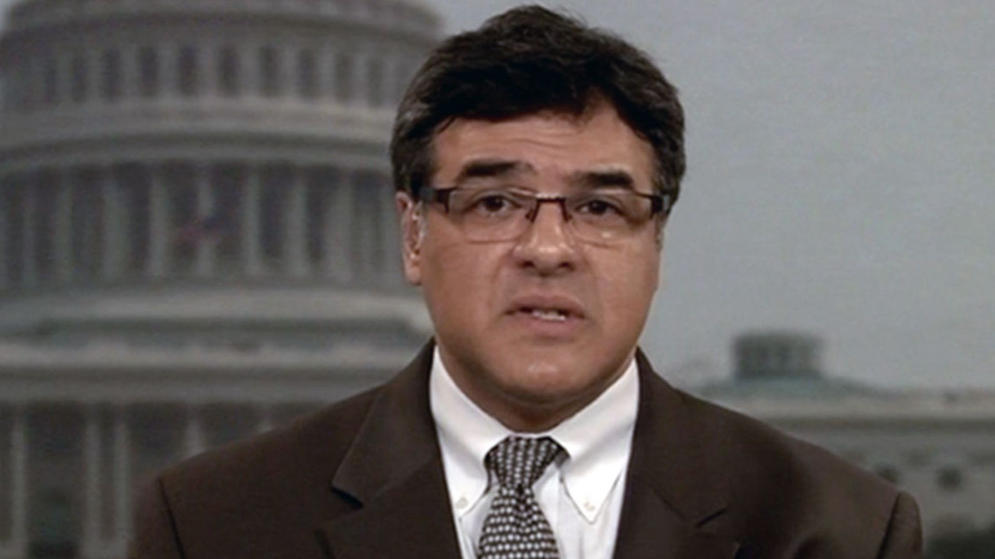

John Kiriakou, a former CIA analyst and counterterrorism officer, accused the United States of buying influence in Pakistan under General Pervez Musharraf. He said Washington supplied “millions and millions and millions of dollars” in military and economic aid. He added that US officials met Musharraf often.
“Our relations with the Pakistani government were very, very good. It was General Pervez Musharraf at the time. And look, let's be honest here. The United States loves working with dictators. Because then you don't have to worry about public opinion and you don't have to worry about the media anymore. And so we essentially just purchased Musharraf,” Kiriakou told ANI.
He said the aid gave the US wide freedom to act in Pakistan. “We gave millions and millions and millions of dollars in aid, whether it was military aid or economic development aid. And we would meet with Musharraf regularly, several times a week. And essentially he would let us do whatever we wanted to do. Yes. But Musharraf also had his own people that he needed to deal with,” he added.
Claim: Pentagon Controlled Pakistan’s Nuclear Weapons
Kiriakou said Musharraf feared terrorists might seize nuclear weapons. He claimed Musharraf handed control of Pakistan’s nuclear arsenal to the US Pentagon. Kiriakou said he heard this while posted in Pakistan in 2002.
“When I was stationed in Pakistan in 2002, I was told unofficially that the Pentagon controlled the Pakistani nuclear arsenal, that Musharraf had turned control over to the United States because he was afraid of exactly what you just described (nuclear weapons falling into terrorist hands),” he told ANI.
Dual Policy
Kiriakou accused Musharraf of playing a double game. He said Musharraf publicly cooperated with the US on counterterrorism. But he also allowed actions aimed at India to continue.
“He had to keep the military happy. And the military didn't care about al Qaeda. They cared about India. And so in order to keep the military happy and keep some of the extremists happy, he had to allow them to continue this dual life of pretending to cooperate with the Americans on counterterrorism while committing terror against India,” Kiriakou said.
He added that tensions between India and Pakistan rose in 2002, and he noted the timing around the 2001 Parliament attack. “India-Pakistan were on the brink of war in 2002. December 2001 was when Parliament attack also happened. During that time,” he said.
On Corruption: Bhutto’s Lavish Life
Kiriakou described deep corruption among Pakistan’s elite. He contrasted their luxury with the public’s hardship. He singled out former prime minister Benazir Bhutto. He recalled visiting her in exile in Dubai. He said she lived in a costly home and spoke angrily about her husband’s cars.
“When Benazir Bhutto was in exile in Dubai, I went to see her with another senior officer. I went as the note taker. And she lived in this $5 million palace on the Gulf. And we were sitting in the front room, the salon of the house, and we heard a car pull up. And she said, her exact words, so help me God, if he came home with another Bentley, I'm going to kill him!” he recalled.
When asked if she meant Asif Ali Zardari, Kiriakou said, “Yeah. Her husband.” He added bluntly: “She lives in a $5 million house and he has a collection of Bentleys. Aren't they ashamed of themselves? Like, how can they go back to Pakistan and look the Pakistani people in the face when their people don't even have shoes and enough food to eat? Like, I understand corruption is a problem there, but that level of corruption? Come on!”
Kiriakou’s Overall View
Kiriakou described Pakistan as “deep buried under corruption.” He said some leaders lived lavishly abroad while ordinary people struggled. He painted a picture of a country where power, money, and outside influence mixed to shape policy.