
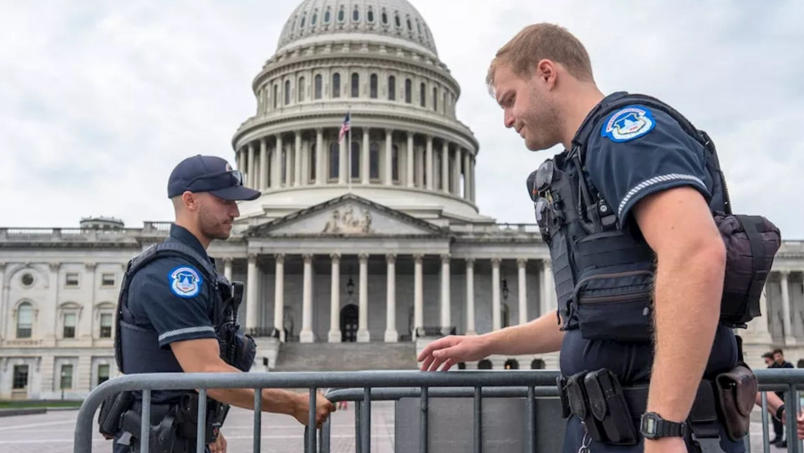

The United States government shutdown has crossed four weeks, bringing the world’s richest nation to an unusual halt. Hundreds of thousands of government employees remain unpaid, key public programs are running out of funds, and millions of citizens are preparing for growing economic pain.
Federal Workers Face Harsh Reality
The most visible impact of the shutdown is on federal workers, caught in a political deadlock. Nearly 730,000 employees continue to work without pay to keep essential services running. Another 670,000 have been furloughed and won’t receive salaries unless Congress approves back pay.
Many of these workers belong to crucial agencies like Homeland Security, the Transportation Security Administration (TSA), and the Internal Revenue Service (IRS). They have already missed their first full paycheck, forcing many to find side jobs, deliver food, or sell personal belongings to manage expenses.
Labor unions and lawmakers are urging Congress to end the shutdown. “It’s time to pass a clean continuing resolution and end this shutdown today. No half measures, and no gamesmanship,” said Everett Kelley, president of the American Federation of Government Employees. His union has demanded normal funding and full back pay for all affected workers.
Major Public Programs Running Out of Funds
As the shutdown stretches into its fifth week, several federal programs that millions rely on are at risk of stopping.
The Supplemental Nutrition Assistance Program (SNAP), which supports over 40 million Americans, may run out of money by Saturday. Politico reported that the Trump administration refused to use a $5 billion emergency fund, even though $9 billion is needed to sustain the program through November.
Senate Democratic Leader Chuck Schumer accused the administration of making “an intentional choice not to fund SNAP this weekend.”
He said the Department of Agriculture’s actions contradict earlier policies that allowed emergency reserves during shutdowns.
The Women, Infants, and Children (WIC) program, which helps around 7 million low-income mothers and children, is also close to losing funds. Temporary support from school meal programs will end this weekend unless another $300 million is approved.
The Head Start program, which provides early education and healthcare to children from poor families, faces a similar crisis. The National Head Start Association warned that funding for more than 130 programs across 41 states and Puerto Rico could lapse soon. Some centers have already alerted parents about possible closures.
The Essential Air Service (EAS), which connects rural towns to major cities, is also under threat. The Department of Transportation had diverted $42 million earlier this month to keep small airlines operational, but that support is nearly gone. Without subsidies, flights could stop, and ticket prices could soar.
Military Pay Faces Temporary Relief
The Trump administration has taken emergency steps to keep the military paid. President Donald Trump approved payments to active-duty troops by diverting $6.5 billion from research and development funds. This move helped 1.3 million service members receive their salaries — at least for now.
However, this solution may not last. The Defense Department’s remaining funds are limited, and the next payroll is due Friday. Pentagon officials also confirmed they received a $130 million anonymous donation to cover pay during the crisis. The donor’s identity remains secret.
Civilian workers in defense and other agencies, including logistics and procurement, are already missing full paychecks. The White House has explored extending similar emergency measures to other departments, such as airport security, but legal hurdles persist.
Senate Democrats have rejected partial funding bills, saying such plans would let the administration decide “who gets paid and who doesn’t,” giving it leverage in negotiations.
Travel, Healthcare, and Economy Hit Hard
Airports across the US are facing delays as TSA agents and air traffic controllers work unpaid. Rising absenteeism has led to long queues, canceled flights, and safety concerns. Experts warn that morale and efficiency could worsen if the shutdown continues.
The healthcare sector is also suffering. The Centers for Medicare and Medicaid Services (CMS) has limited staff available to manage the Affordable Care Act (ACA) enrollment period. Many users reported outdated information on the Healthcare.gov website, causing confusion among millions of Americans seeking insurance.
Senator Tim Kaine said Democrats are trying to reach a “comprehensive deal” to reopen the government while protecting healthcare subsidies. But Republicans insist discussions must wait until the shutdown ends.
“I’m particularly worried about premiums going up for working families,” said Senator David McCormick.
Political Deadlock in Washington
Despite mounting public anger, Washington remains divided. Trump, currently on a three-nation Asia tour, has refused to change his position.
House Speaker Mike Johnson has opposed interim funding, claiming that short-term pay bills would reduce pressure on Democrats to negotiate a full deal.
Meanwhile, Senate Majority Leader Chuck Schumer accused Republicans of prolonging the crisis.
Even moderates like Senator Lisa Murkowski have called for unity. “Right now, those that are losing are the American people,” she said.
Economic Damage Mounts
Economists warn that the prolonged shutdown could slow the US economy through reduced consumer spending, stalled contracts, and delayed federal projects. While the Treasury Department has not missed debt payments, experts fear that extended gridlock could shake investor confidence.
The 2019 shutdown caused a measurable dip in GDP growth, and analysts expect similar effects now. The sight of the world’s largest economy unable to pay its own workers has shocked international observers.
With Thanksgiving approaching, millions of families face uncertainty over food, healthcare, and work. Yet, both political parties remain firm in their stances.
Senate Majority Leader John Thune summed it up grimly: “Things are about to get worse.”
If no agreement is reached soon, the United States — a global superpower — could continue failing in a basic duty: paying its own people.