
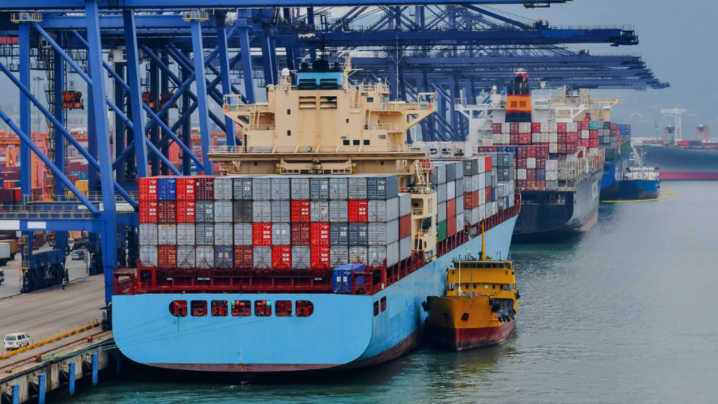

China announced on Monday that it would suspend “special port fees” for US vessels for one year. The move matches Washington’s decision to pause its own fees on Chinese ships. It shows both sides are easing trade tensions after months of tariff disputes.
The decision followed the meeting between Presidents Xi Jinping and Donald Trump in South Korea last month. At that meeting, both leaders agreed to roll back some harsh trade measures.
The tariff war had earlier reached extreme levels, hurting global trade and supply chains. The new suspension began at 13:01 local time (0501 GMT) on Monday, the Chinese Transport Ministry said.
Asia Dominates Shipbuilding
The suspended fees applied to US-operated or US-built ships visiting Chinese ports. The US shipbuilding sector, once powerful after World War II, now produces only 0.1 percent of the world’s ships.
Today, Asia leads global shipbuilding. China builds nearly half of all new vessels, followed by South Korea and Japan.
Beijing Lifts Sanctions on Hanwha Subsidiaries
China also said it would suspend sanctions for one year on US subsidiaries of Hanwha Ocean, a major South Korean shipbuilder. The move, effective November 10, follows Washington’s decision to halt port fees on Chinese ships.
"In light of this (US suspension)... China has decided to suspend the relevant measures for one year," the Commerce Ministry said.
Beijing had imposed sanctions in October on five Hanwha subsidiaries in the US. These included Hanwha Shipping LLC, Hanwha Philly Shipyard Inc., Hanwha Ocean USA International LLC, Hanwha Shipping Holdings LLC, and HS USA Holdings Corp.
China accused them of supporting a US “Section 301” investigation that claimed Beijing’s control of the shipbuilding industry was “unreasonable.”
Chinese companies and individuals had been banned from working with these firms. A planned investigation into whether that US probe affected China’s shipbuilding industry was also put on hold for a year.
China Adds Controls on Fentanyl Chemicals
China also announced new export controls on Monday. The Commerce Ministry said it had added more than a dozen fentanyl precursor chemicals to its list of restricted exports to the US, Mexico, and Canada.
The US has long blamed China for failing to stop the flow of chemicals used to make fentanyl, a drug fueling a deadly crisis in America.
The White House said earlier this month that China had agreed to “stop the shipment of certain designated chemicals to North America.” The move is part of “significant measures to end the flow of fentanyl.”
Signs of Trade Recovery
The latest actions suggest improving ties between Beijing and Washington. Last week, China extended the suspension of extra tariffs on US goods for another year, keeping them at 10 percent. It also paused tariffs on soybeans and other US farm products.
On Sunday, China lifted export bans on gallium, germanium, and antimony — metals vital for modern technology. In return, Washington suspended export restrictions on affiliates of blacklisted foreign companies that hold more than a 50 percent stake.
Beijing also paused restrictions on the export of rare earth technology for one year. These steps reflect a slow but steady thaw in the trade relationship between the two economic powers.