
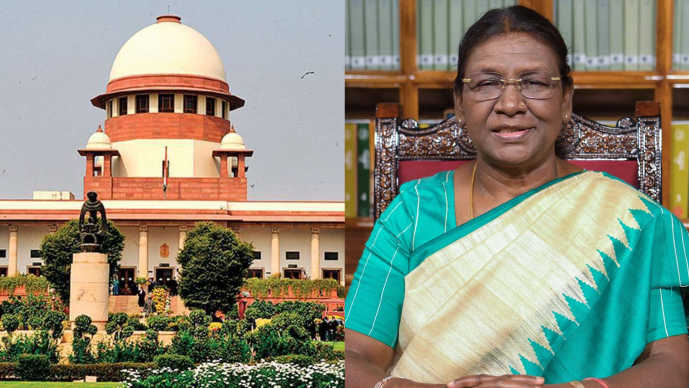

The Supreme Court will announce its opinion on Thursday in the Article 143 reference made by President Droupadi Murmu. The reference seeks clarity on whether the President and state governors must follow fixed time limits while granting assent to bills under Articles 200 and 201 of the Constitution.
A five-judge Constitution Bench led by Chief Justice of India BR Gavai will deliver the verdict. The matter stems from the Court’s April 12 ruling, where it had set deadlines for the President and Governors to act on bills passed by state legislatures.
In August, CJI Gavai had clarified that the Court was playing only an “advisory” role in this matter and would not act as an appellate body. However, the earlier judgment triggered constitutional debate on whether the judiciary can direct the President and Governors to follow timelines when dealing with state bills.
Why This Issue Reached the Supreme Court
The debate began in April when the Supreme Court issued a significant ruling. It held that the President must decide on any bill sent for her consideration within three months of receiving it. The Court also declared Tamil Nadu Governor RN Ravi’s decision to withhold certain bills as “illegal.”
Additionally, the Court said that if the President withholds assent on a bill forwarded by a Governor, the concerned state government can approach the Supreme Court directly. This expanded judicial oversight sparked questions about whether such directions violated the separation of powers.
President Murmu then used her powers under Article 143(1) to seek formal guidance. She asked the Court whether judicially imposed timelines apply to the President’s discretion over bills passed by state assemblies.
What the President Asked the Court
In a five-page reference, President Murmu presented 14 detailed questions. She sought clarity on the powers of Governors and the President under Articles 200 and 201, especially on how they should handle bills approved by state legislatures.
Several states—including Tamil Nadu, Kerala, Punjab, and West Bengal—questioned the need for a fresh reference. They said the April judgment had already answered these concerns. Yet the Supreme Court examined whether Governors can delay bills indefinitely without returning them to the legislature. The Court noted that such delays could weaken the authority of elected governments.
Union Government Opposes Timelines
Attorney General R. Venkataramani and Solicitor General Tushar Mehta represented the Union government. They opposed strict time limits for the President or Governors. They argued that the Constitution gives them discretionary power, and imposed deadlines could violate the separation of powers.
Mehta also supported the view that the Supreme Court may reconsider or revise an earlier judgment when acting under Article 143.