
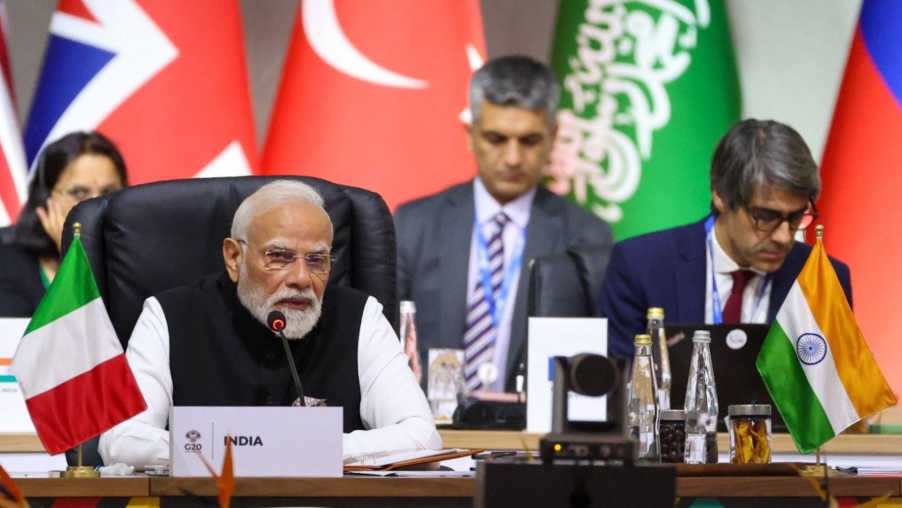

India unveiled a G20 Critical Minerals Circularity Initiative on Saturday to boost recycling, urban mining, second-life batteries, and new clean-energy innovations. Prime Minister Narendra Modi made the pitch at the second session of the G20 Summit in Johannesburg.
He said India remains firmly committed to sustainability and clean energy. He explained that the new initiative will help the world secure essential minerals while reducing environmental damage.
Modi seeks shared satellite data
During his address, Modi also called for a G20 Open Satellite Data Partnership.
The plan aims to make satellite data and analysis from G20 space agencies “more accessible for countries of the Global South”.
He later shared key highlights of his speech through a series of posts on X.
Session focuses on resilience
The second session was titled A Resilient World — the G20’s Contribution: Disaster Risk Reduction, Climate Change, Just Energy Transitions, Food Systems.
Modi said India is already working strongly in all these areas. He added, “India has been actively working on all these fronts, building a future that is human centric and inclusive.”
Climate change threatens agriculture
Modi warned that climate change hits the agriculture sector the hardest, placing food security at risk.
He explained how India has been responding through the world’s largest food security and nutrition support programme, along with the world’s largest health insurance scheme and a wide-reaching crop insurance programme.
He also said, ”India is also at the forefront of promoting Shree Anna or millets which are nutritious.”
India stresses global cooperation
Modi argued that global problems need collective solutions.
“This is what made India establish the Disaster Risk Reduction Working Group during our G20 Presidency,” he said.
He added that disaster management should be development centric, not only response centric.
Modi arrives for the summit
Modi reached the Waterkloof Air Force Base near Johannesburg on Friday for the summit hosted by South Africa.