
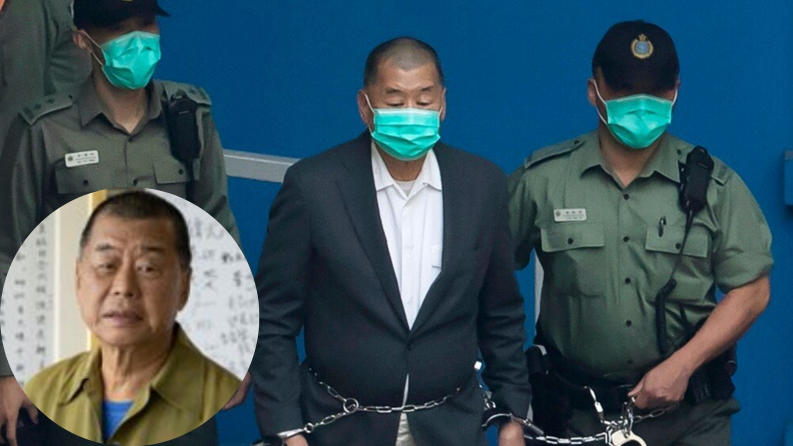

Jimmy Lai, the founder of the now-closed Apple Daily newspaper and a long-time critic of Beijing, was found guilty on Monday in a major national security case in Hong Kong. A panel of three judges approved by the government ruled that the 78-year-old conspired with foreign forces and allowed the publication of seditious content.
Lai denied all the accusations. He pleaded not guilty to every charge brought against him. The court will announce his sentence at a later date. Under Hong Kong’s strict national security law, he could receive a life sentence.
Case Seen as Turning Point for Political Freedoms
Authorities have held Lai in detention since 2020. Critics see his prosecution as strong evidence of shrinking political space in Hong Kong. They link the case to the national security law imposed by Beijing after the massive pro-democracy protests in 2019, some of which turned violent.
Apple Daily, once one of Hong Kong’s most popular newspapers, shut down after authorities froze its assets and arrested senior staff.
Prosecutors Detail Alleged Foreign Collusion
Prosecutors told the court that Lai was behind two separate plots. They said he tried to push foreign governments to take action against Hong Kong or China. These actions included calls for “sanctions or blockade” measures and other “hostile activities.”
They also accused Lai of supervising the publication of articles that, according to authorities, had “excited disaffection” against the government.
Judges Cite Long-Standing Opposition to Beijing
Judge Esther Toh, delivering the court’s findings, said the evidence showed Lai’s deep hostility toward Beijing.
“There is no doubt that (Lai) had harboured his resentment and hatred of the PRC for many of his adult years, and this is apparent in his articles,” she said, using the abbreviation for the People’s Republic of China.
She added that Lai had thought for years about how foreign powers could pressure Beijing.
“It is also clear to us that the first defendant has from an early stage, long before the National Security Law, been applying his mind as to what leverage the US could use against the PRC,” she added.
Tight Security and International Attention
Lai remained calm as the judges delivered their verdicts. He wore a light green cardigan and a grey jacket. He sat with his arms folded and did not speak in court.
Police enforced heavy security around the courthouse. Dozens of officers guarded the area, and authorities parked an armoured vehicle nearby.
Several foreign diplomats attended the hearing. Representatives from the United States, the European Union, and France lined up to enter the courtroom.
“We’re here to observe… to signal close interest in these cases,” said Matthias Kaufmann, deputy head of the EU Office to Hong Kong and Macao.
Family and Pro-Democracy Figures Present
Members of Lai’s family were also in court. His wife, Teresa, and his son, Lai Shun-yan, attended the hearing. Well-known pro-democracy figures, including Cardinal Joseph Zen and former lawmaker Emily Lau, were also present.
Their presence underlined the importance of the case, which many see as a defining moment for Hong Kong’s legal system and civil liberties.