
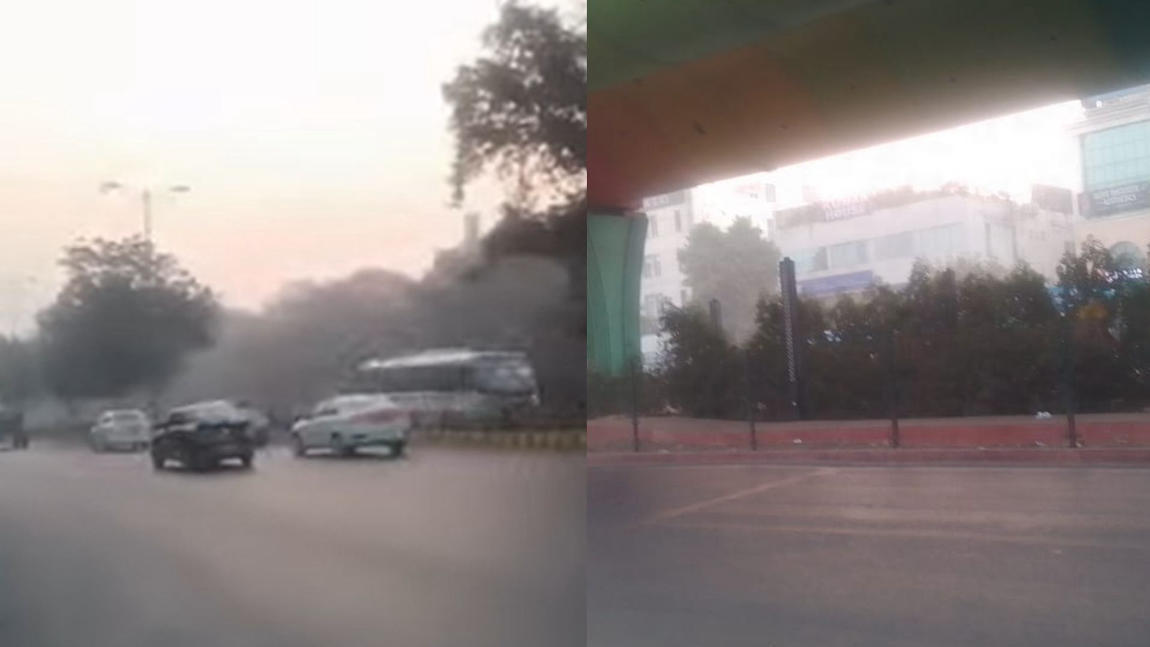

Delhi witnessed a sharp decline in air quality on Wednesday as most monitoring stations across the city reported Air Quality Index readings in the very poor range. The worsening pollution has raised major health concerns for residents, especially children, the elderly, and those with breathing problems.
Data showed that air quality deteriorated across nearly all parts of the national capital.
Industrial and Traffic Zones Worst Affected
According to area-wise readings, industrial belts and high-traffic zones emerged as the most polluted. Bawana recorded the highest AQI at 378, making it the most polluted location in the city. Mundka followed with a reading of 370, while Pusa, Rohini, ITO, Wazirpur, Nehru Nagar, Jahangirpuri, and NSIT Dwarka all recorded AQI levels between 360 and 365.
These figures are dangerously close to the severe category. Prolonged exposure at such levels can cause breathing difficulty even in people without existing health conditions.
Residential and Commercial Areas Also Hit Hard
Several residential and commercial neighbourhoods also reported worrying pollution levels. Ashok Nagar recorded an AQI of 350, while DTU stood at 357. Sirifort, Vivek Vihar, and Shadipur reported AQI levels ranging between 343 and 356.
RK Puram, Dwarka Sector 8, and the Dr Karni Singh Shooting Range also remained firmly in the very poor category with AQI readings around 342. Older and central parts of the city were no better. Chandni Chowk recorded 328, Punjabi Bagh stood at 339, Patparganj at 331, and the North Campus of Delhi University reported an AQI of 319.
Even Greener Areas See Decline
Areas usually considered greener or less crowded also experienced unhealthy air. Lodhi Road recorded an AQI of 289, while CRRI Mathura Road stood at 297, both hovering near the boundary between poor and very poor air quality.
Aya Nagar and IGI Airport Terminal 3 showed slightly lower readings at 272 and 263 respectively, but the air remained unhealthy. The lowest AQI levels in the city were recorded at IHBAS, Dilshad Garden, at 247 and Mandir Marg at 257. Even these locations stayed within the poor category.
Andrews Ganj Shows Temporary Relief
A JUSZNEWS reporter noted comparatively better air quality at Andrews Ganj Ring Road at around 7:15 am. This is a busy traffic corridor, yet pollution levels there appeared lower during the early morning hours.
Health Impact and Advisory for Residents
According to AQI.in, breathing Delhi’s air at current levels is equivalent to “smoking 8.5 cigarettes a day.” The platform advised residents to take protective measures to reduce exposure.
People were urged to remain indoors as much as possible and keep windows closed to limit contact with polluted air. Those with health conditions were advised to follow medical advice strictly and take prescribed medicines on time. The use of air purifiers was recommended, especially in bedrooms and shared living spaces.
Residents were also cautioned against smoking or exposure to secondhand smoke. Outdoor exercise and strenuous physical activity were strongly discouraged as they could worsen the impact of polluted air on the lungs.