
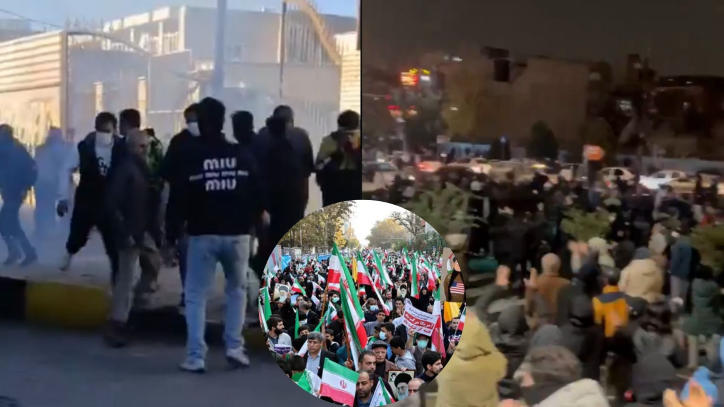

Iran is struggling to control a fresh wave of anti-government protests. At the same time, officials say US President Donald Trump’s threats have made the situation more difficult.
The pressure increased after US forces captured Venezuela’s President Nicolas Maduro and took him to New York. Iranian officials said this move sent a strong warning signal to Tehran.
Trump Warning Raises Alarm in Tehran
One day before US special forces seized Maduro and his wife on January 3, Trump issued a warning. In a social media post, he said that if Iran’s leaders killed protesters, the US “will come to their rescue”.
Protests began in Iran on December 28. Since then, at least 17 people have died, according to rights groups.
As a result, Iranian leaders now face added international pressure while trying to restore order at home.
Economic Crisis Limits Iran’s Options
Meanwhile, Iran’s choices remain limited due to a deep economic crisis. The situation worsened after Israel, backed by the US, carried out air strikes on Iran in June.
The 12-day conflict damaged several nuclear sites and further weakened the economy.
“These twin pressures have narrowed Tehran’s room for manoeuvre, leaving leaders caught between public anger on the streets and hardening demands and threats from Washington, with few viable options and high risks on every path,” one Iranian official told Reuters.
Two other officials and a former senior official shared similar concerns. All spoke anonymously due to the sensitivity of the matter.
Fear Iran Could Be ‘Next Victim’
After US action in Venezuela, some officials now fear Iran could be next. A second official said authorities worry Iran may become “the next victim of Trump’s aggressive foreign policy”.
Years of US sanctions have already weakened Iran’s economy. In addition, the Iranian rial has sharply fallen since last year’s Israeli-US strikes. These attacks targeted nuclear facilities that the West says Iran used to pursue nuclear weapons. Iran denies the claim.
Protests Smaller but More Political
The current protests are not as large as the unrest seen in 2022–23 after the death of Mahsa Amini. She died in custody after being detained by morality police for allegedly violating hijab rules.
However, these new protests have evolved quickly. While they began over economic issues, they now reflect wider anger.
Some protesters chant “Down with the Islamic Republic” and “Death to the dictator”. These slogans refer to Supreme Leader Ayatollah Ali Khamenei, who holds ultimate authority.
Unity Narrative Under Threat
This shift worries Iran’s leadership. Officials have tried to preserve national unity following the Israeli-US strikes. However, growing street anger now challenges that effort.
A third official said fears are rising in Tehran that “Trump or Israel might take military action against Iran, like what they did in June.”
Iran Condemns US Over Venezuela Action
Iran has long maintained close ties with Venezuela. Both countries are major oil producers and have suffered under US sanctions. Tehran condemned Washington’s move against Maduro. It also strongly criticised Trump’s statements on Iran.
Foreign Ministry spokesperson Esmaeil Baghaei said such comments on “Iran’s internal affairs amount, under international norms, to nothing more than incitement to violence, incitement to terrorism, and incitement to killing”.
On Friday, Trump repeated his warning, saying, “We are locked and loaded and ready to go,” without giving details.
Khamenei Issues Stern Warning
The protests threaten what Khamenei has always prioritised — protecting the Islamic Republic at all costs. On Saturday, he accused “enemies of the Islamic Republic” of stirring unrest. He warned that “rioters should be put in their place”.
Deadliest Unrest in Three Years
Authorities have used a mixed approach. They say economic protests are legitimate and promise dialogue. At the same time, security forces have used tear gas during violent clashes.
Rights groups said at least 17 people have been killed in one week. Officials also confirmed that two security personnel died and more than a dozen were injured.
Fallout From June Air Strikes Continues
Iran’s leadership is still dealing with the aftermath of the June Israeli-US strikes. The attacks killed senior Revolutionary Guard commanders and nuclear scientists.
The strikes occurred just one day before planned nuclear talks with the US. Since then, negotiations have stalled. Still, both sides say they remain open to an agreement.
The US and its allies accuse Iran of using its nuclear program to develop weapons. Iran denies this and says its program is peaceful.
Economy Drives Public Anger
Economic hardship remains the main cause of public anger. Many Iranians resent the growing gap between ordinary citizens and a powerful clerical and security elite. State media has acknowledged mismanagement, corruption, and inflation.
Witnesses reported heavy security in major cities. “You can feel the tense atmosphere in Tehran, but life continues as normal,” said Amir Reza, 47, a carpet shop owner in Tehran’s Grand Bazaar.
Government Announces Limited Relief
President Masoud Pezeshkian has called for dialogue. He promised reforms to protect purchasing power and stabilize the financial system.
From January 10, the government will give citizens monthly electronic credits worth 10,000,000 rials per person, or about $7. The credit can be used only in selected grocery stores, Tasnim news agency reported.
For low-income families earning little more than $150 a month, the support offers limited relief.
In 2025, the rial lost about half its value against the dollar. Official inflation reached 42.5% in December.