
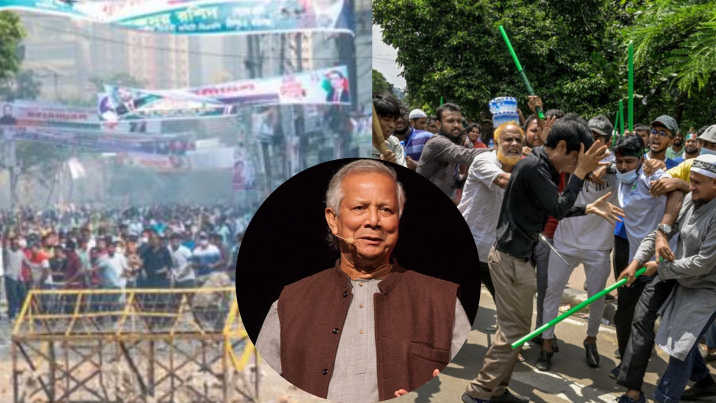

India on Tuesday asked the families of Indian officials posted in Bangladesh to come back home as a safety measure. The advice was issued because of security concerns linked to Bangladesh’s approaching parliamentary elections. The information was shared by government sources and reported by PTI.
“Given the security situation, as a precautionary measure, we have advised the dependents of mission and post officials to return to India,” the sources said.
However, the move does not affect India’s diplomatic presence in Bangladesh. The Indian High Commission in Dhaka and other Indian offices across the country continue to function normally. All diplomatic work and public services are being carried out without disruption, the report added.
So far, the Ministry of External Affairs (MEA) has not issued any official statement on the development.
Bangladesh elections amid political uncertainty
Bangladesh is set to hold national elections on February 12. These will be the first elections since the political upheaval of 2024, when mass protests led to the fall of Sheikh Hasina’s government.
The country has faced continued instability since August 2024, when a student-led uprising forced Hasina out of power, ending her 15-year rule. The unrest created a political vacuum and raised concerns about law and order.
Nobel Peace Prize winner Muhammad Yunus, now 85, returned from exile at the request of protest leaders. He was appointed to head a caretaker administration as “chief adviser.” Yunus is expected to step down after the general elections.
India-Bangladesh relations under strain
Ties between India and Bangladesh have weakened following the political changes in Dhaka and a series of diplomatic disagreements.
Tensions rose sharply after Sheikh Hasina was removed from office during widespread protests and violence. She later travelled to India, where she sought refuge. Soon after, Muhammad Yunus was appointed to lead the interim government.
Yunus’s administration later asked India to extradite Hasina following her conviction in Bangladeshi courts. India confirmed that it had received the request but did not make any commitment. New Delhi said it was closely watching the situation and hoped for stability in Bangladesh.
Relations became more strained after comments by some Bangladeshi leaders regarding India’s northeastern states. These remarks triggered strong reactions from New Delhi. India also raised concerns over increasing attacks on minority communities in Bangladesh and urged the authorities to ensure their safety.
The situation worsened further after Bangladeshi political figure Osman Hadi was killed during an election campaign. Bangladeshi officials alleged that those responsible fled to India. New Delhi rejected the claim.
Rising violence against minority communities
Recent months have seen a disturbing rise in targeted attacks against minority groups, especially Hindus, causing concern both within Bangladesh and abroad.
In January alone, several violent incidents were reported. Ripon Saha was run over in Rajbari after an argument with a customer. In Sylhet, Birendra Kumar Dey’s house was set on fire. Samir Das was found dead in Feni. Earlier in the month, Sarat Mani Chakraborty, Rana Pratap, and a Hindu businessman in Gazipur were killed in separate incidents.
Similar violence was reported in December. Factory worker Dipu Chandra Das was lynched over a false blasphemy allegation. Reports said he was hanged and then set on fire. Violence following the death of a student leader also spread to media houses, including Prothom Alo and The Daily Star. Hindu homes and cultural institutions were also attacked during the unrest.