
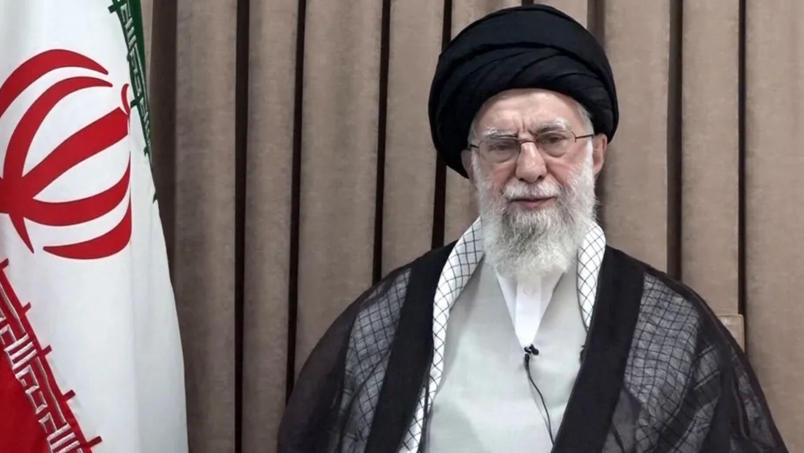

Iran’s Supreme Leader Ayatollah Ali Khamenei did not attend the annual February 8 meeting with air force commanders, ending a tradition he had followed every year since taking power in 1989. His absence comes at a time when tensions between Iran and the United States are once again increasing.
The yearly gathering is considered an important symbol of loyalty to the Islamic Republic and has been a regular part of Iran’s military calendar for almost four decades. This time, however, the country’s armed forces chief of staff, Abdolrahim Mousavi, met senior air force officers in Khamenei’s place.
Symbolic absence during rising tensions
Khamenei’s decision to stay away has drawn attention because it happened during a period of strained relations with Washington. There are growing fears of a possible US military strike, and the situation has made the region tense. Iran’s leader has earlier warned that any American attack could trigger a wider conflict, saying, “If the US initiates a war this time, it would spill over across the entire region.”
Over the years, Khamenei has led Iran through several regional conflicts and political challenges, firmly establishing himself as the country’s highest authority. Because of this, missing such a ceremonial yet politically important event has sparked discussion.
Possible message from Iran’s leadership
Experts believe the decision to send a senior official instead of Khamenei may be intentional. It could be a way to signal that Iran’s leadership is focusing more on careful strategy than on symbolic displays. It may also reflect internal discussions about how the country should respond to pressure from the United States, whether through diplomacy, military readiness, or both.
Nuclear talks and ongoing disagreements
Iran recently held nuclear discussions with the United States in Oman, which Iranian diplomats described as a “good start” despite strong differences over Tehran’s missile programme and its regional role. At the same time, Iran has made it clear that no one can stop it from continuing its nuclear enrichment activities, showing that while talks are taking place, tensions and disagreements remain.