
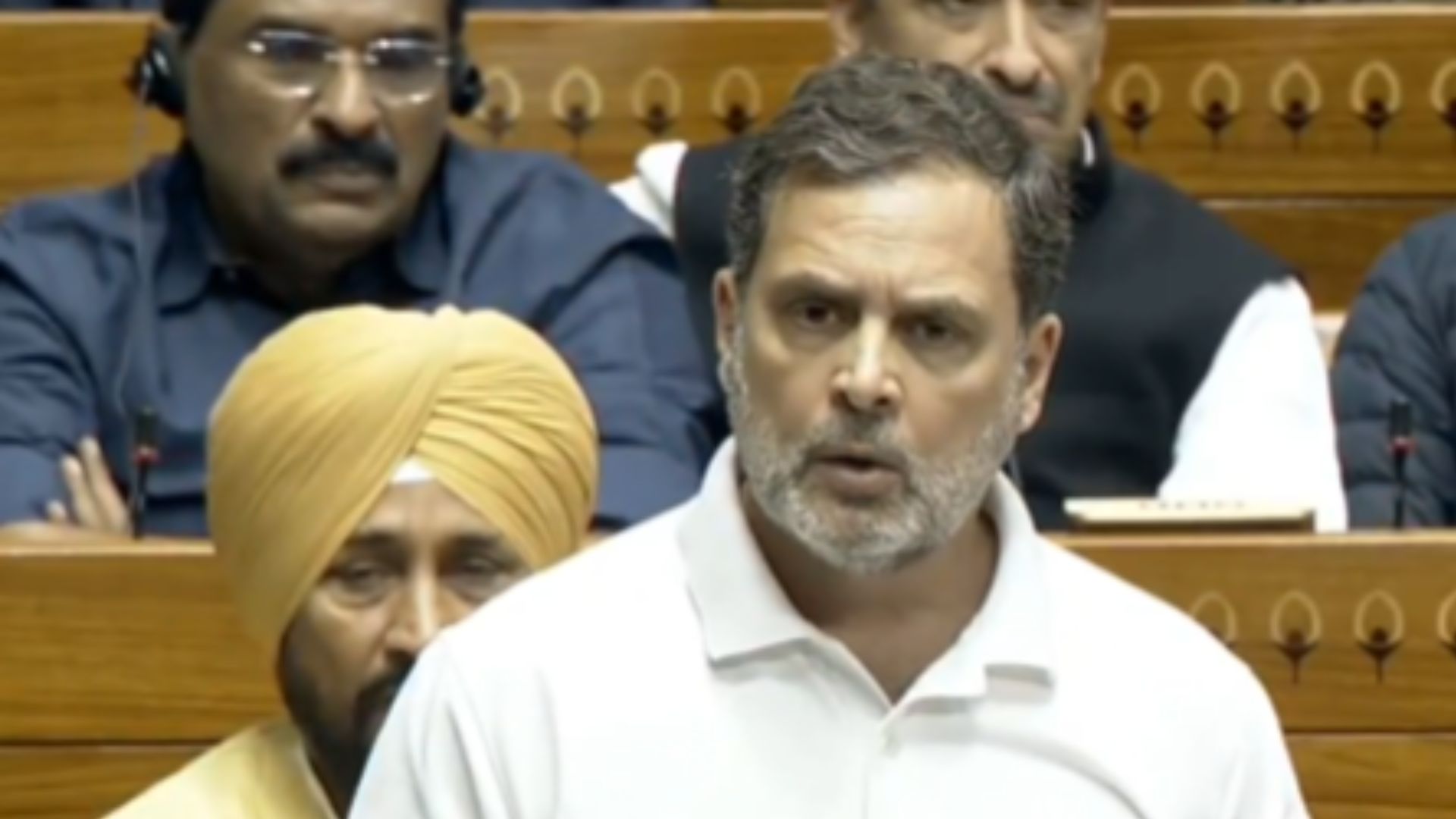

BJP Member of Parliament Nishikant Dubey has clarified that he has not moved a privilege motion against Leader of the Opposition Rahul Gandhi. However, he confirmed that he has submitted a substantive motion demanding strict action against the Congress leader, including cancellation of his membership from Parliament.
Dubey made it clear that his move is serious and based on what he described as concerning allegations.
“There is no privilege motion. I have submitted a substantive motion wherein I have mentioned how he allegedly engages with the Soros Foundation, Ford Foundation, USAID and travels to places like Thailand, Cambodia, Vietnam and the US, and how he is linked with anti-India forces," Dubey said.
He further demanded that Rahul Gandhi’s membership in Parliament should be cancelled. He also asked that Gandhi be permanently barred from contesting elections in the future.
Rahul Gandhi’s Remarks Trigger Political Reaction
This development came just one day after Rahul Gandhi sharply criticised the interim trade agreement between India and the United States in the Lok Sabha.
On Wednesday, during a debate on the Union Budget, Gandhi described the trade deal as a “wholesale surrender.” He claimed that the agreement had compromised India’s energy security and harmed the interests of Indian farmers.
Gandhi argued that Indian interests had been “surrendered" under the trade deal to protect the BJP’s financial architecture.
He strongly criticised the Indo-US agreement and used a martial arts comparison to explain his point. He said that in martial arts, once a fighter secures a grip, the next move is a chokehold, and eventually the opponent taps out in surrender. Through this analogy, he suggested that India was being forced into submission through the deal.
What Is a Substantive Motion?
A substantive motion is a formal proposal introduced by a Member of Parliament for discussion and decision in the House. It generally addresses a serious matter that requires action.
Such a motion can be similar in seriousness to a no-confidence motion or even an impeachment motion. It can be brought against a person holding an official or high constitutional position.
Before it is accepted, the House debates whether it should be admitted. The member who moves the motion must provide proper evidence and clearly explain the charges or grounds against the person concerned.
In simple terms, a substantive motion is a formal and significant proposal that requires the House to take a clear decision after discussion.