
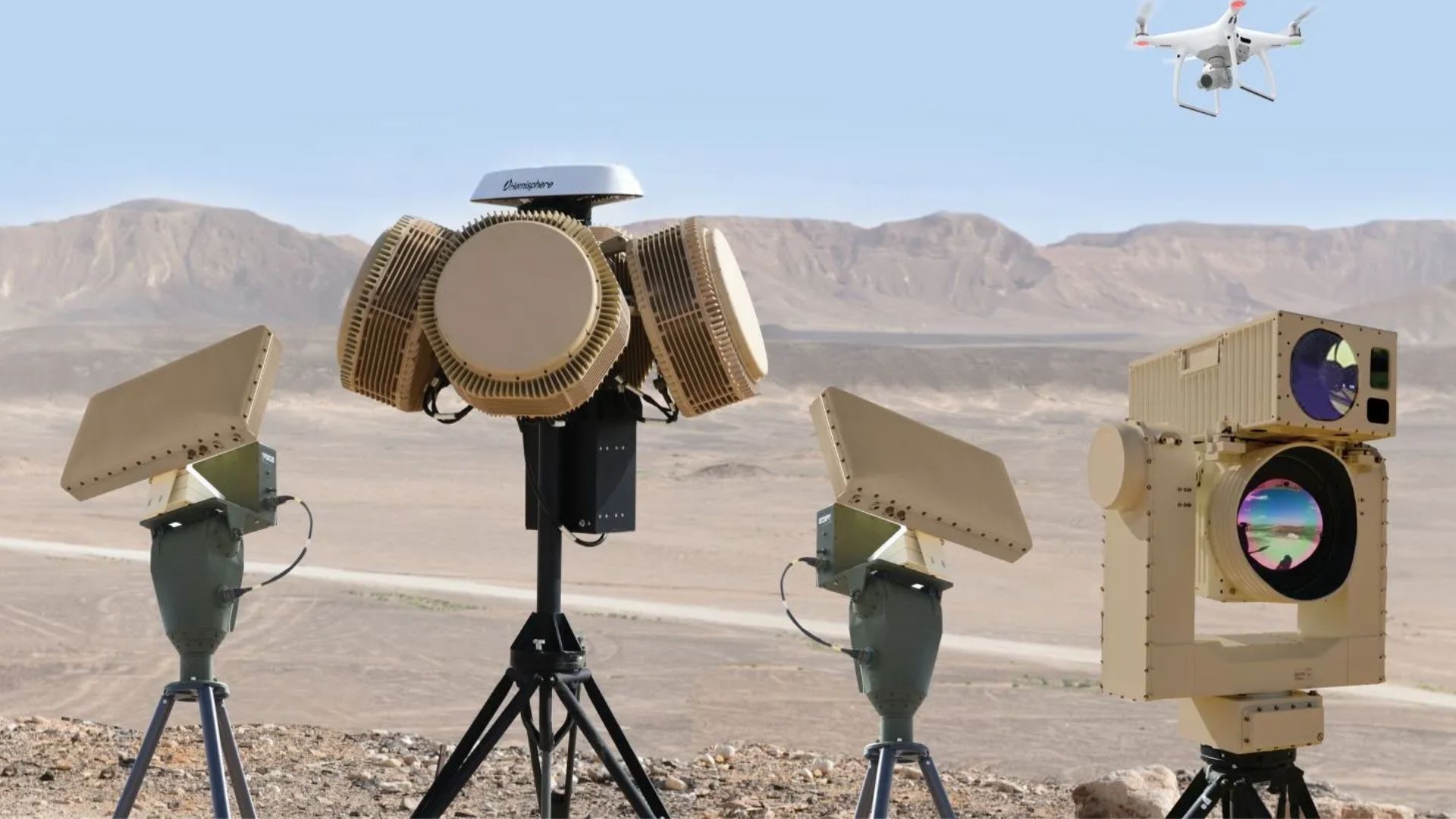

The United States is preparing to send an advanced anti-drone defence system to West Asia amid growing concerns about possible drone attacks from Iran.
The decision comes after recent military strikes carried out by the United States and Israel, which have increased fears that Iran or its allied groups could launch retaliatory drone attacks across the region.
According to a report by Associated Press, citing US officials, the new defence system has already been successfully tested against Russian drones during the war in Ukraine.
US military seeks stronger protection against Iranian drone threat
American forces currently depend on air defence systems such as the Patriot missile defense system and the THAAD missile defense system to intercept incoming missiles.
However, US officials admit that the region still lacks dependable systems specifically designed to stop drone attacks.
Military experts say drones present a different kind of threat compared to traditional missiles. They are usually smaller, cheaper, and more difficult to detect. As a result, conventional missile defence systems are not always effective against them.
Officials in Washington also say the increasing use of Iranian-made drones has created new security challenges.
One US official acknowledged that Washington’s response to Iranian-made Shahed drones has been “disappointing” so far.
These drones are relatively inexpensive and can be launched in large numbers. Their smaller size also makes them harder for radar systems to detect when compared with conventional missiles.
Cost imbalance in countering drone attacks raises concerns
Several US lawmakers have raised concerns about the financial burden of defending against large-scale drone attacks.
Jim Himes, a member of the US Congress, said the American military is highly capable of intercepting missiles but faces difficulties when dealing with swarms of drones.
He explained that the current defence strategy often requires firing expensive interceptor missiles to destroy drones that cost far less to produce. This creates a significant cost imbalance for the military.
Merops counter-drone system designed to intercept hostile drones
To address this growing threat, the United States plans to deploy a new defence technology called the Merops counter-drone system.
The system detects hostile drones and launches smaller counter-drones to intercept and destroy them.
It uses artificial intelligence to identify, track, and neutralise incoming drones before they reach their targets.
The technology is designed to be highly mobile. It is compact enough to be mounted on a midsize pickup truck, allowing forces to deploy it quickly in different areas.
Once the system detects an approaching drone, it launches another drone that intercepts and disables the threat.
Another important feature is that the system can continue operating even if satellite signals or communication networks are disrupted.
Merops system offers cost-effective defence against drones
Officials say the Merops system also provides a cheaper method of countering drone attacks.
Traditional interceptor missiles can cost hundreds of thousands of dollars for a single launch. In contrast, the counter-drones used by this system are significantly less expensive.
This allows the military to destroy hostile drones that may cost less than $50,000 without creating a heavy financial burden.
Ukraine war provides key lessons for US drone defence strategy
The counter-drone technology has already been deployed in several NATO countries.
During the war in Ukraine, Russia has repeatedly used Iranian-made Shahed drones to attack military targets and infrastructure.
Volodymyr Zelenskyy, the President of Ukraine, said Washington also sought Ukraine’s experience in countering these drones.
The lessons learned from the conflict are now helping shape US defence strategies to protect against drone threats in other regions, including West Asia.