
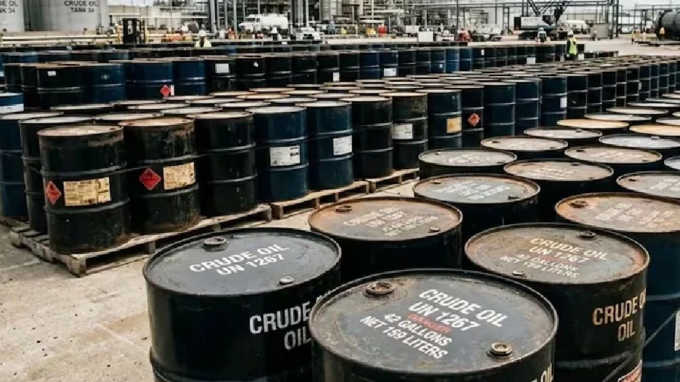

Global oil markets rose sharply on Thursday as crude prices climbed close to $100 per barrel. Traders reacted strongly to new attacks on ships near the Strait of Hormuz, one of the most important energy shipping routes in the world.
Data showed that Brent Crude Oil surged nearly 7 percent to around $99.5 per barrel. Meanwhile, West Texas Intermediate rose more than 8 percent to about $94.36 per barrel in early trading.
Later in the day, Brent prices stayed between $98 and $100 per barrel, reflecting growing concern in global energy markets.
Emergency Oil Release Fails to Calm Markets
The price surge came despite a major move by the International Energy Agency. The agency announced that its 32 member countries will release a record 400 million barrels of oil from emergency reserves. The goal is to stabilise global supply and ease market pressure.
However, the announcement did little to calm traders. Markets continued to react to the rising risks in the Gulf region.
Ship Attacks Raise Supply Fears
Reports of attacks on commercial vessels triggered the rally in oil prices. Authorities said three commercial ships were attacked near the Strait of Hormuz. In a separate incident, an explosive-laden Iranian boat reportedly struck two fuel tankers in Iraqi waters.
These incidents increased fears that the conflict between the United States and Iran could disrupt oil shipments from the Middle East. About one-fifth of the world’s oil supply moves through the narrow Strait of Hormuz, making it a vital route for global energy trade.
US Strikes Add to Rising Tensions
The latest escalation comes days after Donald Trump ordered strikes on Iranian vessels suspected of laying mines near the strait. The action further increased tensions in the region.
Trump had earlier suggested that the conflict might end “very soon.” However, the latest ship attacks have raised fears that the confrontation between Washington and Tehran could last longer and threaten global energy supplies.
US Plans Massive Reserve Release
The United States plans to release 172 million barrels of oil from the Strategic Petroleum Reserve. Shipments are expected to start next week and continue for about four months.
However, analysts say the move may only reduce the impact if disruptions in the Strait of Hormuz become severe.
Analysts Warn Impact May Be Limited
Energy analyst Saul Kavonic said the emergency oil release would offset only a small part of the potential supply disruption. He estimates the reserve release would cover only about a quarter of the possible 20 million barrels per day supply shock if the strait were effectively closed.
“The IEA decision signals how severe the shortage risk is,” he said. Kavonic also warned that the reserves will need to be replenished later. This could keep oil prices high even after the conflict ends.
Risk of Oil Reaching $200
Uncertainty remains about how quickly the emergency oil supplies can reach global markets. This has added more volatility to the energy sector. An official from the Islamic Revolutionary Guard Corps warned that oil prices could surge dramatically if attacks on shipping continue.
The spokesperson said crude prices might rise to $200 per barrel if the situation worsens.
Markets Brace for Volatility
With geopolitical tensions rising and supply risks increasing, analysts expect oil markets to remain unstable in the coming days. Much will depend on whether the Strait of Hormuz remains open. The narrow passage remains the lifeline of global oil trade.