
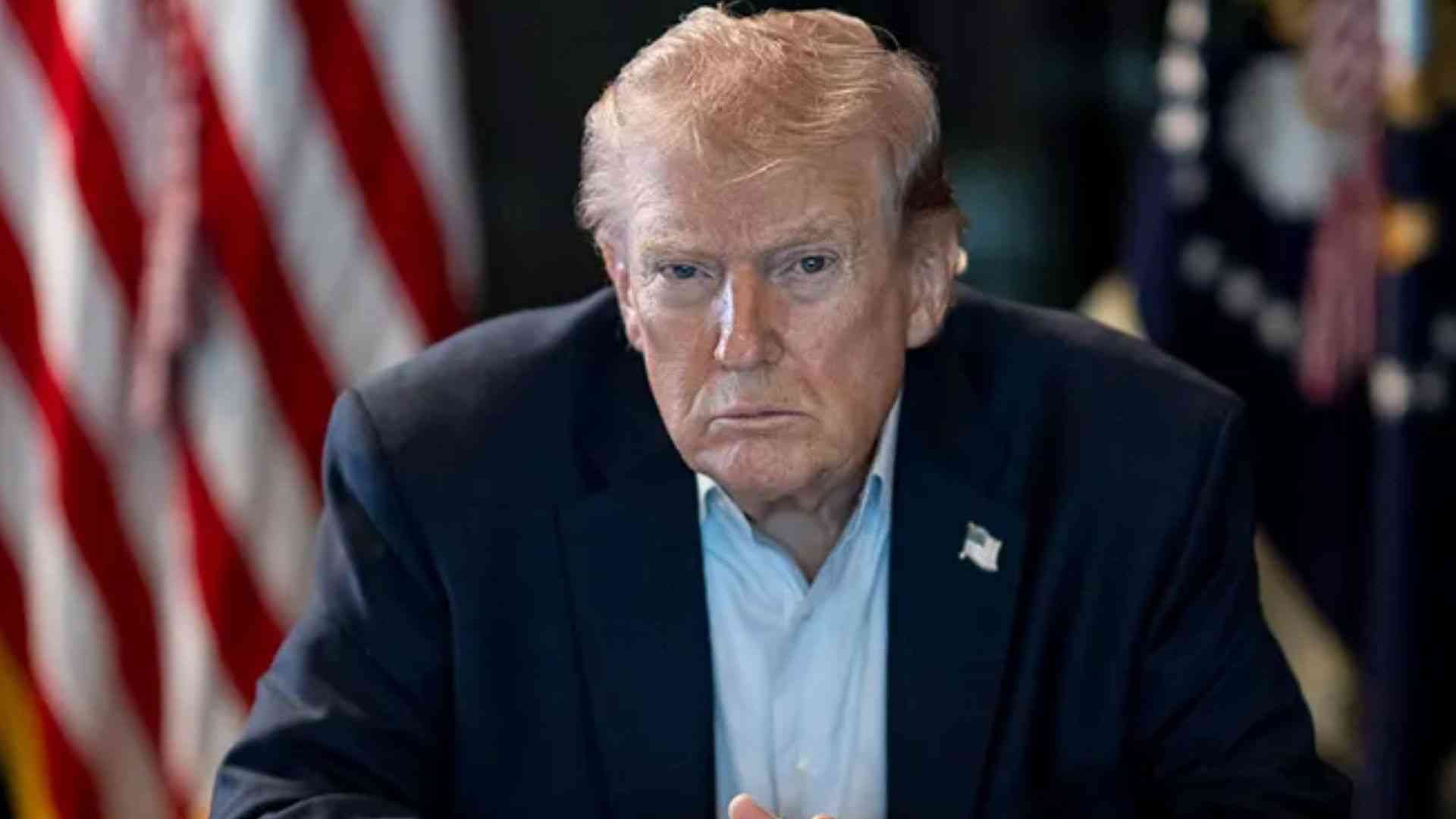

US President Donald Trump announced that American forces conducted what he called “the most powerful bombing raid” on Iran’s Kharg Island, claiming the operation completely destroyed military targets located there.
The island lies in the Persian Gulf and plays a crucial role in Iran’s energy sector. It serves as the country’s main oil export terminal, through which a large share of Iranian crude shipments moves to global markets.
Trump shared details of the strike in a post on the social media platform Truth Social late Friday night in the United States.
“Moments ago, at my direction, the United States Central Command executed one of the most powerful bombing raids in the History of the Middle East, and totally obliterated every MILITARY target in Iran's crown jewel, Kharg Island,” Trump wrote.
US avoided hitting oil infrastructure
Trump stressed that although the United States had the ability to destroy the island’s oil facilities, it intentionally avoided doing so.
“Our Weapons are the most powerful and sophisticated that the World has ever known but, for reasons of decency, I have chosen NOT to wipe out the Oil Infrastructure on the Island,” he added.
By sparing the oil terminals, the United States appears to have tried to limit disruption to global energy supplies, since Kharg Island handles the majority of Iran’s crude exports.
Warning over shipping in Strait of Hormuz
The US president also issued a strong warning to Iran about interfering with international shipping routes in the region, particularly the strategically important Strait of Hormuz.
“However, should Iran, or anyone else, do anything to interfere with the Free and Safe Passage of Ships through the Strait of Hormuz, I will immediately reconsider this decision,” Trump continued. “Iran has NO ability to defend anything that we want to attack — There is nothing they can do about it!”
The narrow waterway connects the Persian Gulf with global shipping routes and carries a significant share of the world’s oil supply.
Trump claims Iran’s regional ambitions are over
In another social media post, Trump accused Iran of attempting to dominate the Middle East and eliminate Israel, but said those plans had now failed.
“Iran had plans of taking over the entire Middle East, and completely obliterating Israel. JUST LIKE IRAN ITSELF, THOSE PLANS ARE NOW DEAD!” said the US President.
US deploys Marines and warship to the region
The bombing operation comes alongside a major military reinforcement by the United States in the Middle East.
According to a US official, the American military has deployed around 2,500 Marines along with an amphibious assault ship to the region. The move marks a significant increase in US military presence after nearly two weeks of war involving Iran.
The deployment indicates that Washington is preparing for a prolonged conflict and possible escalation in the Gulf.
Explosion hits rally site in Tehran
Meanwhile, a powerful blast struck a central square in Tehran during a large state-backed rally. Thousands of people had gathered for the annual event expressing support for Palestinians and calling for Israel’s destruction.
Israel had earlier warned that it could target the area.
Despite the explosion, there were no immediate reports of casualties. Several senior Iranian officials attended the rally, and authorities allowed the demonstration to proceed despite security concerns. The situation reflected the tense atmosphere inside Iran as the conflict intensifies.
Strait of Hormuz tensions escalate
Iran has continued to launch large-scale missile and drone attacks targeting Israel and several Gulf countries. At the same time, Tehran has effectively closed the Strait of Hormuz, disrupting one of the world’s most critical shipping routes.
Roughly one-fifth of global oil trade passes through this narrow channel, making any disruption a major concern for international markets.
Conflict in the Gulf intensifies
The latest developments highlight the rapidly worsening confrontation involving the United States, Israel and Iran. The crisis has already triggered missile strikes, drone attacks and rising instability across the Gulf region.
With military forces building up and strategic waterways under threat, the conflict now risks spreading further across the Middle East.