
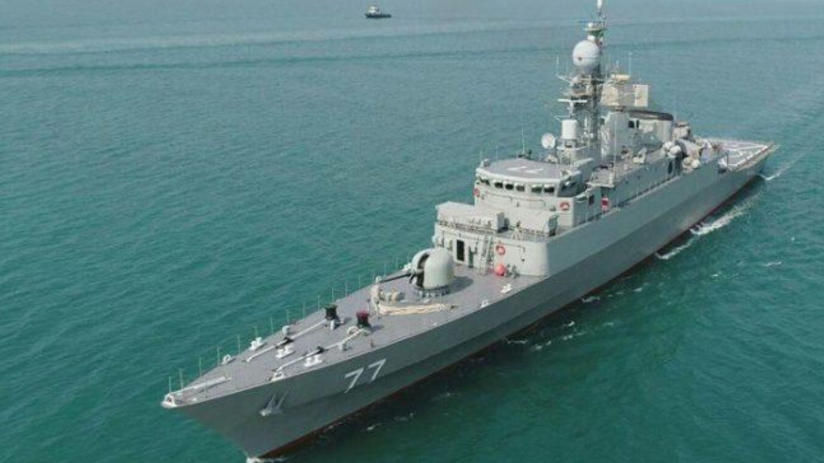

Several allies of the United States have responded carefully or declined outright after US President Donald Trump urged around seven countries to deploy naval ships to protect the Strait of Hormuz. The important shipping route has faced disruptions due to the ongoing conflict involving Iran.
The strait is one of the world’s most critical oil routes. Nearly one-fifth of globally traded oil passes through it, making any disruption a major concern for energy markets and global trade.
Australia Declines to Send Naval Ships
The government of Australia said it does not plan to send naval assets to the region. Cabinet minister Catherine King explained that although the shipping lane is extremely important, Canberra has not received a request to deploy ships.
“We won’t be sending a ship to the Strait of Hormuz. We know how incredibly important that is, but that’s not something that we’ve been asked or that we’re contributing to,” Catherine King said in an interview with Australian Broadcasting Corporation.
Her remarks indicate that Australia currently does not intend to join any maritime security mission in the area.
Japan Signals Caution on Maritime Operations
Japan also adopted a cautious stance. Authorities said they are not presently considering maritime security operations in the strait.
Senior Japanese lawmaker Sanae Takaichi said that the government has not made any decision to send escort vessels. She added that officials are still examining possible options within the country’s legal framework before making any move.
South Korea Still Consulting the US
South Korea has not made a final decision either. Officials said Seoul will continue discussions with Washington before determining whether it should take part in such operations.
The presidential office noted that any decision would follow a detailed and careful review of the situation.
Britain Focuses on Diplomatic Approach
The government of United Kingdom took a more diplomatic approach. Prime Minister Keir Starmer spoke with Trump about the need to reopen the Strait of Hormuz and reduce disruptions to global shipping, according to Downing Street.
Starmer also held discussions with Mark Carney, the Prime Minister of Canada. Both leaders agreed to continue conversations about the Middle East crisis at a meeting scheduled for Monday.
Trump Urges Oil-Dependent Nations to Act
Trump made the appeal while speaking to reporters aboard the presidential aircraft Air Force One on Sunday. He said he has been strongly urging countries that rely heavily on Middle Eastern oil supplies to help protect the strategic waterway.
According to Trump, those nations should take responsibility for safeguarding the route because it is crucial for their energy supplies. He added that the United States depends much less on the strait compared with other countries. Trump also refused to reveal which specific nations he had asked to send ships. Instead, he said they should protect what he described as “their own territory.”
China Highlighted as Key Stakeholder
Trump pointed to China as one of the countries with a major interest in securing the route. He noted that China imports a large portion of its oil through the Strait of Hormuz.
However, he did not say whether Beijing would participate in any possible naval coalition aimed at protecting the waterway.
No Firm Commitments Yet as Oil Prices Rise
Despite Trump’s calls for international support, none of the countries mentioned have announced firm plans to deploy warships to the region.
Meanwhile, uncertainty surrounding the security of the Strait of Hormuz continues to affect global markets, with oil prices rising sharply amid fears of supply disruptions.