
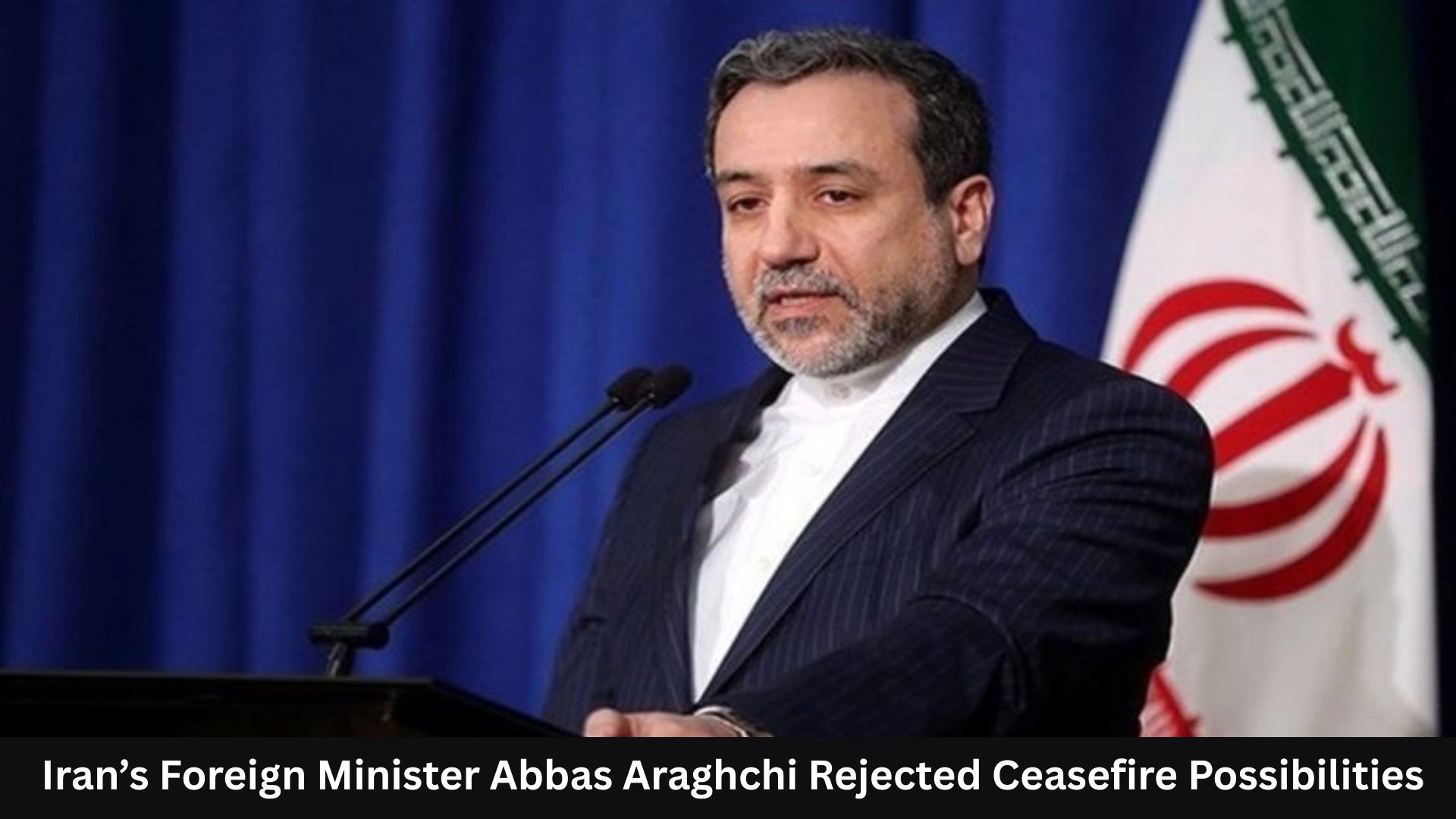

In a strong response to Washington’s recent outreach, Iran’s Foreign Minister Abbas Araghchi rejected any possibility of ceasefire negotiations. Speaking during an interview on Sunday, as US and Israeli airstrikes entered their 16th day, Araghchi dismissed claims by US President Donald Trump that Iran was “desperate” for a deal.
“A Lesson for the Ages”
Araghchi made it clear that Iran has no intention of negotiating under pressure. He strongly criticised the ongoing airstrikes, calling them “illegal,” and explained why Tehran is refusing to engage in talks.
“We are not asking for a ceasefire, and we see no reason to negotiate,” he said. “Because we want to teach them a lesson so hard that enemies never even think of attacking Iran again.”
He also stressed that Iran is not fighting for survival. According to him, the country remains “stable and strong enough” to handle the ongoing attacks. He added that past attempts at dialogue with the US did not lead to peace but instead resulted in more aggression.
Media : Why don't you ask for a ceasefire with the US? Iran FM Abbas Araghchi : Because we want to teach them a lesson so hard that enemies never even think of attacking Iran again. pic.twitter.com/z7m695bgSG
— Iran in India (@Iran_in_India) March 16, 2026
Escalation Across Land and Sea
Iran has backed its words with action. While the US and Israel continue targeting Iran’s missile and security infrastructure, Tehran has intensified its response.
The country has taken steps to disrupt key global energy routes, particularly through actions affecting the Strait of Hormuz, which has pushed oil prices higher. Iran has also launched Sejjil ballistic missiles toward Israel for the first time in the current conflict.
In addition, Iranian forces targeted the US aircraft carrier USS Abraham Lincoln using drones in the Gulf of Oman, forcing the strike group to reposition.
Rising Risk of Wider Conflict
Observers say Araghchi’s remarks signal a dangerous escalation. By framing the conflict as a way to “teach a lesson,” Iran appears unwilling to return to earlier conditions or reduce tensions quickly.
Meanwhile, the Trump administration continues to push for a naval coalition to counter Iran’s actions in the Strait of Hormuz. However, many European and Asian countries have not yet responded to this call.
Situation Remains Tense
Overall, the conflict shows no signs of easing. Iran’s firm stance and ongoing military actions suggest that tensions could rise further, increasing the risk of a broader regional crisis.