
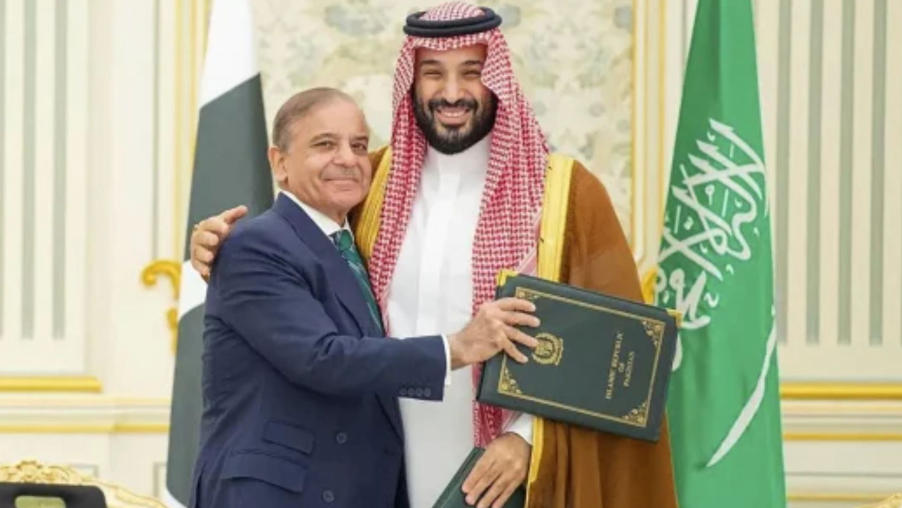

Saudi Arabia is pushing Pakistan to take action against Iran as tensions rise in West Asia. Reports suggest Riyadh has reminded Islamabad of a defence agreement signed in 2025. Through indirect messaging, including communication channels involving experts, Saudi Arabia has indicated that it expects Pakistan to play a role if the conflict escalates.
Why Saudi Arabia Wants Pakistan Involved
Saudi Arabia sees Pakistan as a strong military partner with a large and experienced army. This is especially important after the difficulties Riyadh faced in ground operations in Yemen. The defence pact reportedly allows Saudi Arabia to benefit from Pakistan’s nuclear deterrence umbrella. This reduces its reliance on the United States and strengthens its position against Iran.
If the situation worsens, Pakistani forces could help by opening a second front along Iran’s eastern border or by securing key routes like the Strait of Hormuz. Such support would reduce the need for Saudi troops to engage heavily on the ground.
Major Risks for Pakistan
For Pakistan, joining any conflict against Iran carries serious consequences. Iran has a Shia-majority population, and Pakistan itself has one of the largest Shia populations in the world, estimated between 30 and 50 million. Any military move against Iran could trigger sectarian tensions within the country.
The economic risks are also high. A conflict could lead to rising oil prices and reduced remittances from Gulf countries. Pakistan is already facing financial and energy challenges, and a war could worsen its economic situation.
There are also security concerns. Pakistan shares a long border of about 900 km with Iran, which increases the risk of direct retaliation. At the same time, Pakistan is already dealing with tensions involving India, militant activity linked to Afghanistan, and insurgency in Balochistan. A new conflict could stretch its military resources across multiple fronts.
Intelligence Concerns Over Limited Role
According to intelligence inputs, even a limited role by Pakistan could have serious implications. Support such as air defence assistance or troop deployment in Saudi Arabia or near the Strait of Hormuz would effectively open a western front.
This could complicate Pakistan’s already challenging security situation. It may also increase the risk of internal unrest and radicalisation due to the country’s sensitive sectarian balance.
Pakistan Likely to Stay Cautious
Sources suggest that Pakistan is unlikely to launch a full-scale offensive or send ground troops into Iran. Recent statements from Islamabad appear to be aimed at maintaining balance rather than signalling direct involvement.
So far, Pakistan has maintained neutrality in the ongoing conflict involving the United States, Israel, and Iran. It has criticised attacks from all sides and continues to call for diplomacy and regional stability.
Regional Signals and Developments
Recently, Mojtaba Khamenei urged Pakistan to improve ties with Afghanistan. In a message on X, he described Pakistan as a “beloved" country and expressed willingness to strengthen relations.
Meanwhile, a Pakistani oil tanker named MT Karachi successfully passed through the Strait of Hormuz on March 15, despite disruptions in the route.