
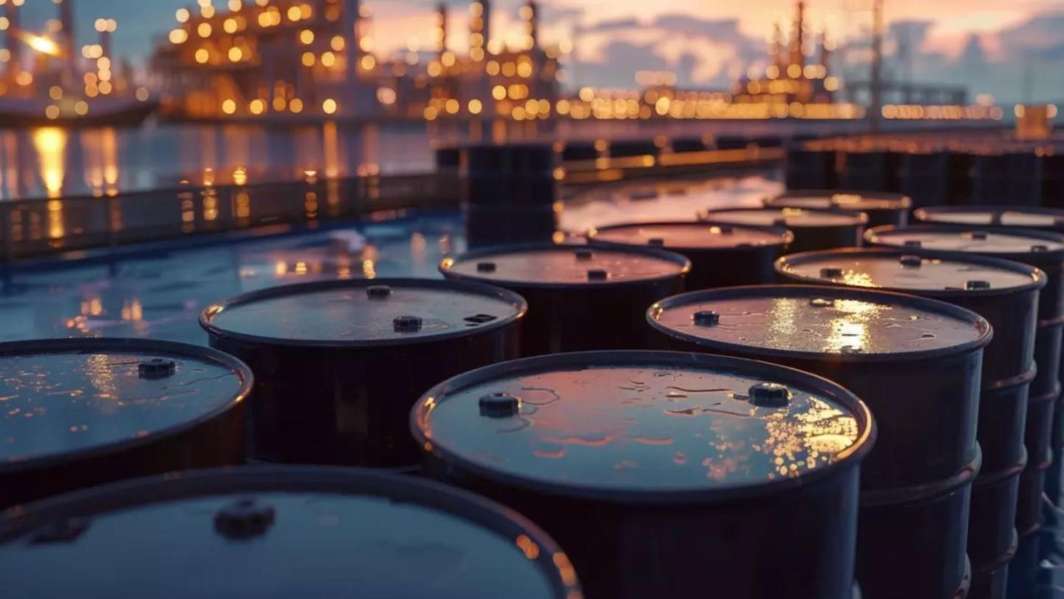

Global oil prices increased sharply on Monday, rising more than 8% and crossing the $100-per-barrel mark. The surge came after the United States announced plans to block the Strait of Hormuz following failed peace talks with Iran.
Brent crude futures for June rose by $8.08, or 8.49%, to reach $103.28 per barrel in early trading. Meanwhile, West Texas Intermediate (WTI) increased by $8.66 to $105.23 per barrel. These gains reflect growing concerns about possible disruptions in global oil supply.
Failed Talks Spark Supply Concerns
The sudden rise in prices followed an announcement by Donald Trump. He said the US would begin blocking maritime routes connected to Iranian oil exports after negotiations failed to end the ongoing conflict.
This move could affect up to 2 million barrels of oil per day. The Strait of Hormuz is one of the most important routes for global energy transport, and any disruption here has wide-reaching effects.
Iran Issues Strong Warning
Tensions increased further after the Islamic Revolutionary Guard Corps warned that any military ships entering the area would face a “decisive” response.
Shipping activity has already slowed down. Reports show that only a few vessels passed through the strait over the weekend. By Monday, traffic had nearly stopped, with just one Iranian ship seen anchored in the region.
Saudi Arabia Offers Partial Support
In response to possible supply shortages, Saudi Arabia said it has restored full capacity on its East-West pipeline. This pipeline can carry about 7 million barrels of oil per day.
However, experts believe that alternative routes like this may not fully replace the oil flow through the Strait of Hormuz, especially if the situation worsens.
Global Economic Impact in Focus
Trump admitted that higher oil and fuel prices may continue until the midterm elections in November. This could create political challenges within the US.
The rise in oil prices is also expected to increase inflation worldwide. This will make it harder for central banks to manage economic growth and control rising prices.
Markets Remain Uncertain
As the geopolitical situation continues to change, traders remain cautious. The risk of long-term disruption in one of the world’s most important energy routes is keeping markets on edge.